Fonterra FY26 Results: $9.69 Milk Price, $3.4bn Profit
Fonterra has unveiled its annual results for the 2026 financial year, posting $27 billion in revenue and close to $20 billion returned to New Zealand farmer owners and unit holders.




 increase font size

FONTERRA HAS upped its forecast payout for the 2012 season 20c/kgMS to $6.90-$7.00 for a fully shared up farmer.
The revised forecast comprises a Farmgate Milk Price of $6.50/kg milksolids (MS) and an unchanged Distributable Profit forecast range of 40-50 cents per share.
Fonterra chief executive Theo Spierings says dairy prices have edged up in three of the last four fortnightly online GlobalDairyTrade auctions and the GDT-Trade Weighted Index is 5.8% above a recent low in early October.
World dairy trade growth is being led by whole and skim milk powders, reflecting strong demand, notably in emerging markets, including a number of ASEAN economies, as well as Brazil, Mexico and China.
While foreign exchange volatility remains, the impact on the Fonterra Farmgate Milk Price becomes less further into the season as the proportion of foreign exchange hedging increases, he adds.
Fonterra also announced the Estimated Fair Value Share Price for the 2012/13 is $4.52/share, the same as the current season’s.
Independent valuer, Grant Samuel, estimated a Restricted Market Value (RMV) range for Fonterra shares with a mid-point of $4.26/share as at 1 June 2012, the start date of the 2013 season. The estimate is 2%, or 8c/share, higher than the valuation for the current 2012 Season.
As the mid-point of the valuer’s estimated range remains below the current Base Price of $4.52 that applies during the transition RMV, the Fonterra board determined that the estimate remain at $4.52/share. The final share price for the 2013 season will be determined in late May 2012 after the board receives a final independent valuation.
Fonterra chairman Sir Henry van der Hayden says the valuation increase per share primarily reflects the impact of retentions in further reducing Fonterra’s overall debt levels.
“This is in line with the board’s strategy to maintain a strong balance sheet during these volatile and uncertain times. It also positions the co-op well going forward, as we invest to grow future farmer returns.”
Van der Heyden says the valuation has been adversely affected by exchange rate movements since the previous valuation in May 2011. In particular, a higher New Zealand dollar against many overseas currencies has eroded expected valuation gains for Fonterra’s businesses and investments in Asia and South America.
“If exchange rates had stayed around May 2011 levels, the Restricted Market Value could well have been close to the $4.52 Base Price. Even after this exchange rate impact, we have recorded a modest increase in share valuation. This compares favourably with share price declines averaging up to 10% or more since May on NZX and world equity markets.”
The valuer stressed that the RMV is not an estimate of where Fonterra shares will trade immediately after Trading Among Farmers commences, he notes.
Rather, it reflects the valuer’s view on the likely long-run average discount to Fair Value. The valuer says that in practice the discount will swing depending on dairy industry and equity market conditions.
“As well as taking into account the views of the valuer, the board will seek expert advice on the price that shares are likely to trade at before making a decision on TAF implementation,” adds van der Heyden.
Fonterra has unveiled its annual results for the 2026 financial year, posting $27 billion in revenue and close to $20 billion returned to New Zealand farmer owners and unit holders.
Fonterra Co-operative Group has confirmed the independently assessed candidates standing for election to its board in 2026.
Fonterra has revised its Farmgate Milk Price forecast for the 2026/27 season, lifting the midpoint and narrowing the range on the back of improving global dairy commodity prices.
Outgoing Fonterra Co-operative Council chair John Stevenson says that it has been a privilege to represent the co-op's farmer shareholders.
OPINION: It seems Canterbury processor Synlait is still in the doldrums.


Federated Farmers says it welcomes Labour's commitment to reviewing the Sharemilking Agreements Act, calling on other major parties to do the same.
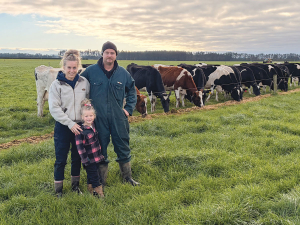
For Canterbury dairy farmers Sian Meijer and Rick Wobben, wearable technology has become one of their most valuable on-farm tools - helping manage 1850 cows across an expansive, high-performing dairy operation while improving efficiency, mating outcomes and day-to-day decision making.
Fonterra has unveiled its annual results for the 2026 financial year, posting $27 billion in revenue and close to $20 billion returned to New Zealand farmer owners and unit holders.
The first major update to the Dairy Cattle Code of Welfare in more than a decade has been released, marking what DairyNZ describes as an important step in ensuring animal welfare standards continue to evolve alongside scientific evidence and on-farm realities.
Ravensdown shareholders have elected Jane Montgomery and Kate Acland to the Ravensdown Board for three-year terms, following a closely contested director election.
Federated Farmers says new legislation replacing the Resource Management Act will cut red tape, unlock investment and help grow New Zealand's export-led economy, after the Planning Bill and Natural Environment Bill passed their third reading in Parliament yesterday.




OPINION: The same mainstream media muppets that brought you Jacindamania in 2017 have been flat out pimping for the Opportunities…
OPINION: Your old mate reckons the atrocious way farmers in the UK are treated by their lords and masters in…