India FTA Removes 33% Tariff on NZ Sheepmeat
New Zealand’s red meat sector has welcomed the India-New Zealand Free Trade Agreement taking effect, which removes India’s 33% tariff on New Zealand sheepmeat.




 increase font size
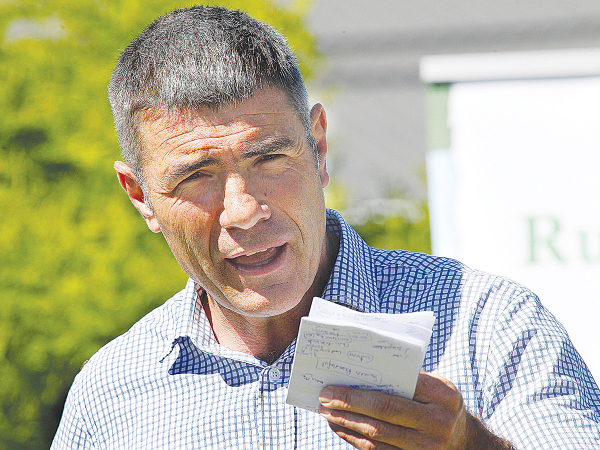 Meat Industry Association chair Nathan Guy is not holding much hope for progress on HWEN before the general election.
Farmers are finding themselves "extremely confused" about He Waka Eke Noa (HWEN), says Meat Industry Association chair Nathan Guy.
Speaking at the Red Meat Sector Conference in Auckland last week, he noted that politics continue to dominate the issue.
HWEN – a partnership between farmers, agricultural sector industry bodies and Māori – with input from Primary Industries and Environment ministries was formed to price greenhouse gas emissions at farm level.
In October last year, the Government proposed a levy on farmers for greenhouse gas emissions to begin in 2025, a plan rejected by many farmers. Since then, there has been little progress, with a change in Prime Minister further stalling progress.
Guy says he’s not holding hope for too much progress before the general election.
“There aren’t a lot of sitting days (of Parliament) left but I could be wrong,” he says.
Guy says there remain different views between different ministries and departments in Wellington.
While HWEN remains under a cloud, the red meat sector agrees that things must change otherwise customers will leave them behind.
Guy wants progress on measurement and reporting based on science that considers NZ’s very different farming systems.
“It’s clear to me that an incoming government will have to make the big decisions into the future,” he says.
He acknowledged work underway like the AgriZero partnership between agribusiness and the Government, a catalyst and investment fund with an ambition to accelerate the reduction of agricultural emissions by 30% by 2030.
He says the partnership deals with methane and “turbo charging the commercialisation of tools within the toolbox of farmers to adjust inside the farm gate”.
He acknowledged meat companies Silver Fern Farms and Anzco for contributing to the programme. With the election around the corner, MIA has stepped up its engagements with politicians.
Recently, it launched its election manifesto and in the coming weeks it will release a briefing for incoming ministers.
Guy points out that dealing with red tape costs NZ meat processors and exporters $370m a year.
They also lose $200m a year on tariffs.
“These are mouthwatering numbers,” says Guy.
“We are doing everything possible to convince politicians of all parties what our main frustrations are, what they need to do as policy makers to support our sector,” he says.
The association has also reset its working relationship with the Ministry for Primary Industries (MPI).
A “bold” workplan has been agreed with MPI director-general Ray Smith, says Guy.
Guy and MIA chief executive Sirma Karapeeva are now meeting Smith on a quarterly basis.
“Because I know, as a former Minister for Primary Industries, that things occasionally slip,” he says.
“If you have a big cyclone event, people at MPI get pulled off, you have a big event like M. bovis, staff get pulled off.
“So, we want to ensure we are keeping the feet to the fire so that MPI know that we need to work collaboratively with them to deal with challenges we face.”
Guy thanked the Government for two recent free trade agreements, with the UK and the EU.
He says the UK FTA is a comprehensive deal which is celebrated by the sector.
“But we remain disappointed by the opportunities lost with the EU one,” Guy says.
New Zealand’s red meat sector has welcomed the India-New Zealand Free Trade Agreement taking effect, which removes India’s 33% tariff on New Zealand sheepmeat.

New Zealand's role is not to compete with Indian growers, according to NZ Apples and Pears.
The red meat sector is in great heart.
New Zealand's red meat and fifth-quarter exports reached $867 million in August, up 23% on the same month last year, as stronger returns lifted earnings across all major markets.
Meat Industry Association data, released alongside the Red Meat Sector conference in Wellington, shows export value climbing across the US, China, UK and Canada.


Federated Farmers has welcomed new rural policies released by ACT, saying they align closely with its own election priorities.

Rural Contractors NZ says proposed changes to land transport rules for agricultural vehicles are a welcome response by the Government to out of date regulations which have seen members hit with huge fines.
Alliance is calling for final applications for its 2027 Graduate Programme, with applications closing on Sunday 25 October.
Decades piloting planes has ensured vet and farmer David Hayes is focused on safety. So, after a serious accident while welding on farm, he is sharing his experience so others can learn from it.
Canterbury milk processor, Synlait Milk has confirmed Leon Fung as its chief executive officer.
OPINION: Making it easier to collect rainwater and use it to grow crops and livestock is a no brainer.


OPINION: The same mainstream media muppets that brought you Jacindamania in 2017 have been flat out pimping for the Opportunities…
OPINION: Your old mate reckons the atrocious way farmers in the UK are treated by their lords and masters in…