
OSPRI Reduces TB Testing and Lifts Movement Controls in Key Regions
Ospri is reducing TB testing frequencies and movement control measures as the disease risk subsidies in parts of the country.




 increase font size
 B+LNZ chief economist Andrew Burtt.
A new report from Beef + Lamb New Zealand (B+LNZ) shows that sheep and beef farmers are facing on-farm inflation levels not seen since the 1980s for the second year in a row.
The Sheep and beef on-farm inflation report shows a 40-year high of 16.3%, more than double the consumer price inflation rate of 6.7%.
In March this year, B+LNZ forecast a 30% decrease in average farm profit based on estimated on-farm inflation of 12-13%, but the latest figures imply that farm profit is likely to fall even further.
The jump between the March 2022 and March 2023 follows a 10.2% increase over the previous 12-month period and is up 31.1% over the past five years.
B+LNZ chief economist Andrew Burtt says last year seemed bad, but the latest figures mark the highest on-farm inflation rate since 1981-82, when on-farm inflation was at 17.1%.
“Costs increased across the board this year,” he says. “The largest increase was for interest (+86.5%), which contributed substantially to the overall increase in on-farm inflation because it comprises 10.9% of total farm expenditure.”
Burtt says floating interest rates doubled from March 2022 to March 2023 while fixed and overdraft interest rates increased by approximately 50%.
Meanwhile, feed and grazing (up 14.8%) and fertiliser, lime, and seeds (up 14%) were the next two largest increases for the year.
With inflation eroding farm profitability, farmers may have to continue tightening their belts.
Burtt says debt servicing is a non-negotiable, meaning farmers are looking to cut back in other areas of farm expenditure.
He says that will have a flow-on effect for rural communities as services and farm inputs reduce.
“With uncertainty over regulations and the economic outlook for New Zealand, there is a focus on essential ‘must have’ expenditure on farm.”
The report is the latest in a series from B+LNZ that highlights the financial and regulatory pressures currently facing sheep and beef farmers.
B+LNZ chief executive Sam McIvor says the significant financial challenges facing farmers, with many also working to recover from Cyclones Hale and Gabrielle, are yet another reason the Government needs to put the brakes on its raft of environmental policy changes.
“The financial pressure is challenging,” McIvor says. “A generation of farmers have not operated under this level of inflation and the situation is further exacerbated by unworkable environmental rules.”
McIvor says that when farmers are impacted in this way, it also impacts the wider economy, especially businesses that service farmers like vets, trucking companies, and shearers.
“It also impacts businesses where farmers spend their family incomes,” he says.
“New Zealand sheep and beef farmers are playing their part to address climate change, improving our waterways, and protecting New Zealand’s biodiversity. We are asking for urgent changes to flawed Government policies and poorly crafted rules,” McIvor says.
“The Government must get behind the sector, which provides nearly one of every five dollars New Zealand earns from exporting, so farmers can navigate this financially challenging time, plan ahead and ensure their businesses remain sustainable, in every sense of the world.”
Ospri is reducing TB testing frequencies and movement control measures as the disease risk subsidies in parts of the country.

OPINION: The good times felt across the dairy sector weren't lost at last week's Beef + Lamb NZ annual meeting.
Southland farmer and director Tony Cleland has been named OSPRI New Zealand’s new chair.
Beef + Lamb New Zealand (B+LNZ) is calling on livestock farmers to take part in a survey measuring the financial impact of facial eczema (FE).
Beef + Lamb New Zealand (B+LNZ) chair Kate Acland says there are clear governance processes in place to ensure fairness and transparency.


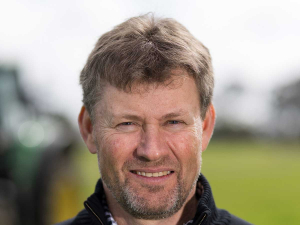
Mark Hooper has been appointed the new chair of NZPork, the industry organisation representing New Zealand pig farmers.

As the India-New Zealand free trade agreement enters into force, New Zealand’s apple industry has reaffirmed its commitment to the long-term development of India’s apple sector.
Fonterra shareholders can begin voting on Tuesday 20 October in the 2026 Board of Directors’ election, a Co-operative Council election in one Ward, and seven Annual Meeting resolutions.
National’s pledge to introduce 19 new national standards shows the party is serious about getting Wellington out of farming, Federated Farmers says.
The National Party’s policies to make it easier to grow fresh vegetables, secure reliable water and energy and simplify farm planning are practical changes that will give growers the confidence to invest, according to Horticulture New Zealand (HortNZ).
Fonterra Co-operative Group chief financial officer Andrew Murray has resigned to take up a role outside the dairy giant.


OPINION: The same mainstream media muppets that brought you Jacindamania in 2017 have been flat out pimping for the Opportunities…
OPINION: Your old mate reckons the atrocious way farmers in the UK are treated by their lords and masters in…




