
New Rural Recycling Scheme to Replace Voluntary Farm Plastics Programmes by 2027
Environment Minister Nicola Grigg has announced details of a new rural plastics recycling scheme.




 increase font size

CLIMATE CHANGE will bring flooding, wildfire and coastal damage to New Zealand – but also increased spring pasture growth in cooler regions, says a new international report.
"Without adaptation, further changes in climate are expected to have substantial impacts on Australia and New Zealand's water resources, coastal ecosystems, oceans, infrastructure, health and agriculture," says Dr Andy Reisinger of The New Zealand Agricultural Greenhouse Gas Research, who jointly prepared the chapter on New Zealand and Australia for the report.
The report, from the IPCC's Working Group 2, was released today (March 31) in Yokohama. It describes effects already being seen from changes in climate, the impacts expected for a range of possible future scenarios of greenhouse gas emissions, and ways of managing and reducing risks through adaptation.
The report says that globally, climate change has caused animals and plants to shift their ranges, seasonal activities, migration patterns and abundance.
Changing rainfall or melting snow and ice are affecting water resources and quality in many parts of the world. Negative impacts of climate change on crop yields have been more common than positive impacts. As temperatures rise, so does the risk of severe and pervasive impacts.
Sea level rise projected to occur through this century will lead to increasing flooding and erosion impacts for low- lying coastal areas.
For 1°C of warming, climate change related risks are high from extreme events such as heat waves, extreme precipitation (rain and snow), and coastal flooding. Without adaptation, negative impacts for crop production in many tropical and temperate regions are expected for local temperature increases of 2°C or more.
The fraction of the global population experiencing water scarcity will increase with the level of warming through the 21st Century.
Reisinger says " a key challenge for government is to identify when and where adaptation may have to go beyond incremental measures and more transformational changes may be needed, and how to support such decisions".
Several New Zealand scientists contributed substantially to the report, as well as Dr Reisinger. Professor Alistair Woodward of Auckland University was a Coordinating Lead Author for the Health chapter. Dr Andrew Tait of NIWA and Dr Paul Newton of AgResearch were Lead Authors of the Australasia chapter.
See www.ipcc.ch
Environment Minister Nicola Grigg has announced details of a new rural plastics recycling scheme.

For the first time in a quarter of a century, Federated Farmers has something positive to say about the Labour Party’s climate change policy leading into a general election.
Climate, nature and animal wellbeing make up Fonterra's refreshed sustainability roadmap released last week.
OPINION: David Seymour and James Meager's plan to make it easier for farmers and orchardists to operate drones can best be described a 'courageous' move.
There's been widespread support from the primary sector for the Government's announcement on changes to freshwater farm plans that come under the Natural Environment Bill, which is now set to replace the existing RMA.


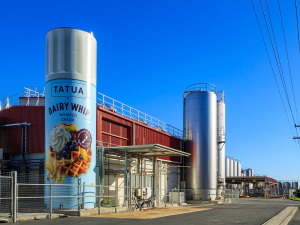
Waikato milk processor Tatua has again declared a record milk payout to farmer shareholders, leaving other processors in the dust.

A Labour-led Government won’t be bringing back the controversial freshwater rules of 2020.
National’s much-touted free trade deal with India featured in the Rural Issues Debate at Mystery Creek, Hamilton on Wednesday night.
New Zealand's 2026-27 freshwater fishing season has opened, with anglers encouraged to head to rivers and lakes over the coming days as conditions look favourable across much of the country.
Central Otago District Council (CODC) has voted against a plan to spread treated sewage sludge from Cromwell and Alexandra on farmland near Lauder, a decision Federated Farmers says reflects strong opposition from rural residents.
Pāmu has released its FY26 Integrated Annual Report, reporting a Net Operating Profit of $113 million, more than double the $49 million recorded in FY25.





OPINION: The same mainstream media muppets that brought you Jacindamania in 2017 have been flat out pimping for the Opportunities…
OPINION: Your old mate reckons the atrocious way farmers in the UK are treated by their lords and masters in…




