
Final call for Alliance’s 2027 Graduate Programme
Alliance is calling for final applications for its 2027 Graduate Programme, with applications closing on Sunday 25 October.




 increase font size
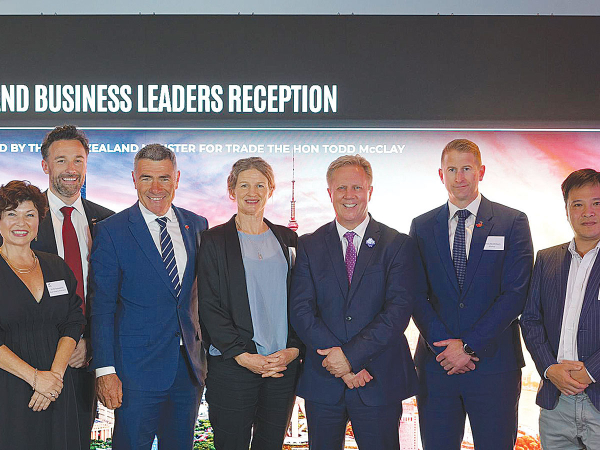 From left: Sirma Karapeeva, MIA, Derek Ramsey, Affco, MIA chair Nathan Guy, Silver Fern Farms chair Anna Nelson, Minister for Agriculture Todd McClay, James McWilliam, Alliance, and Ambrose Cheung, ANZCO at the launch.
An eight million dollar, three year campaign to get wealthy Chinese to buy New Zealand beef and lamb is now underway.
The launch of this significant venture called Taste Pure Nature (TPN) took place in Shanghai on the sidelines of a huge international import expo that attracted countries and companies across the globe - all out to show their commitment to the massive Chinese market and to increase their exports there.
NZ had its own pavilion at the expo at which a whole range of our exports, including beef, lamb, dairy products and honey were showcased. As part of this the partners in the campaign - the Meat Industry Association, B+LNZ and the Government - organised a chef to cook up delicious sample of lamb and beef to give to visitors during the week-long event - all part of the programme to raise the profile of NZ's high-quality products.
The actual official launch of the campaign by Trade Minister Todd McClay took place at what is known as NZ Central - a large venue in Shanghai which companies can use to stage promotional events and interact with key businesspeople and officials.
About 120 invited guests, mainly buyers from China along with NZ company representatives and TPN partners. NZ's ambassador to China, Graham Morton, and the chair of the Meat Industry Association (MIA), Nathan Guy, were also at this function. Sirma Karapeeva, MIA chief executive, says this event was very commercially focused. She says they got positive feedback from customers about the TPN campaign and what NZ was trying to do in the market.
Karapeeva says the launch of TPN comes at a very good time because the Chinese market is saturated with some fierce competition. She says this means NZ has to define its niche and differentiate itself in what is a very busy market.
"The main goal is to educate the Chinese consumer about NZ grass-fed meat and to promote the nutritional benefits of eating a leaner meat that's full of the vitamins, minerals and omegas and the like. It's to raise awareness of our product and help consumers build up an affinity with it so that they reach for our product when they are doing their grocery shopping," she says.
Karapeeva says there is a lot of competition in the Chinese market from Brazil and Argentina but their product tends to be focused at a lower price point. She says NZ has to be unapologetic about the fact that it is not going to be at the bottom to serve that low-cost market.
"We [have] quality, high-value premiume products and we are targeting a small but discerning group of consumers that are looking for that product. Hence this campaign must be surgically focused on our customer segment," she says.
Taste Pure Nature Plan
As part of the official launch of TPN, there was a signing ceremony to lock in an international public relations company which will have the task of doing a lot of the groundwork in the market.
Karapeeva points out that it's impossible to run a campaing like this remotely from Wellington and says the PR company has been tasked with giving advice on messaging and how to target discerning customers.
"It's a mixed campaign. We will have some social media because China runs on social media, and they also run on what are known as 'Key Opinion Leaders' - KOLs. That is how consumers get their information on brands. We will also have a digital presence and promotions in market with food service partners to promote the provenance and the attributes of our beef and lamb," she says.
The Chinese market has been sluggish since Covid and not helped by internal economic problems relating to the property market. The word, says Karapeeva, is that things are starting to pick up but that this is slow and will continue to be slow. She says it's not so much that Chinese conumers don't have the money to spend, rather that they are being very cautiou about their spending on food and in some cases trading down.
"But having said that, they are ot trading down when it comes to health, nutrition and wellbeing and that is the segment that we are trying to position our grass-fed premium product into. What we are saying is our product is good for your health and your family's health because it's lean and nutritious," she says.
Alliance is calling for final applications for its 2027 Graduate Programme, with applications closing on Sunday 25 October.
As part of its Election 2026 coverage, Rural News asked political parties how they would help pull the arable sector out of the doldrums. Here's what they said:
Food and fibre exports have returned a billion- dollar bonus to the country.
The Government is backing work on a community-led water storage scheme that could irrigate up to 11,000 more hectares of the Poverty Bay flats, Agriculture Minister Todd McClay says.
OPINION: There could hardly be a more appropriate theme for a conference than the one chosen by the red meat sector - Navigating Volatility.



Alliance is calling for final applications for its 2027 Graduate Programme, with applications closing on Sunday 25 October.
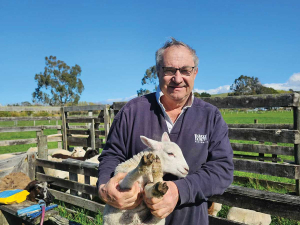
Decades piloting planes has ensured vet and farmer David Hayes is focused on safety. So, after a serious accident while welding on farm, he is sharing his experience so others can learn from it.
Canterbury milk processor, Synlait Milk has confirmed Leon Fung as its chief executive officer.
OPINION: Making it easier to collect rainwater and use it to grow crops and livestock is a no brainer.
As part of its Election 2026 coverage, Rural News asked political parties how they would help pull the arable sector out of the doldrums. Here's what they said:
Farmers are being encouraged to rethink how they manage waste on farm with the launch of ruralwastesorted.co.nz, a new website bringing together practical tips, real farmer experiences and resources.



OPINION: The same mainstream media muppets that brought you Jacindamania in 2017 have been flat out pimping for the Opportunities…
OPINION: Your old mate reckons the atrocious way farmers in the UK are treated by their lords and masters in…




