It's The Margins That Matter
OPINION: It appears to be difficult for people who haven’t tried to run a business to understand the difference between assets and cash.




 increase font size
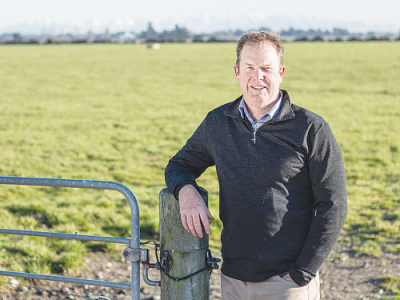 Ravensdown chief executive Greg Campbell.
Ravensdown chief executive Greg Campbell doesn’t want the co-op to be labeled “a fertiliser business and a polluter”.
“If we are getting those messages, we have failed,” he told Rural News.
Instead, Campbell wants Ravensdown known as an agri service business “that happens to use products that protect the environment and the social license to operate”.
“We want to turn the conversation around -- from ‘polluters’ to ‘we understand and value what you do and we won’t sell products that will have negative outcomes’.”
Ravensdown, headquartered in Christchurch and turning 40 in August, was launched in 1977 by farmers fed up with being at the mercy of two commercial operators.
By the end of Ravensdown’s beginning, two of New Zealand’s largest companies would be delisted from the stock exchange – an unheard of precedent. By the end of 1977, a small band of far-sighted pioneers had wrested control of four fertiliser factories and nine stores from a commercial entity that had fought them tooth and nail.
The cooperative spirit of those early pioneers prevailed and Ravensdown was here to stay.
Today the co-op owns three manufacturing sites, 90 stores, joint venture spreading companies running 85 trucks and an aerial spreading business. An environmental consultancy business, set up there years ago, is the fastest growing unit within the company. Four services are offered: Overseer modeling, farm environment management plans, water quality testing and resource consent applications.
Campbell says shareholders are keen that the company is in discussion on their behalf and provides services, particularly in agronomy and science. It also collects farm data, from farming systems to outputs, on behalf of farmers “who are happy to be benchmarked against one another”.
“A farmer can look at any one paddock at any one time to see what’s going on, the likely production and whether he will have any potential environmental issue.”
“A lot of shareholders are quite happy about the challenge- how they are going against the other farmers; I haven’t met too many farmers who don’t want to help their fellow farmer. If all our farmers do well it’s good for NZ.
“When I talk to our founding shareholders, they tell us what they foresaw,” Campbell says.
OPINION: It appears to be difficult for people who haven’t tried to run a business to understand the difference between assets and cash.
OPINION: In the 1980s, concern was expressed in West Germany about the falling birth rate. Some simple analysis was performed by Professor Helmut Sies, physician and biochemist at Dusseldorf University. His letter ‘A new parameter for sex education’ was published in Nature in 1988:
When it comes to annual rebates, it's been a long time between drinks for Ravensdown shareholders.
Ravensdown has reported a net profit before tax and rebate of $50.1 million for the year ended 31 May 2026.
Farmer owned co-operative Ravensdown has signed a two-year naming rights sponsorship of the Canterbury A&P Show.

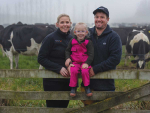
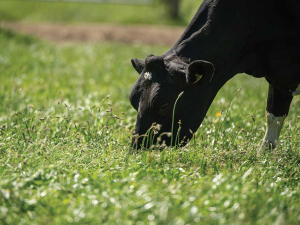
Farms across the upper North Island are trialling different pasture mixes as part of a research programme that aims to build greater resilience into farming systems.
Election years are always a concerning time for farmers, according to DairyNZ chair Tracy Brown.
The Ballance Farm Environment Awards are coming to the West Coast of the South Island.
Most dairy regions around the country have had a pretty good season so far says Tracy Brown.
Rural leader Mark Hooper has been appointed as an independent director to the NZPork board, bringing extensive farming, governance and advocacy experience to the role.




OPINION: The same mainstream media muppets that brought you Jacindamania in 2017 have been flat out pimping for the Opportunities…
OPINION: Your old mate reckons the atrocious way farmers in the UK are treated by their lords and masters in…