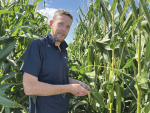
Fall Armyworm in NZ Maize: Four Years of Research
Four years since it was first detected in New Zealand, researchers and growers now know much more about management of maize pest fall armyworm (FAW).




 increase font size
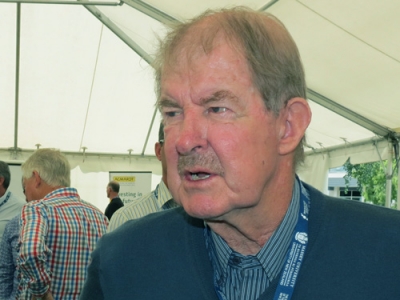 Dr Jock Allison.
A former director of AgResearch, Dr Jock Allison, remains unconvinced about the validity of the AgResearch strategy that has driven changes in personnel.
This is despite assurances by the current chief executive Tom Richardson that despite making 78 scientists and technicians redundant at the CRI research on key projects related to the dairy industry will continue and in many cases increase.
AgResearch has cut 78 positions but is planning to employ 27 new staff in different areas.
Allison questions why AgResearch is starting to get involved in the food sector when Massey and Otago universities are involved, as is Fonterra which, he says, has 500 staff involved in this work.
"They are getting big in Maori agribusiness. Well what's different about Maori agribusiness? Certainly there're opportunities on Maori land, but that's a farm advisor's role; you don't need more science for that, so that is a fictitious reason," Allison claims.
"Then they are getting into areas of farm systems and that again is essentially a farm advisor's job."
Allison says it seems AgResearch and the science funding people are discovering the farm extension business, which he claims he did years ago.
The former AgResearch boss believes there is nowadays very little interaction between scientists, farmers and news media. He says whenever a breakthrough is announced farmers and others seeking more information mostly get put through to 'head office', not to the scientist who did the work.
However, Richardson says science relating to dairy food research is growing and there new people will be employed.
"As well, there is a lot more focus on farm systems and on forages," he told Rural News. "But the main area of growth is in dairy food companies looking to extract extra value from their products, including the dairy goat and emerging sheep milk sector."
Richardson says there is more science the dairy sector wants done, proven by AgResearch's success in MBIE contestable funding rounds for joint ventures, with the likes of the Miraka dairy company.
He says the feedback AgResearch gets from the industry is that it is doing the science that is wanted. But he concedes there is less interest now in some areas because priorities change.
Four years since it was first detected in New Zealand, researchers and growers now know much more about management of maize pest fall armyworm (FAW).
Generative AI in the workplace, trials in the field, and industry-relevant research took centre stage at this year’s Grape Days events in Central Otago, Hawke’s Bay and Marlborough.
Last night saw the winners of the 2026 Beef + Lamb New Zealand (B+LNZ) Awards named at a gala dinner at Te Pae Christchurch Convention Centre.
A significant breakthrough in understanding facial eczema (FE) in livestock brings New Zealand closer to reducing the disease’s devastating impact on farmers, animals, and rural communities.
A breakthrough in the understanding of Facial Eczema (FE) in livestock could bring New Zealand closer to reducing the disease’s impact.


Dairy processors are ready to further boost New Zealand’s export earnings but want the incoming government to match their ambition with good policy.

Massey University is best placed to solve the “problems” facing the dairy industry, says vice chancellor, Pierre Venter.
Synlait's longest serving employee – a man who joined the Canterbury-based milk processor even before it began processing milk – is now its newest executive.
A dairy industry leader believes eradicating the common and costly disease, Bovine Viral Diarrhoea (BVD) is within reach.
A farmgate milk price of $10/kgMS this season is firming up as milk powder prices soar and the New Zealand dollar weakens.
Federated Farmers has welcomed new rural policies released by ACT, saying they align closely with its own election priorities.




OPINION: The same mainstream media muppets that brought you Jacindamania in 2017 have been flat out pimping for the Opportunities…
OPINION: Your old mate reckons the atrocious way farmers in the UK are treated by their lords and masters in…




