NZKGI Responds to Migrant Worker Exploitation Reports
Where any worker in the kiwifruit industry is mistreated, we expect the authorities to take action.




 increase font size
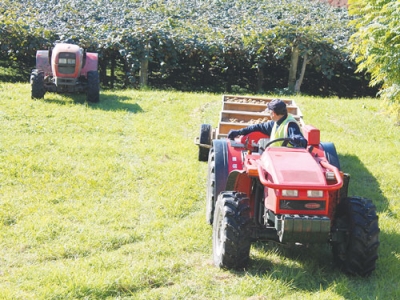 Growers are usually compliant with spray rules but in some areas, a little extra care is appropriate.
Bay of Plenty Regional Council staff are encouraging open dialogue between kiwifruit growers and their neighbours as the kiwifruit spray season starts this month.
Bay of Plenty Regional Council senior pollution prevention officer John Morris says that growers are usually compliant with spray rules but in some areas, a little extra care is appropriate.
"The Bay of Plenty Regional Air Plan requires orchard owners or contractors to notify the neighbours of any adjoining properties within 50 metres at least 12 hours before spraying and no more than 20 days in advance.
"This year we've also encouraged growers and industry representatives to develop extra guidelines for spray timing and notification near schools and other sensitive public areas at Te Puna, in response to concerns raised by the local community there," Morris says.
Hydrogen cyanamide, often known by the brand name Hi Cane, is sprayed by growers onto their kiwifruit vines at this time of year to increase the number of fruit on the vines, promote bud break and encourage earlier and shorter flowering.
"Generally neighbours like to be notified about Hi Cane spraying so they can take extra precautions such as moving stock, keeping pets inside, or going elsewhere while the spray is being applied. Road users, including pedestrians and cyclists, also have a right to be warned; especially when spray is being applied to orchards that adjoin public roads near schools, bus stops or sports fields and at times of high pedestrian flow," Morris says.
The Regional Air Plan requires spray warning signs to be displayed on the road boundary of any affected orchard at least 24 hours before sprays are applied. Signs are to be removed by the applicator when the spray area is safe for re-entry.
"Kiwifruit growers are part of the community. If everyone works together to look out for each other we can keep building on the great work that's been done over the past few years to improve spray management. Unsafe or un-notified spraying should be reported to the Regional Council's Pollution Hotline on 0800 884 883. The hotline is staffed 24 hours a day, seven days a week," Morris says.
Where any worker in the kiwifruit industry is mistreated, we expect the authorities to take action.

Kiwifruit growers are watchful but remain optimistic as concerns around the potential effects of the El Niño weather pattern this season.
Farms across the upper North Island are trialling different pasture mixes as part of a research programme that aims to build greater resilience into farming systems.
More signs of a booming kiwifruit sector.
After delivering a strong financial year, rural trader PGG Wrightson says the coming months will depend on customer confidence and weather.


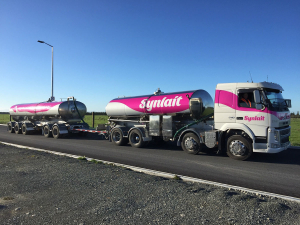
Synlait has swung to second-half profit as operations stabilise, but the dairy processor still posted a $75.4m annual loss.

LIC shareholders have elected a new North Island representative to the co-operative's Board, along with five representatives to its Shareholder Reference Group (SRG), following the company's Annual Meeting held in Invercargill.
Farmers across parts of Southland and South Otago are continuing to deal with difficult conditions after a prolonged run of wet weather, with pressure building around feed supply, stock management, pasture damage, farm infrastructure and everyday workloads.
Federated Farmers says it welcomes Labour's commitment to reviewing the Sharemilking Agreements Act, calling on other major parties to do the same.
For Canterbury dairy farmers Sian Meijer and Rick Wobben, wearable technology has become one of their most valuable on-farm tools - helping manage 1850 cows across an expansive, high-performing dairy operation while improving efficiency, mating outcomes and day-to-day decision making.
Fonterra has unveiled its annual results for the 2026 financial year, posting $27 billion in revenue and close to $20 billion returned to New Zealand farmer owners and unit holders.




OPINION: The same mainstream media muppets that brought you Jacindamania in 2017 have been flat out pimping for the Opportunities…
OPINION: Your old mate reckons the atrocious way farmers in the UK are treated by their lords and masters in…