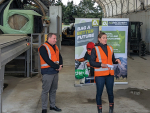
New Rural Recycling Scheme to Replace Voluntary Farm Plastics Programmes by 2027
Environment Minister Nicola Grigg has announced details of a new rural plastics recycling scheme.




 increase font size
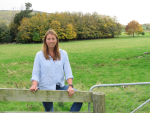
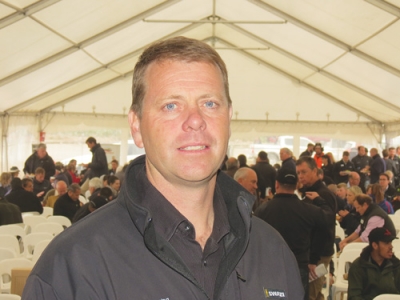 Ngai Tahu Farms Ltd chief executive Andrew Priest.
Ngai Tahu Farms Ltd chief executive Andrew Priest says all farmers should be embracing and adopting the sustainability measures his organisation is committed to.
Sustainability practices should not be regarded as a cost, but as a benefit, he says.
He was addressing a field day Ngai Tahu staged recently as a finalist in this year's Ahuwhenua Trophy competition to determine the top Maori dairy farm in NZ. Ngai Tahu is one of three finalists.
Ngai Tahu's farms Te Ahu Patiki and Maukatere, located near Oxford, Canterbury, were formerly forest, now cleared. The farms are irrigated from the Waimakariri River.
At the field day about 300 people heard that Ngai Tahu is moving to ensure its dairying farming is sustainable. Its projects include placing lyscimeters around the property to accurately measure environmental factors.
"This is based on a concept of tikanga (culture) which says you can do things well and you can do things right, but there is difference between doing that and the 'right thing'," Priest told Rural News.
"What I mean is we could do our farm environmental plans and we could meet our consents. But we want to go further than that; we want some of these projects onfarm to go above and beyond what we are required to do."
He believes if the wider dairy industry adopts the sustainability measures developed by Ngai Tahu it will be more competitive and will resonate well with international markets and make the NZ sector more competitive.
Irrigation is the key to the success of Ngai Tahu's farming operations near Oxford, especially given the land has only recently been converted to dairying and is of poor quality.
Ngai Tahu Farming Ltd chair Gill Cox referred to the business's profitability, achieved responsibly. It takes marginal land and turns it into productive land. Ngai Tahu people farm the land as good corporate citizens for NZ and helping NZ's productivity.
"We harness the water, use it responsibly, treating it as having real value and being a scarce resource we use in the most efficient way," Cox explains. "Many people, especially those from urban areas, see irrigation water linked to dairying only, and dairying has been linked to the word 'dirty'. But irrigated land [is not used only] for dairying."
Ngai Tahu has a lot of land, much of it unsuitable for dairying. For example, it has 30,000ha in high country stations and a new block it's developing at Balmoral, likely for beef farming. Long term Ngai Tahu will look at horticulture and cropping options, Cox says.
"[We respect] the land, using it productively for the benefit of Ngai Tahu and other people and for the overall benefit of the NZ economy."
Environment Minister Nicola Grigg has announced details of a new rural plastics recycling scheme.

Almond hulls sourced from Australian orchards may have the potential to help New Zealand cows reduce emissions, boost milk yield and lower input costs.
The Government is introducing a new nationwide rural recycling scheme that will significantly increase the recovery of farm plastics from March next year, Minister for the Environment Nicola Grigg announced today.
Climate, nature and animal wellbeing make up Fonterra's refreshed sustainability roadmap released last week.
Developed in Australia and launched in 2021, John Deere’s See & Spray Select System uses camera-based green-on-brown technology to identify living green plant matter in fallow paddocks and apply herbicide only where it is needed.


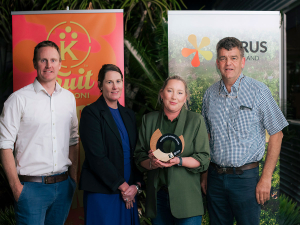
New Zealand's citrus growers were challenged to build their future on the value embedded in their fruit rather than the volume they produce, at Citrus New Zealand's annual gathering in Gisborne on 17 September.
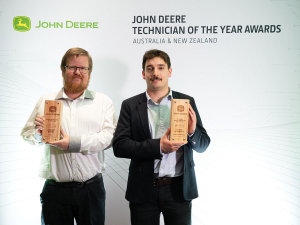
Leading John Deere technicians and apprentices from New Zealand and Australians were recognised at the recent sixth annual JD Technician of the Year Awards, held in Brisbane.
In Dacre, near Invercargill in New Zealand’s South Island, Bruce Dinnington is running a dairy operation unlike any other.
A free online platform aggregating governance vacancies across rural and regional New Zealand has been launched.
Environment Minister Nicola Grigg has announced details of a new rural plastics recycling scheme.
Agricultural drone operators say that a government decision to allow lower-risk drone work without certification won’t lower standards but drive innovation and efficiency.




OPINION: The same mainstream media muppets that brought you Jacindamania in 2017 have been flat out pimping for the Opportunities…
OPINION: Your old mate reckons the atrocious way farmers in the UK are treated by their lords and masters in…




