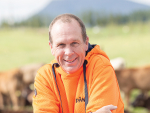
Pāmu FY26 Report: Profit More Than Doubles to $113m
Pāmu has released its FY26 Integrated Annual Report, reporting a Net Operating Profit of $113 million, more than double the $49 million recorded in FY25.




 increase font size
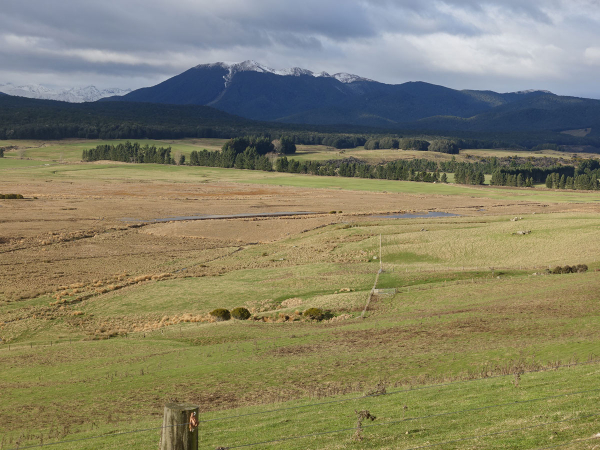 Pāmu has reached the 10,000-hectare milestone, with the registration of five blocks on Dale Farm in the Te Anau Basin.
Pāmu is celebrating a significant milestone in its on-farm biodiversity protection and restoration programme, with over 10,000 hectares of important native habitat now protected in perpetuity with QEII covenants.
QEII covenants (also known as open space covenants) provide permanent legal protection for areas of significant natural, cultural and landscape value.
Pāmu has reached the 10,000-hectare milestone, with the registration of five blocks on Dale Farm in the Te Anau Basin. Dale Farm is a 2,549ha sheep and beef farm in the Upukerora Ecological District.
Pāmu chief executive Mark Leslie says the co-operative aims to be a leader in integrated sustainable land use protecting and restoring the natural world.
He says QEII covenants are a tangible way Pāmu can ensure stewardship of natural assets and the protection of lands and waterways for New Zealand.
"Over 10,000 hectares of QEII covenants is a milestone to celebrate,” he says. “We also have another 6,000 hectares under covenants with the Department of Conservation and other bodies.”
“This approach along with forests on steep hill country and waterway fencing and riparian planting all add up – enabling us to nurture and enrich the land on which we farm. It’s about balancing our performance and the environment for the benefit of generations to come,” says Leslie.
Native vegetation cover in the Upukora district today is much reduced, due to past burning and clearance of large areas of forest, shrubland and tussock land.
The QEII covenants on Dale Farm and other surrounding Pāmu farms are significant as they protect some of the few remaining areas of primary and secondary forest, wetlands, and transitional zones still present in the district.
The Dale Farm covenants protect the habitats of several acutely and chronically threatened indigenous species, including the Nationally Endangered Central Otago roundhead galaxias and At Risk – Declining species such as South Island robin, slender wine sedge, matagouri, and manuka.
Pāmu has a longstanding partnership with the QEII National Trust that has seen a total of 236 covenants put in place on 58 farms, protecting 10,126 hectares in total.
QEII Trust representative Mark Sutton has worked closely with Pāmu for over two decades and says the strong relationship between QEII reps, Pāmu farm managers and Pāmu staff in Wellington has been key to the success.
“Pāmu recognised the need to protect areas of biodiversity on their properties, and putting robust legal protection over these areas underscores their commitment to protect and care for them in perpetuity,” says Sutton. “Their approach, protecting entire sub-catchment systems for future water quality and biodiversity connectedness, is a major achievement.”
“The working relationships developed in my time with Pāmu environmental managers, the late Gerry Soanes and now Gordon Williams, and the farm managers themselves, have been key in securing the 236 covenants so far,” he says.
Pāmu environment manager Gordon Williams says having a biodiversity strategy has assisted the process.
“The strategy has three key pillars: identify all biodiversity worthy of protection; protect it; and enhance it. That has been, and will continue to be, my mantra,” says Williams.
“Both our farm teams and QEII Trust reps are passionate supporters of the process and take much pride in protecting these areas, for the benefit of future generations. The job isn’t done yet, although I do have most of the last few areas for consideration in my sights,” he says.
Each of the Pāmu covenants on Dale Farm, much like the rest of the country, are fenced to a stock-proof standard, giving the areas support to improve to a more representative state. Fencing in the Te Anau Basin is often jointly funded by Pāmu, the Waiau Trust, and QEII.
Pāmu has released its FY26 Integrated Annual Report, reporting a Net Operating Profit of $113 million, more than double the $49 million recorded in FY25.

Minister of Conservation Hon Tama Potaka has appointed Susan O'Regan as Chair of the Queen Elizabeth II National Trust (QEII) for a three-year term.
A partnership between state-owned enterprise Pāmu (Landcorp Farming Limited) and charity Meet the Need is putting more than quality New Zealand beef into food bank parcels this year.
State farmer Pamu has delivered its strongest operating result on record.
Beef+Lamb New Zealand and the Ag Emissions Centre have launched a new research project aimed at helping beef farmers reduce methane emissions without impacting productivity or profitability.


Waikato milk processor Tatua has again declared a record milk payout to farmer shareholders, leaving other processors in the dust.
A Labour-led Government won’t be bringing back the controversial freshwater rules of 2020.
National’s much-touted free trade deal with India featured in the Rural Issues Debate at Mystery Creek, Hamilton on Wednesday night.
New Zealand's 2026-27 freshwater fishing season has opened, with anglers encouraged to head to rivers and lakes over the coming days as conditions look favourable across much of the country.
Central Otago District Council (CODC) has voted against a plan to spread treated sewage sludge from Cromwell and Alexandra on farmland near Lauder, a decision Federated Farmers says reflects strong opposition from rural residents.
Pāmu has released its FY26 Integrated Annual Report, reporting a Net Operating Profit of $113 million, more than double the $49 million recorded in FY25.




OPINION: The same mainstream media muppets that brought you Jacindamania in 2017 have been flat out pimping for the Opportunities…
OPINION: Your old mate reckons the atrocious way farmers in the UK are treated by their lords and masters in…




