
Election Year Curse?
OPINION: The coalition Government seems to have chickened out when it comes to live animal exports by sea.




 increase font size
 Two animal welfare groups are calling for the continuation of a ban on live exports.
Animal rights organization, SAFE says the government needs to maintain the ban on live exports.
A year ago this week, the ban was implemented by the previous government in a move that proved controversial.
SAFE chief executive Debra Ashton says that while the anniversary of the ban should be a cause for celebration, it has been overshadowed by the possibility of its reversal.
“The ban on live export was a response to years of advocacy and public outcry against the inhumane treatment of animals during transportation,” Ashton says. “It was a recognition of the inherent cruelty and suffering inflicted upon animals subjected to long-distance transport under often deplorable conditions.”
“We are urgently calling on the coalition to uphold the ban, recognizing the irreversible harm that lifting it would inflict on animal welfare and New Zealand’s international reputation,” she says.
A petition by former chair of the National Animal Welfare Advisory Committee John Hellstrom and supported by SAFE and the SPCA, has garnered more than 33,000 signatures since its launch in March, something SAFE says underscores widespread public support for maintaining the ban.
“The live export ban is a testament to New Zealand’s commitment to compassion and ethical treatment of animals,” Ashton says. “Reversing it would not only be a grave mistake but also tarnish our reputation as a global leader in animal welfare.”
SAFE isn’t alone in its opposition to a reversal of the ban, with SPCA chief scientific officer Dr Arnja Dale saying many farmers are in support of the ban.
“Government would have the public believe that any opposition to their plan is anti-farming,” Dale says. “It’s about animal welfare and farmers agree.”
Dale says the SPCA has requested for the Government to provide a business case or cost benefit analysis in support of the practice of live export, but she says the government claims not to have it.
“We have also asked to see the official advice provided to the Minister from MPI on the process for reintroducing live exports by sea. The Government refuses to share it,” she says.
“New Zealand farmers work tirelessly to provide good animal welfare evolving and safeguarding standards that are envied abroad. Why would anyone want to undermine that premium?”
Waikato dairy farmer, Chris Falconer has signed the petition and says that scrapping the ban is a step backward for farmers.
““Scrapping the ban is a backward step for farmers and farmers have enough trouble being associated with forward steps,” he says.
“My farm is my business so the first lens I apply is does it compromise our values – not is it financially viable - does it compromise our values and if it does – it’s a nonstarter,” Falconer says.
“It’s an animal welfare issue,” he says. “Not a political one.”
OPINION: The coalition Government seems to have chickened out when it comes to live animal exports by sea.
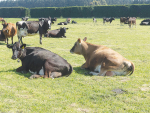
Lincoln University Dairy Farm will be tweaking some management practices after an animal welfare complaint laid in mid-August, despite the Ministry for Primary Industries (MPI) investigation into the complaint finding no cause for action.
OPINION: A mate of yours truly has had an absolute gutsful of the activist group SAFE.
OPINION: An animal activist organisation is calling for an investigation into the use of dairy cows in sexuallly explicit content posted on social media and adult entertainment subscription site OnlyFans.
OPINION: Should there be an inquiry into virtual fencing technology for cows?



Ravensdown shareholders have elected Jane Montgomery and Kate Acland to the Ravensdown Board for three-year terms, following a closely contested director election.
Federated Farmers says new legislation replacing the Resource Management Act will cut red tape, unlock investment and help grow New Zealand's export-led economy, after the Planning Bill and Natural Environment Bill passed their third reading in Parliament yesterday.
Leading figures from the major political parties will be questioned on their primary sector policies at the Rural Issues Debate at Mystery Creek Events Centre, Hamilton, on 30 September.
OPINION: Have a plan in place now!
Beef + Lamb New Zealand (B+LNZ) says it welcomes the passage of the Natural Environment Bill and Planning Bill, calling the bills a positive step for sheep and beef farmers.
A spate of southerly winds bringing cold temperatures has presented challenges for Taranaki dairy farmers.




OPINION: The same mainstream media muppets that brought you Jacindamania in 2017 have been flat out pimping for the Opportunities…
OPINION: Your old mate reckons the atrocious way farmers in the UK are treated by their lords and masters in…




