
Four Candidates Confirmed for Fonterra Board Election
Four candidates have been confirmed for two director positions on Fonterra’s board.




 increase font size
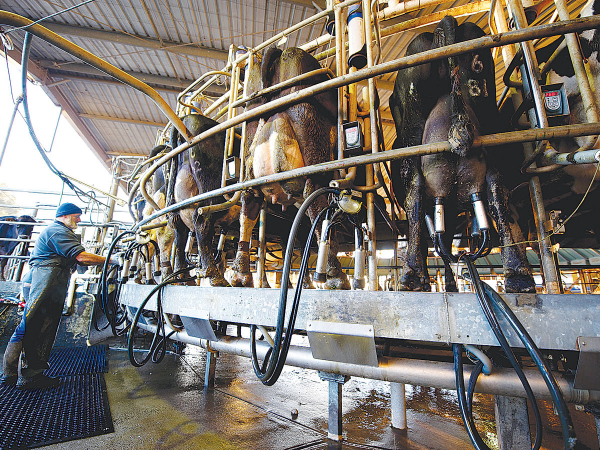 The report claims that Fonterra's planned capital restructure would mean for the average dairy farm producing 176,000 kgMS per year - a loss of around $360,000 annually.
Fonterra's planned capital restructure could see the co-operative's share price slump to $2/share - shaving $4 billion off the shareholders' balance sheet.
That's the claim of a report prepared for Fonterra rival Open Country Dairy. Consulting firm Castalia was hired by Open Country to look at the implications of Fonterra's recent capital restructure.
The report claims that for the average dairy farm producing 176,000 kgMS per year, this would mean a loss of around $360,000. The report was made public as Fonterra and the Government discuss final approval by Parliament.
Fonterra believes its new capital structure will attract more suppliers, ensure better utilisation of assets and help the co-op deliver a higher milk price to farmer shareholders.
Fonterra's competitors, including Open Country, could be forced to match the co-operative's milk price to retain shareholders. The NZ milk supply has peaked and competition for raw milk is intensifying.
Castalia says the restructure shifts wealth from farmers to Fonterra.
Fonterra has rejected the Castalia report.
In a statement to the NZ Stock Exchange, Fonterra director capital markets, Simon Till, says the co-operative disagrees with the report and a number of its conclusions - including the assertion that protections for a fair milk price will be eroded and that the restructure will cause Fonterra's milk price to increase.
"Fonterra also notes that Castalia estimates Fonterra's future share price on the basis of possible dividends up to 2030 but appears to assume that Fonterra has zero value at the end of 2030.
"Fonterra considers this to be a misleading approach to valuing its shares," Till says.
"The report contains no perspectives not previously considered by Fonterra and discussed with shareholders in the lead up to the 2021 vote."
Fonterra's share price has weakened since the capital structure was approved in December last year - down from $3.13 to $2.90 last week.
Jarden head of research Arie Dekker also questions the $2/share reference point used by Castalia. He notes that Fonterra is currently generating earnings per share of 30c and a 20c/share dividend.
Dekker says the co-operative hopes to increase earnings and dividends over the next ten years with meaningful investment to support that.
"Even in the absence of meaningful dividend growth, discounting divideds currently supported by earnings results in a share value well above the suggested $2," he says.
He also notes that Fonterra plans to return $1 billion capital to shareholders and that the proposed capital structure plans will not change the way in which the milk price is set.
"The level of independence in the setting of the milk price has long been an area of debate in the industry.
"The level of independent oversight was reviewed recently with a ministerial appointee added to the milk price panel," Dekker adds.
"Despite the questions, we remain of the view that the robustness of the milk price has been supported over the last two decades by the increase in independent processing capacity put in place in NZ."
Four candidates have been confirmed for two director positions on Fonterra’s board.
A record farmgate milk price and strong global demand is laying the foundation for continued growth of organic dairy farming in New Zealand.
Waikato milk processor Tatua has again declared a record milk payout to farmer shareholders, leaving other processors in the dust.
Fonterra has unveiled its annual results for the 2026 financial year, posting $27 billion in revenue and close to $20 billion returned to New Zealand farmer owners and unit holders.
Fonterra Co-operative Group has confirmed the independently assessed candidates standing for election to its board in 2026.


A major move is about to get underway to improve the quality and viability of dairy beef and cattle in NZ.
Veterinarians say changes to the code of welfare for dairy cattle provides a positive foundation for improved cattle welfare across the country.
Today, 15 October, is the International Day of Rural Women, which recognises rural women’s contribution to farming, communities and the environment.
Global dairy giant Lactalis has integrated its Australian operations with the Mainland Dairy consumer business it acquired from Fonterra earlier this year.
After almost two decades of sharemilking, saving and building equity, Aaron and Marcia Flay this year realised their long-held dream of settling on their first dairy farm.
Good medium to long term prospects for NZ beef, especially in the US, has heighted the focus on various initiatives to capitalise on this situation.


OPINION: The same mainstream media muppets that brought you Jacindamania in 2017 have been flat out pimping for the Opportunities…
OPINION: Your old mate reckons the atrocious way farmers in the UK are treated by their lords and masters in…




