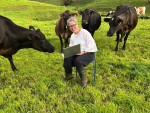
International Day of Rural Women: Two DairyNZ Farmers’ Stories
Today, 15 October, is the International Day of Rural Women, which recognises rural women’s contribution to farming, communities and the environment.




 increase font size
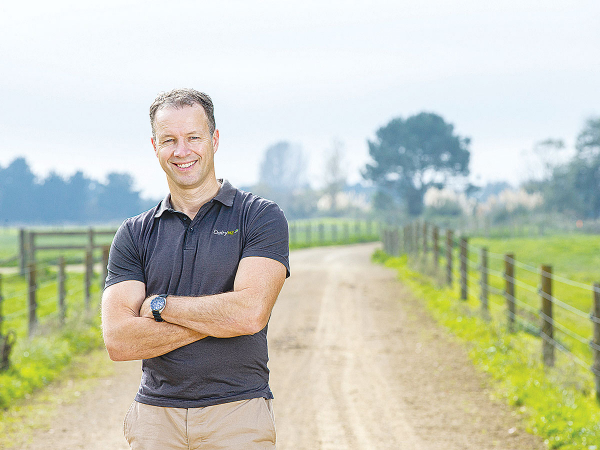 DairyNZ chief executive Tim Mackle says the current global economic climate is unique.
Farm costs are rising rapidly and farmers are being urged to manage cows, staff and finance efficiently to stay profitable.
A record milk price is helping buffer rising input costs, but DairyNZ warns that high cost pressures are expected to continue for at least the next couple of years.
Last month, Statistics New Zealand released its latest farm expense price index. It showed large inflation costs for farmers over the past two years.
Four key farming costs have experienced inflation of more than 10% between 2019 and 2021. These include fertiliser with a 15.9% increase; cultivation, harvesting and animal feed with an 18.9% increase; electricity with a 21% increase; and stock grazing costs which are 36.9% higher this year than they were in 2019.
"The current economic climate is unique and reflects a combination of forces that seldom come together," says DairyNZ chief executive Tim Mackle.
"International demand for food, especially dairy products, remains strong, but poor production and high input prices worldwide have limited supply. This means world food prices are currently around a third higher than the same time last year."
DairyNZ principal economist Dr Graeme Doole says shipping prices, on average, are around 600% higher than two years ago due to port delays and closures relate to Covid-19. The prices of ocean freight out of Asia have grown substantially, increasing by 15 times between March and August last year.
Urea prices alone have jumped by 67% since August 2020, due to greater global demand for nitrogen. FAO figures suggest nitrogen use has only increased by 1.33% since 2020, but higher seasonal demand, coupled with international supply issues, have pushed up urea prices globally.
"In New Zealand, China is our largest supplier of urea for fertiliser and there is huge competition with other industries for shipping containers," Doole says. "China has also tightened exports of urea to assure supplies in its domestic market, so this is having a real impact on international markets, and of course our dairy farmers are also grappling with those extra costs."
Domestic PKE prices are currently at their highest since the start of 2020 at $391 per tonne.
New Zealand is also seeing higher fuel prices due to less crude oil production and exports.
Doole says New Zealand can expect to see strong global demand and a high price for farming inputs, especially feed and fertiliser, for some time.
"While the payout may fall in the near to mid-term compared to where forecasts are now, it will likely stay above its long-term average of $6.50 next season," he adds.
Only two farm cost categories have deflated since 2019, these are lime, down 4.5%, and interest rates down 13.4%.
Lower interest rates between June 2019 and November 2021, coupled with higher payouts, have helped to reduce debt in the dairy sector by $3.58 billion. However, business lending interest rates are starting to increase as the Reserve Bank seeks to control inflation across the economy, making debt more expensive to issue.
Farmers will start facing more scrutiny from banks over the next few years as environmental policies start to affect profitability and banks introduce tighter lending criteria to meet new legislative requirements.
"While we do have challenges ahead, efficiency is the low hanging fruit, and we know that at least 50% of farmers can produce the same amount of milk with fewer inputs like feed, nitrogen and fertiliser," he says.
Today, 15 October, is the International Day of Rural Women, which recognises rural women’s contribution to farming, communities and the environment.
The first major update to the Dairy Cattle Code of Welfare in more than a decade has been released, marking what DairyNZ describes as an important step in ensuring animal welfare standards continue to evolve alongside scientific evidence and on-farm realities.
Have a plan in place for your cows and staff.
DairyNZ deputy chair Cameron Henderson has been re-appointed unopposed for another term.
OPINION: The stats speak for themselves.



National’s pledge to introduce 19 new national standards shows the party is serious about getting Wellington out of farming, Federated Farmers says.
The National Party’s policies to make it easier to grow fresh vegetables, secure reliable water and energy and simplify farm planning are practical changes that will give growers the confidence to invest, according to Horticulture New Zealand (HortNZ).
Fonterra Co-operative Group chief financial officer Andrew Murray has resigned to take up a role outside the dairy giant.
A major move is about to get underway to improve the quality and viability of dairy beef and cattle in NZ.
Veterinarians say changes to the code of welfare for dairy cattle provides a positive foundation for improved cattle welfare across the country.
Today, 15 October, is the International Day of Rural Women, which recognises rural women’s contribution to farming, communities and the environment.




OPINION: The same mainstream media muppets that brought you Jacindamania in 2017 have been flat out pimping for the Opportunities…
OPINION: Your old mate reckons the atrocious way farmers in the UK are treated by their lords and masters in…




