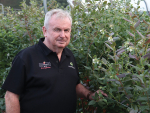
Blueberries Could Be NZ's Next $150m Horticultural Export
Blueberries have the potential to become a major horticultural export, earning up to $150 million within the next three to five years.




 increase font size

EVERY MOVE to slow the reform of the Resource Management Act makes business more uncertain for commercial fruit and vegetable growers.
Horticulture New Zealand (HortNZ) now fears for the future of growers all over the country who struggle with resource management issues hanging over their businesses every day.
"These are growers who tell us that complying with resource management issues for their businesses feels like a death by a thousand paper cuts," HortNZ president Julian Raine says.
"The announcements made by the Maori Party and Peter Dunne removing support for the reforms just show what the potential is in this country for the environment to be used as a political football."
HortNZ considers it is a core priority for growers to improve environmental practice, but believes the Resource Management Act (RMA) needs to do a better job of requiring councils to consider the full implications of their decisions on the whole society.
More collaboration is essential if money is not to be wasted in the courts and in consent processes.
"Simply too much cost is generated by resource consenting for things like water takes, building new packhouses, putting in seasonal accommodation facilities and defending a host of land use restrictions targeted at preserving the 'amenity' created by growers and farmers, that others enjoy.
"This affects their communities, their jobs, businesses, livelihoods and the viability of safe local food supply at a reasonable cost.
"Right now, the law does not require them to do this and we are seeing growers leave the industry demoralised and beaten by the way the law does not support them.
HortNZ is aware of growers who have spent hundreds of thousands on resource consents before they are granted, and of many who simply do not try because of the experience of others.
HortNZ uses 30% of the levy funding it raises from all commercial fruit and vegetable growers to represent grower interests in regional and district council planning.
Right now HortNZ is working on 48 different plans generated from councils, including awaiting a High Court decision on the Horizons Regional Council's 'One Plan'.
While HortNZ is happy to see environmental values recognised, often the same inclusiveness is not endorsed by environmental groups.
"This goes beyond environmental quality matters and strikes at the heart of creating jobs for kiwis and maintaining food production at a reasonable cost to the community," Raine says.
Blueberries have the potential to become a major horticultural export, earning up to $150 million within the next three to five years.

New Zealand needs to make sure that it continues to focus on its own food security, according to HortNZ board member and blueberry grower Dermott Malley.
According to a progress report on the Aotearoa Horticulture Action Plan (AHAP), New Zealand's horticulture sector is making real progress on the big issues facing growers.
Agriculture Minister Todd McClay has admitted that a scheme bringing workers from Pacific nations to work on orchards has become too hard to navigate but says changes are coming.
A pause on Waikato Regional Council's (WRC) plan change that sets new freshwater rules for farming could be announced in the coming weeks.



OPINION: As the general election approaches, political parties are churning out policies in the hope of attracting more votes.

An LIC bull, Tronnoco AR Sadio-ET S3F, bred by Tony and Keri O'Connor of Tronnoco Farming Co Ltd near Timaru, has won the 2026 Mahoe Trophy.
With forecasters advising El Niño conditions will develop through winter and strengthen into spring and summer, Ballance Agri-Nutrients is encouraging farmers and growers to think ahead about nutrient planning and be prepared to work around challenging weather conditions.
In the past, much has been made of the concept of farm to fork, but an Australian expert in food science and marketing with experience in the dairy industry, Dr Angeline Achariya, says the reverse of this slogan is critical to win modern day consumers.
Efficiency is the big one because it tracks back into what is done on farm.
A four year trial has reaffirmed that mixing plantain into dairy pastures can help reduce nitrogen losses to freshwater while maintaining milk production and profitability, say researchers.





OPINION: The same mainstream media muppets that brought you Jacindamania in 2017 have been flat out pimping for the Opportunities…
OPINION: Your old mate reckons the atrocious way farmers in the UK are treated by their lords and masters in…