Susan O'Regan Appointed New Chair of QEII National Trust
Minister of Conservation Hon Tama Potaka has appointed Susan O'Regan as Chair of the Queen Elizabeth II National Trust (QEII) for a three-year term.




 increase font size
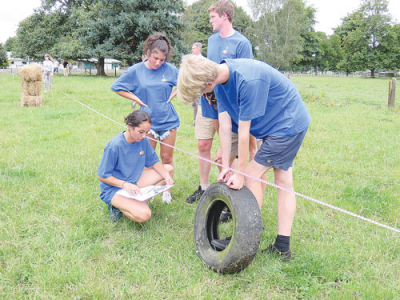 Rabobank agri-leadership participants Jacinda Baker Singh, Monique Mellow, Anthony Foy, Luke Geange take part in an exercise during the course.
Many young people, especially from urban backgrounds, don’t realise how broad the opportunities are in the rural sector, says Waikato University agribusiness and marketing student Celine Walters.
Exposing youngsters to such opportunities is a key aspect of the 2018 Rabobank Waikato Agri-Leadership programme, funded by the bank to grow future agri-leaders in New Zealand.
Walters (20) organised the four day programme held from January 22-25.
The 26 high school students involved, mainly from Waikato and some from Auckland, were via a selection process.
“Many were from city and urban backgrounds,” Walters explained to Rural News.
“We were trying to get more people, including those not from rural backgrounds, to understand the vast opportunities available.”
Guest speakers and industry leaders like Environmental Protection Agency chief scientist Jacqueline Rowarth and KPMG’s Ian Proudfoot opened their eyes to what they could achieve in the sector. Visiting various organisations, including Fonterra and Plant and Food, was also enlightening.
“A lot of the students did not realise how broad the sector was and the opportunities it offered in engineering, science and business. It is not just typical farming.”
Seeing the automated production processes at Fonterra was “incredible” as was the contrasts between different industries.
And the contrasting viewpoints of various speakers were also an eye opener.
“It was interesting to see how such high calibre people had such differing opinions on where New Zealand agribusiness should stand in future,” says Walters.
Proudfoot spoke on ‘vaping food’ – experiencing food through vapourising it – and more personalised value-add products tailored to individuals rather than selling the one product to hundreds of thousands of people.
“He definitely got people thinking. Agribusiness leader Traci Houpapa with her opinions on synthetic meats got people thinking as well.”
The students had a debate that night on the proposal that ‘Synthetic proteins are the future of New Zealand’. The team that argued they were not the future won the debate. “But it was interesting to hear the pros and the cons,” says Walters.
Starting the third year of her four year degree, Walters is not from a rural background herself, but was born overseas and raised in Tauranga. She had “never really been on a farm” before the leaders’ programme.
She says she was inspired into agribusiness and marketing studies when Rowarth, formerly professor of agribusiness at Waikato, came and talked in Tauranga.
“That made me realise the potential of agriculture and I wanted to be part of something so major in NZ,” Walters told Rural News. “She also got me interested in the management of this programme.
“She tried to inspire all the students and this generation so we can, in future, help solve the current challenges.”
Walters says primary industries offer many opportunities that young people, particularly those from urban areas, don’t know about. “That is why I wanted to become a part of it.”
She intends to work on a farm before finishing her studies.
Minister of Conservation Hon Tama Potaka has appointed Susan O'Regan as Chair of the Queen Elizabeth II National Trust (QEII) for a three-year term.
Farms across the upper North Island are trialling different pasture mixes as part of a research programme that aims to build greater resilience into farming systems.
Chinese beef trade quotas and a looming suspension of Brazilian beef imports into the European Union are expected to reshape global beef trade flows over the remainder of 2026, with implications for New Zealand exporters, according to Rabobank's Q3 Global Beef Quarterly report.
New Zealand consumers are paying more for beef mince than ever before, with the average retail price now sitting above $24 per kilogram, according to Rabobank.


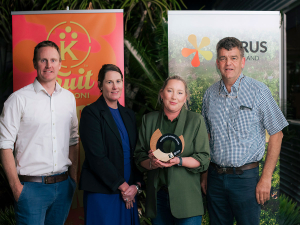
New Zealand's citrus growers were challenged to build their future on the value embedded in their fruit rather than the volume they produce, at Citrus New Zealand's annual gathering in Gisborne on 17 September.
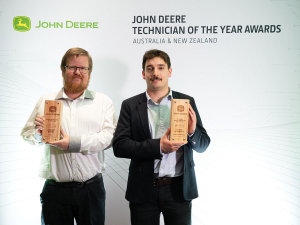
Leading John Deere technicians and apprentices from New Zealand and Australians were recognised at the recent sixth annual JD Technician of the Year Awards, held in Brisbane.
In Dacre, near Invercargill in New Zealand’s South Island, Bruce Dinnington is running a dairy operation unlike any other.
A free online platform aggregating governance vacancies across rural and regional New Zealand has been launched.
Environment Minister Nicola Grigg has announced details of a new rural plastics recycling scheme.
Agricultural drone operators say that a government decision to allow lower-risk drone work without certification won’t lower standards but drive innovation and efficiency.





OPINION: The same mainstream media muppets that brought you Jacindamania in 2017 have been flat out pimping for the Opportunities…
OPINION: Your old mate reckons the atrocious way farmers in the UK are treated by their lords and masters in…