
Biosecurity Ranked Top Priority In KPMG Agribusiness Agenda 2026
According to new research, industry leaders have ranked world-class biodiversity as the number one priority for the 16th year in a row.




 increase font size
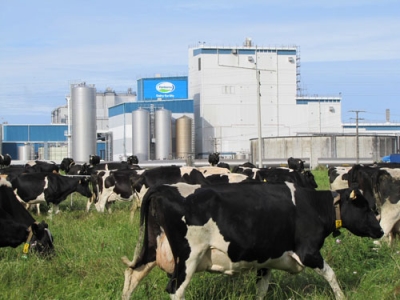 Current oversupply is causing price problems for the dairy sector.
The payout to dairy farmers next season is unlikely to improve over the current season, says KPMG’s global head of agri, Ian Proudfoot.
Fonterra’s payout for the current season is $4.50/kgMS.
Proudfoot told Rural News that while he doesn’t have the models to calculate a payout, current knowledge and experience suggests little change is likely.
The problem for the dairy industry is one of supply and demand and this will not get back into equilibrium within the next 18 months, he says. There would need to be a major disruption to global supply – such as a big drought somewhere – to force up the price of corn in the US and so put pressure on the US system to cut back production.
The last time the farmgate milk price dropped in New Zealand and then bounced back the next season was due to adverse weather. But Proudfoot says the present crisis is not due to weather, but more fundamental changes in the supply and demand in the market.
“To my mind there is a couple of key drivers. In the US corn is incredibly cheap and farmers are strategically making decisions to grow their share of the global traded dairy market. And the political situation in Russia is not getting any easier.
“Consequently that is having quite a play in how products are moving. Then there is this whole change in the quota system and, regardless of what you will think happens in the average season – the markets we compete in will see more product.”
Also, in China domestic milk production is increasing and the Chinese Government is encouraging local businesses to use domestic production.
All things considered, the growth in the world market is not fast enough to absorb this extra production. Proudfoot believes the farmgate price for milk will be set low – advance payments of $3 to $4 – which means farmers will have to budget very carefully.
Rationalisation possible
Proudfoot says the current crisis in the dairy industry could trigger some rationalisation in the medium term.
He says a report by the Canterbury Development Corporation on high value land in the region suggested conversion from dairy back to other land uses was possible, but not in the short term.
And DairyNZ has commented that farmers operating high input systems will not immediately be able to scale down their operations because they are effectively locked into the system they have.
Proudfoot says conversion away from dairying will not happen soon because many of those in dairying have a lot of debt and there haven’t been enough good seasons to clear this debt.
“But when you look out five to ten years or more, people will be looking at what is going to be the high value product opportunities in the market. We will see some innovation in what people grow.
“If you go back 10, 15 or 20 years, dairy wasn’t our largest category of exports. It’s become that because the market was there.”
Proudfoot reckons investors will be looking at innovative foods and proteins and any new opportunities. One obvious example is sheep milking and expanding goat milking. There are opportunities to use land differently.
“Two or three poor dairy seasons in a row will start to focus people’s attention on whether dairy is their long term best use of land,” he says.
According to new research, industry leaders have ranked world-class biodiversity as the number one priority for the 16th year in a row.

Biosecurity remains the top priority for agribusiness leaders, according to KPMG’s 2025 Agribusiness Agenda released last week.
Biosecurity remains the top priority for agribusiness leaders, according to KPMG's 2025 Agribusiness Agenda released last week.
OPINION: In the same way that even a stopped clock is right twice a day, economists sometimes get it right.
OPINION: Noted economist and self-promoter Cameron Bagrie took one look at KPMG's recently released Financial Institutions Performance Survey on banks and zeroes in one key number that suggests banks are so risk averse in this country that they are probably stifling growth and innovation.


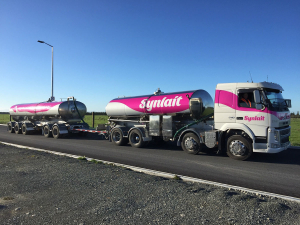
Synlait has swung to second-half profit as operations stabilise, but the dairy processor still posted a $75.4m annual loss.

LIC shareholders have elected a new North Island representative to the co-operative's Board, along with five representatives to its Shareholder Reference Group (SRG), following the company's Annual Meeting held in Invercargill.
Farmers across parts of Southland and South Otago are continuing to deal with difficult conditions after a prolonged run of wet weather, with pressure building around feed supply, stock management, pasture damage, farm infrastructure and everyday workloads.
Federated Farmers says it welcomes Labour's commitment to reviewing the Sharemilking Agreements Act, calling on other major parties to do the same.
For Canterbury dairy farmers Sian Meijer and Rick Wobben, wearable technology has become one of their most valuable on-farm tools - helping manage 1850 cows across an expansive, high-performing dairy operation while improving efficiency, mating outcomes and day-to-day decision making.
Fonterra has unveiled its annual results for the 2026 financial year, posting $27 billion in revenue and close to $20 billion returned to New Zealand farmer owners and unit holders.




OPINION: The same mainstream media muppets that brought you Jacindamania in 2017 have been flat out pimping for the Opportunities…
OPINION: Your old mate reckons the atrocious way farmers in the UK are treated by their lords and masters in…




