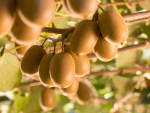
NZKGI Responds to Migrant Worker Exploitation Reports
Where any worker in the kiwifruit industry is mistreated, we expect the authorities to take action.




 increase font size

How growers can produce top-tasting kiwifruit and make top dollar was the theme of a recent Zespri field day in Hawkes Bay. This is a critical time for growers as decisions made now will determine the size and value of their crop.
HAWKES BAY is commonly known as the fruit bowl of New Zealand.
Apples are grown there, as are grapes, kiwifruit and horticultural crops. The region is also known for its dry summers and Indian summer-type autumns, which actually suit kiwifruit – and of course apples.
The field day was held at John Ericksen’s 20ha kiwifruit block at Puketapu, west of Napier. In Bay of Plenty, there are ‘focus’ orchards where growers hold regular discussion groups and hear from Zespri staff firsthand on the issues affecting the industry. There is no such orchard in Hawkes Bay. However, Shane Max, who runs Zespri’s orchard productivity centre, says it was decided timely to hold a special day in the region, especially given the fact there are some very big volumes of Gold3 (gold kiwifruit)coming on.
He told Rural News they wanted to make sure every growing district had all the knowledge available to do everything to achieve high dry matter and therefore good tasting fruit. Max says springtime is a critical time in the production of kiwifruit with the focus being on getting the crop load, pollination and spray programmes right.
“A consumer’s first concern is always what the fruit tastes like, rather than how big it is,” he explained. “We want growers – particularly with the big volumes we’ve got coming – to focus on high taste fruit and less focus on how big the fruit is. So taste is more important than size in the dynamics of the market.
“A key to this is making sure there are enough, but not too many, flowers for the bees to pollinate. We suggest growers target around 60 flowers per square metre.”
Max says growers need to fully understand the challenges of pollinating kiwifruit – especially if it is growing under netting to protect the fruit from hail. Growers, he says, need to have a good understanding of beehive management.
“They have to make sure they have got the appropriate number and quality of beehives coming because kiwifruit require a very high number of bees to achieve good pollination. With kiwifruit you have a male and female vine and to achieve good pollination you have to have a very high stocking rate of bees that will go in and visit a male flower and then visit female flowers in the same flight,” he explains.
Max says it’s important that growers connect with the market and understand that what they do in the orchard impacts on the credibility of the kiwifruit industry. He says with the rapid growth of Gold3, which replaced the Hort16A variety after it succumbed to the Psa disease, , its marketing success will hinge on providing Zespri high quality, high taste fruit. “The market feedback is very strong and growers had to must adapt their practices to grow a high taste product. Zespri pays a premium for high taste fruit so there is financial incentive,” he explains. “But the win is when the consumer buys a nice piece of Zespri kiwifruit, pays a high price for it, likes it and comes back and buys another one. So the real benefit is increasing sales in the high priced markets,” he adds.
Where any worker in the kiwifruit industry is mistreated, we expect the authorities to take action.

Kiwifruit growers are watchful but remain optimistic as concerns around the potential effects of the El Niño weather pattern this season.
More signs of a booming kiwifruit sector.
“The first conviction we need as wine drinkers,” Andrew Jefford once wrote, “is to spend less time thinking about grape varieties, and pay more attention to the places wines come from and the cultures in which they come into being. All the grape variety does is present a spectrum of opportunities.”
When Kate Lattey and Koldo Santamaria planted their dream vineyard in 2020, they knew they wanted to work with winemakers who shared their passion for wine “and expressing what the land can say”.


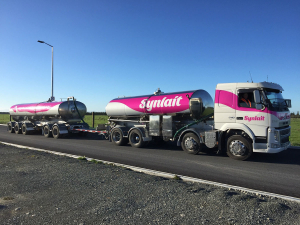
Synlait has swung to second-half profit as operations stabilise, but the dairy processor still posted a $75.4m annual loss.

LIC shareholders have elected a new North Island representative to the co-operative's Board, along with five representatives to its Shareholder Reference Group (SRG), following the company's Annual Meeting held in Invercargill.
Farmers across parts of Southland and South Otago are continuing to deal with difficult conditions after a prolonged run of wet weather, with pressure building around feed supply, stock management, pasture damage, farm infrastructure and everyday workloads.
Federated Farmers says it welcomes Labour's commitment to reviewing the Sharemilking Agreements Act, calling on other major parties to do the same.
For Canterbury dairy farmers Sian Meijer and Rick Wobben, wearable technology has become one of their most valuable on-farm tools - helping manage 1850 cows across an expansive, high-performing dairy operation while improving efficiency, mating outcomes and day-to-day decision making.
Fonterra has unveiled its annual results for the 2026 financial year, posting $27 billion in revenue and close to $20 billion returned to New Zealand farmer owners and unit holders.




OPINION: The same mainstream media muppets that brought you Jacindamania in 2017 have been flat out pimping for the Opportunities…
OPINION: Your old mate reckons the atrocious way farmers in the UK are treated by their lords and masters in…




