Damien O’Connor Criticises Budget 2026 as ‘Miserable’ for Rural New Zealand
A miserable budget that didn’t deliver much for anyone.




 increase font size
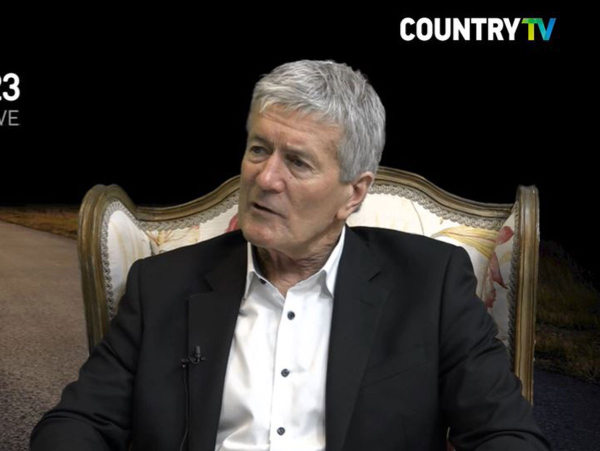 Agriculture Minister Damien O'Connor
Agriculture Minister Damien O’Connor says the Government is not to blame for on-farm pressures.
In an interview with Country TV, O’Connor claimed the country is facing huge inflationary pressures from the Russo-Ukrainian War.
“The Ukraine War has put huge pressure on fuel costs and that has flowed right through. We’ve seen that and many other countries are fighting inflation just as we are as well,” O’Connor says.
He says that while on-farm inflation has been going up recently, it is coming back down but inflation is also coming down at a time when commodity prices are also dropping.
The most recent Food Price Index from the Food and Agriculture Organisation of the United Nations saw a 2.1% drop in the index.
Meanwhile, Rabobank senior agriculture economist Emma Higgins is predicting further discomfort for dairy farmers in particular this season due to a “sluggish” Chinese market.
O’Connor says that while it’s clear there is frustration with the situation farmers find themselves in, “the Government’s a good kicking horse”.
“You can just flog us, but, actually, we’re not to blame for many of the pressures on-farm,” he says.
“I think farmers need to be honest about that because, if they think a change of government’s going to relieve all that pressure, they’re dreaming.”
O’Connor says there are underlying structural issues that need to be addressed and rectified.
“It won’t happen overnight, we’ve got to take a long-term approach to this because it’s really important that future generations in farming can firstly see the incentive to get into it and then stay in it,” he says.
He claims that some of the rhetoric from different organisations and political parties is not helping the situation, especially when it comes to that feeling of pressure on farm.
“It’s a lot of rhetoric and it’s been run up by organisations like Fed Farmers under Andrew Hoggard, now Andrew’s stepped up and he’s going to stand for ACT which is fine, but some of the messages that they were sending to farmers were quite inaccurate,” O’Connor claims.
He points to the saga surrounding Intensive Winter Grazing (IWG) practices as an example of that.
The issue of IWG practices has long been an issue in the farming community, with some vets claiming the practice results in poor animal welfare and at least one activist taking to the skies to seemingly spy on farmers’ practices.
Late last year, new regulations surrounding the practice came into effect but concerns around slope stipulations and the number of consents required still remained.
Since then, Otago Regional Council says it had issued 207 consents for the practice by early May.
O’Connor says that after changes to winter grazing regulations were made, there was a view from some in the industry that as many as 10,000 consents would be required.
“We’ve had 300 consents issued. Most of the farm practice has improved dramatically, so we’ve got there, but saying that there was a need for 10,000 did cause a panic across the farming sector. That was unnecessary and so there’s a lot of rhetoric out there which is causing alarm among farmers.”
It should be noted that O’Connor’s 300 consents figure does not allow for the number of farms issued permitted activity status by regional councils like Environment Southland because they could not meet the slope criteria but had met all other requirements of the consent process.
Get the full story on Country TV, tonight at 7.30pm on sky channel 81, or get 30 days FREE access, online and on demand at www.countrytv.co.nz.
A miserable budget that didn’t deliver much for anyone.

National's decision to ‘dribble’ information about the NZ/India to Labour contributed to the delay in it deciding to supported the FTA.
When it comes to international trade, politicians from all sides of the aisle are united, says Labour's trade spokesman Damien O'Connor.
Federated Farmers have reiterated their support for the coalition Government to abolish the present ban on the live export of animals.
As the coalition Government mulls new regulations to reinstate the export of live animals, debate is heating up between supporters and opponents.

OPINION: Farmers are being put on notice by the Green Party.
As dairy farmers lock in plans for the upcoming mating season, a partnership between Fonterra and Silver Fern Farms has been formed with the aim of making it simpler to create additional value from calves not entering the replacement herd.
Farmers can now get a more reliable view of pasture covers across their farm, thanks to a combination of three data sources.
A warning to dairy farmers not to expect the same good conditions that they experienced last season, has been issued by a leading farm consultant.
South Waikato farmer Bas Nelis is always interested in fine-tuning his business to improve results.
On a farm in Tikorangi, North Taranaki, Brent Stevenson is sharemilking 1,400 cows.




OPINION: Central Hawke's Bay farmer Mark Warren recently told the Hawke's Bay Times it's time for a conversation about allowing…
OPINION: A nation that relies as heavily as NZ does on functional global shipping lanes will have to do its…