Winston Peters' FTA attacks 'just dog whistling' - Jacobi
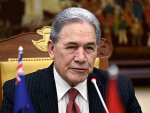
International trade expert Stephen Jacobi says Winston Peters' objections to the Indian free trade deal are "ridiculous".




 increase font size
 Trade expert Stephen Jacobi.
The global trade situation is going from bad to worse, says trade expert Stephen Jacobi.
Some horticultural products are now competing against American goods, fruit in particular, he told Rural News. Competition has increased in Taiwan and Southeast Asia. American product that would have gone to China is flowing into other markets.
The latest tariff round takes us into new territory because they will affect consumer products, says Jacobi, a former trade commissioner.
“We are seeing more New Zealand sectors reporting disruption of different kinds. Not necessarily all bad, there are new market openings for NZ in China because the Americans are being displaced. But we are now facing greater competition with American products in other markets. That is accumulating.”
The biggest worry is the trade war is starting to impact global economic growth which is now slowing down.
“That can’t be good for us. Although exports have been holding up extremely strongly and have been quite resilient, nevertheless the international outlook is worsening by the week,” Jacobi said.
“We don’t want to get into complete dismay and talk ourselves into recession. I am not suggesting that. But all the indicators of trade and growth are starting to be pared back and that isn’t positive at all.”
He believes NZ needs to be monitoring the situation very carefully.
“We need to be hedging our risks as well as we can, we need to be diversifying into other markets. But these are things that companies do at the best of times. It is a matter of greater attentiveness and really watching what is happening in the global situation.
“But at the level of the trade war there is not a lot we can do to persuade the Americans or the Chinese to be more accommodating.”
We are having some effect in Geneva at the World Trade Organisation trying to find a resolution to those particular problems but these are long term issues and not immediate trading opportunities.
Stephanie Honey, NZ International Business Forum associate director, says the trade war is spawning an increasingly chaotic global trade environment.
The old conventions about sticking to the rules and using quiet diplomacy to solve problems seem to be unravelling.
“That is not good news for NZ or for the many other small states in the global system.”
A main impact of the trade war is the “corrosive effect of uncertainty”.
The IMF has estimated that trade war uncertainty will cause the world economy to contract by $455 billion next year, or 0.5% of global GDP. Other estimates put it at $585b by 2021.
“World trade flows are back in negative territory, and so, last month, was NZ’s export growth,” said Honey.
Deeply worrying for NZ is the effect the trade war seems to be having on global mindsets.
“The global prosperity of the last 30 years has been grounded in clear operating assumptions: global rules exist, everybody follows them, if there are problems there are fair mechanisms to solve them, and the system works best when countries engage constructively. In the current belligerent climate those assumptions seem less self-evident.”
Honey says the “tit-for-tat of August” between China and the US is riding a global trend towards increasing protectionism.
“So far this year, 618 new harmful trade measures have been introduced, but the US and China are together responsible for less than one quarter of these,” Honey said.
“This is deeply worrisome for NZ, along with the many other small and medium size states in the global system.”
Keeping our heads down and ‘sticking to our knitting’ won’t be enough, she says.
Hard Brexit on the cards
It looks like the United Kingdom is heading for a hard Brexit on October 31, says Jacobi.
However the situation is so uncertain and confusing it is very hard to work out exactly what is going to happen.
Much has been done to prepare NZ exporters.
“Certainly our institutional arrangements that we could put in place on veterinary agreements and all those sorts of things are all done.
“We are as well prepared as we can be but who knows exactly what will happen.”
International trade expert Stephen Jacobi says Winston Peters' objections to the Indian free trade deal are "ridiculous".

Leading trade analyst Stephen Jacobi has rubbished claims that New Zealand could have got a better free trade deal with India if it had prolonged the negotiations.
New Zealand’s top business leaders are urging the US Administration to review “unjustified and discriminatory tariffs” imposed on Kiwi exporters.
The recent squabble between the Cook Islands and NZ over their deal with China has added a new element of tension in the relationship between China and NZ.
The world is now amid potentially one of the most disruptive periods in world trade for a very long time.


Farms across the upper North Island are trialling different pasture mixes as part of a research programme that aims to build greater resilience into farming systems.
Election years are always a concerning time for farmers, according to DairyNZ chair Tracy Brown.
The Ballance Farm Environment Awards are coming to the West Coast of the South Island.
Most dairy regions around the country have had a pretty good season so far says Tracy Brown.
Rural leader Mark Hooper has been appointed as an independent director to the NZPork board, bringing extensive farming, governance and advocacy experience to the role.


OPINION: The same mainstream media muppets that brought you Jacindamania in 2017 have been flat out pimping for the Opportunities…
OPINION: Your old mate reckons the atrocious way farmers in the UK are treated by their lords and masters in…