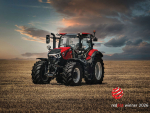
Case IH Unveils Next Generation Puma Series Tractors
Case IH has unveiled its redesigned next generation Puma Series tractors, said to offer improvements in connectivity, operator comfort, fuel efficiency and drivability.




 increase font size
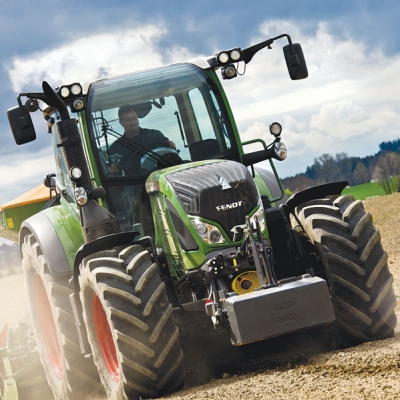
They are the big black knobbly things that stop the bottom of the tractor hitting the ground.
They’re expensive and a right pain in the proverbial when they get a puncture.
The relationship most people have with their tyres, on a tractor or a car, is at best indifferent. But it’s time to love your tyres.
The importance of correct tyre and sufficient ballasting cannot be underestimated. If you take the time to accurately set the two there is potential to save thousands of dollars in operating costs such as reduced fuel consumption, less tyre wear and ultimately less time in completing jobs.
Firstly there’s the question of ballast. This has been argued over at many demo days and rural watering holes for many years. Do you go for water? Or add some cast iron?
Water may be cheap and convenient, but liquids prevent tyres from flexing, so they can’t do the job they were designed to do. It also makes it difficult to accurately set tyre pressures as the volume of air in the tyre is greatly reduced.
Cast iron makes tractors difficult to handle and once added is left on for good, although front linkages with large front weights are more easily removed when not needed.
The most important aspect of ballasting to understand is how much the tractive weight of the tractor/implement combination needs to be to do the job. For many years the standard figure for cultivation work has been about 45-55kg/hp. So a 200hp tractor should be set up to have an operating weight of about 10 tonnes. Less weight might be needed for higher speeds. And, indeed, an increase for slower speeds causes high draught loadings. Some tweaking may be needed for variable conditions such as implement weight, soil conditions or topography.
With the optimal operating weight determined, we then need to accurately weigh each axle. This will allow us to understand where, and how much, ballast we might need to apply. In general, most manufacturers will work on a split of 60% rear and 40% front static loadings, which will shift nearer to a 50/50 ratio as the draught loadings are applied.
Once the operating weight is determined the hard work is over. We know what the load will be on each axle and how many tyres are being used on each axle – either singles or duals.
So now the manufacturers’ data will tell us what tyre pressure is required to carry the operating load. Tyre makers’ websites are a great resource for determining load capacities and recommended pressures for their products.
We will need to adjust tyre pressures for different jobs – maybe decrease them for cultivation, or increase them for road work. The most important tool will be an accurate tyre gauge.
In the end, it all adds up to money. A recent test in Europe showed some interesting results. Two identical 190hp tractors were fitted with 7-leg sub-soilers with a 3m operating width.
Time and fuel consumption were measured over a 200m straight line course.
Tractor 1 ran with the recommended tyre pressure of 0.9 bar (13 psi); tractor 2 ran with a tyre pressure of 1.4 bar (20.5 psi).
Tractor 1 completed the course in 2mins 28 seconds and used 1.2L fuel; tractor 2 completed the course in 2mins 36 seconds and used 1.4L fuel.
The 200m run represented an area of about .058ha, so taken over this area, tractor 2 would use about 3.4L/ha more fuel – at today’s price ($1.22/L) costing $4.15/ha.
The other key point noted was that tractor 1 showed about 10% wheel-slip, whereas tractor 2 showed nearer 20%.
The modern tractor tyre is high-tech, developed over many years by manufacturers who have spent millions on R&D. The correct set-up and utilisation will directly affect your bottom line, so it might be time to fall in love with your tyre rep.
Inflation, deflation take a toll
As a general rule, over/under inflation can result in a number of problems
Over-inflation
Under-inflation
Case IH has unveiled its redesigned next generation Puma Series tractors, said to offer improvements in connectivity, operator comfort, fuel efficiency and drivability.
Continental was founded in 1871, offering solutions for vehicles, machines, traffic and transportation.
A total of 108,800 tractors were registered across Europe in the first six months of 2022, with 31,900 tractors of 37kW (50 hp) and under and 76,900 of 38kW and above.
Alliance, a part of Yokohama Off-Highway Tyres, has introduced a new tyre, especially designed for pivot irrigation systems.
Choosing the right new vineyard tractor is an important decision, given the major capital outlay.



New Zealand's 2026-27 freshwater fishing season has opened, with anglers encouraged to head to rivers and lakes over the coming days as conditions look favourable across much of the country.
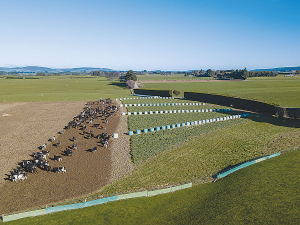
Central Otago District Council (CODC) has voted against a plan to spread treated sewage sludge from Cromwell and Alexandra on farmland near Lauder, a decision Federated Farmers says reflects strong opposition from rural residents.
Pāmu has released its FY26 Integrated Annual Report, reporting a Net Operating Profit of $113 million, more than double the $49 million recorded in FY25.
Meat Industry Association data, released alongside the Red Meat Sector conference in Wellington, shows export value climbing across the US, China, UK and Canada.
Applications are set to open for the 2027 Zanda McDonald Award, a trans-Tasman award recognised for identifying and fast-tracking talented young leaders in agriculture and agribusiness.
The Royal New Zealand College of General Practitioners (the College) and Hauora Taiwhenua Rural Health Network are calling for investment in a proposed new training pathway for rural GPs, warning that many rural practices are struggling to recruit while a large share of the existing workforce nears retirement.



OPINION: The same mainstream media muppets that brought you Jacindamania in 2017 have been flat out pimping for the Opportunities…
OPINION: Your old mate reckons the atrocious way farmers in the UK are treated by their lords and masters in…




