McRae Wins Southern South Island B+LNZ Director Vote
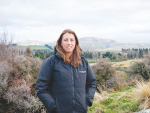
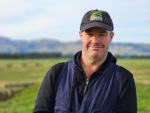
Matt McRae, a farmer from Mokoreta in Southland who runs a sheep, beef and dairy support business alongside a sheep stud, has been elected to the Beef +Lamb NZ Board as a farmer director.




 increase font size

PLANNING AND flexibility are the key to succeeding despite severe weather and economic disasters, attendees at a Northland Beef and Lamb field day were told recently.
Beef and Lamb New Zealand held a resilience, risk management and flexibility field day on Philip and Julia Leaf’s sheep and beef farm 40 minutes south west of Dargaville.
AgFirst Northland consultant and key speaker Bob Thomson says recent droughts and ongoing price pressures have increased calls for this type of discussion, especially in Northland where there’s been a major drought at some point every year for four years running. To make matters worse, last year’s dry coincided with a massive price drop.
At the field day an Agresearch social science study of Northland Farmers was presented. It found most farmers were concerned about drought and storms, but falling prices were a bigger concern. Responses included comments such as: ‘Don’t talk to me about prices’ and ‘Fix up the prices if you want to do something useful.’
An option to mitigate price risk is to diversify stock classes and land uses. Farm forestry is an avenue particularly worth exploring, suggests Thomson, especially on steeper land which may not generate the same level of production as gentle or moderate terrain. A 2011-12 study of three farms in Northland found steep hill only carrying 6 stock units/ha and yielding 150kg/cwt/ha, less than half the productivity off the rest of the farms, he noted.
In contrast to that study, a 22ha section of the Leaf’s property should bring in $443,796 over 25 years, or $807/ha/year, without nearly the same input and management costs as raising cattle. However, poor access could severely limit profitability of forestry so blocks of at least 10ha close to roads are preferable.
Another way of reducing risk from price volatility is to carry a range stock types and classes, cutting the impact of a price drop in any one class. It’s another strategy the Leafs have deployed with great success, says Thomson.
The farm’s 500ha of pasture carries 580 cattle and 3083 sheep. Of the cattle, 125 are spring born bulls and 454 autumn born bulls. The shift to autumn born bulls last season was so a more animals would be finished in time for the Christmas kill with its typically better prices. Spring bulls are stocked on a cell system, complementing the whole farm grass policy, says Leaf. The range of stock classes means “there’s always something ready to go,” if drought or price movements indicate a tweak to the plans would be beneficial.
Thomson says planning is as important an element of resilience as having flexibility in the system. Making early decisions, while there are still plenty of options at what could turn out to be the start of an extreme weather event or price downturn, if often a better bet than waiting.
Matt McRae, a farmer from Mokoreta in Southland who runs a sheep, beef and dairy support business alongside a sheep stud, has been elected to the Beef +Lamb NZ Board as a farmer director.
The red meat sector is poised for a strong rebound this season, with export receipts forecast to top $10 billion and farm profitability to almost double.
Progeny testing at Pāmu’s Kepler farm in Southland as part of Beef + Lamb New Zealand’s Informing New Zealand Beef programme is showing that the benefits of hybrid vigour could have a massive impact on the future of beef breeding.
Beef + Lamb New Zealand (B+LNZ) has reiterated calls for New Zealand to revise its methane targets after the Government's "disappointing" announcement of its revised Nationally Determined Contribution (NDC).
Beef + Lamb New Zealand (B+LNZ) is having another crack at increasing the fees of its chair and board members.

OPINION: Farmers around the country are welcoming the proposed reform of local government.
A move to boost farmer uptake of low methane emitting sheep is underway.
Silver Fern Farms has tackled the ongoing war-induced shipping challenges to mideast markets by airlifting 90 tonnes of chilled New Zealand lamb and beef to the United Arab Emirates.
The primary sector is leading New Zealand's economic recovery, according to economist and researcher Cameron Bagrie.
Dairy industry leader Jim van der Poel didn't make much of the invitation he received to the recent New Zealand Dairy Industry Awards in Rotorua.
Farmers around the country are going public big time, demanding their local district, city and regional councils come up with amalgamation plans that meet the needs of rural communities and don't allow urban councils to dominate.


OPINION: The old saying 'a new broom sweeps clean' doesn't always hold up, if you ask the Hound.
OPINION: This old mutt went to school to eat his lunch, but still knows the future of the country, and…