Let Farmers Decide What They Farm
OPINION: Well, the silly season is upon us and all us politicians are running around shaking babies and kissing hands, or maybe the other way around.




 increase font size
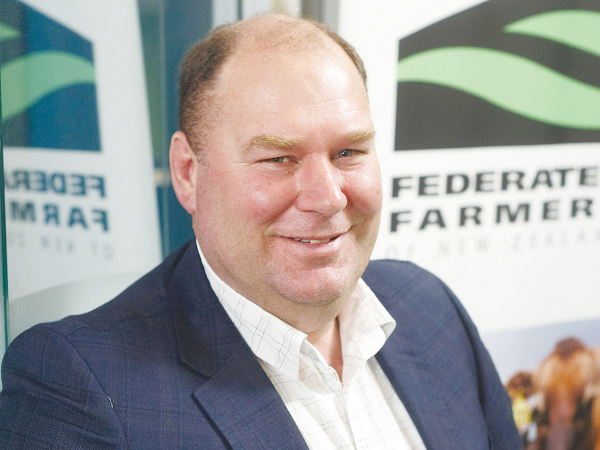 Fed Farmers national president Andrew Hoggard.
OPINION: The recent open letter on He Waka Eke Noa has sparked a lot of discussion, and that’s a good thing.
We should always be open to debate whether we are doing the right thing. So much of the farm emission pricing discussions happened behind closed doors, meaning most farmers never got the chance to properly go on the journey to consensus between the 11 partners.
It’s also fair to say that things have changed since that farmer consultation, both inside and outside HWEN.
Inside HWEN, the final proposal to the Government was slightly different to that presented during consultation – for the better in my opinion, addressing many concerns we heard from our members.
Outside HWEN, a key thing that has changed is the counterfactual – i.e. ‘if it’s not HWEN then it’s the ETS’. In our own member survey, there was a higher number of respondents who favoured going with the farm level levy, as opposed to the processor levy, the ETS or just telling the Government to bugger off.
We heard loud and clear that a large reason for this view was due to concerns about the ETS ‘fallback’ option. Feds have constantly voiced opposition to the Government’s threat to bring agriculture into the ETS if HWEN does not work out.
In 2019 we called the ‘fallback option’ a show of poor faith. It has frustratingly further complicated an already complicated issue. Certainly, in our National Council deliberations, this weighed heavily on us – if Feds didn’t support HWEN, would we be held responsible for farmers going into the ETS?
However, I now question whether that ETS ‘fallback’ alternative is a likely outcome. Feds have always criticised bringing agriculture into the ETS, as designed at the processor-level in current legislation as unworkable, expensive, unscientific and a blunt tax on food production. We are increasingly not alone in saying this.
While there are aspects of the open letter that I am personally in agreement with, there are probably two aspects I disagree with.
Firstly, the call to farmers to question their Feds subscription. We cover a massive range of issues that affect farmers, and while you may not agree 100% with our stance on a singular issue at a certain point in time, I am sure I can point out nine others where you do.
Also, if you are upset about a certain issue, then the way to change that is to be more involved, not less.
The second aspect I would push back on is the conflation of the targets with HWEN.
The 2030 and 2050 methane reduction targets were set in the Climate Change Response Act, and quite frankly if we want changes to the targets it’s best done through that Act. Federated Farmers submitted that the targets should be based on what reductions are required for no additional warming to be caused by methane. This ‘no additional warming’ goal is the same as the goal set for long-lived gases.
Feds are advocating for methane to be treated the same on a warming basis as all other gases, a very reasonable policy. Using the best available science (including the science underpinning the GWP* metric) a 10% reduction in methane by 2050 adds no additional warming and is therefore ‘zero carbon’ equivalent.
There is a lot of talk about the need for farmer buy-in, but to achieve farmer buy-in farmers need to agree on both the ‘where’ (targets) and also the 'how' (HWEN).
Feds will continue to advocate for a mechanism of achieving targets in a way that is best for all our members and are open to their feedback, be they arable, beef, dairy or sheep.
Andrew Hoggard is national president of Federated Farmers.
OPINION: Well, the silly season is upon us and all us politicians are running around shaking babies and kissing hands, or maybe the other way around.

It was billed as a chance for all the political parties to woo the rural vote, but question marks hang over just how effective this was.
There's been widespread support from the primary sector for the Government's announcement on changes to freshwater farm plans that come under the Natural Environment Bill, which is now set to replace the existing RMA.
A pause on Waikato Regional Council's (WRC) plan change that sets new freshwater rules for farming could be announced in the coming weeks.
New Zealanders are being urged to be alert following a confirmed positive case of H5 bird flu this week.


Pāmu has released its FY26 Integrated Annual Report, reporting a Net Operating Profit of $113 million, more than double the $49 million recorded in FY25.

Meat Industry Association data, released alongside the Red Meat Sector conference in Wellington, shows export value climbing across the US, China, UK and Canada.
Applications are set to open for the 2027 Zanda McDonald Award, a trans-Tasman award recognised for identifying and fast-tracking talented young leaders in agriculture and agribusiness.
The Royal New Zealand College of General Practitioners (the College) and Hauora Taiwhenua Rural Health Network are calling for investment in a proposed new training pathway for rural GPs, warning that many rural practices are struggling to recruit while a large share of the existing workforce nears retirement.
Federated Farmers has called on Central Otago District Council (CODC) to drop or vote down a plan to truck sludge from Alexandra and Cromwell to farmland near Lauder, warning it would compound an "outrageous" situation created by a separate council's decision weeks earlier.
Synlait has swung to second-half profit as operations stabilise, but the dairy processor still posted a $75.4m annual loss.




OPINION: The same mainstream media muppets that brought you Jacindamania in 2017 have been flat out pimping for the Opportunities…
OPINION: Your old mate reckons the atrocious way farmers in the UK are treated by their lords and masters in…




