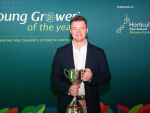
James Blair Named 2026 Young Grower National Champion
James Blair, an agronomist for AS Wilcox and the Pukekohe regional champion, has won the 2026 Young Grower national title.




 increase font size
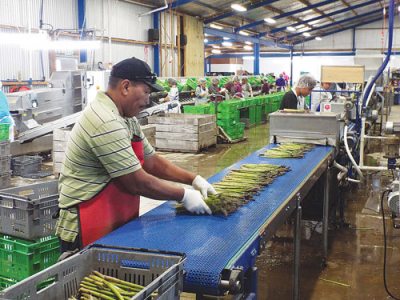 Horticulture NZ says it’s time to take a strategic and measured look at where we grow our food and to protect those regions.
OPINION: Horticulture New Zealand believes it is time to take a strategic and measured look at where we grow our food and protect those regions so that we can feed our future generations with fresh, healthy food.
We cannot take for granted that our fruit and vegetable growers can continue to feed NZ as well as generate increasing export returns.
As the organisation representing growers, HortNZ is talking to the Government about a food security policy. This would ensure access to appropriate growing land and adequate water to keep plants alive and growing. Land most suitable for horticulture is being squeezed by the need for more housing for a growing population, and all the infrastructure that goes with that.
NZ is also looking at how we might manage climate change. We need to get the balance right between climate change mitigation and the need to produce healthy food.
One of the weather patterns we are experiencing is concentrated rain followed by longer dry periods. This places pressure on water supply during dryer periods and causes problems from water over-supply during wet periods. Both rural and urban NZ are affected by these weather patterns. The environmental effects go from flooding at one extreme to very low river flows at the other.
If these patterns continue, methods and locations for growing fruit and vegetables may need to change, and it will become vital for us to store water to prevent excess flows during heavy rain and to provide water during dry periods. This water will be needed for people and animals and for crop survival so that we can feed ourselves.
In terms of food security, it will not be possible to permit undirected urban and lifestyle expansion into areas where sustainable food growing is possible. As a country, we will need to protect the current growing areas and to identify new areas; and there must be a spread of growing around NZ to ensure that during bad weather in one region, other regions can supply the required food.
To bring some evidence to the discussion, HortNZ commissioned Deloitte to look at Auckland’s food bowl – the Pukekohe hub – and report on its economic contribution to Auckland and the wider country, as well as its role in feeding NZers. The report – New Zealand’s food story: The Pukekohe hub – can be found on the HortNZ website.
Although this report is focused on the Pukekohe hub, it is a proxy for many other NZ towns and cities. The report gives facts, figures, analysis and modelling to use in submissions to central and local government.
Just one fact explains how important the Pukekohe hub is as a growing area for Auckland and all NZ: the Pukekohe hub is 3.8% of NZ’s vegetable and fruit growing area but produces 26% of the value. Pukekohe not only feeds Auckland, but at certain times during the year feeds NZ; this is because it is too cold, or perhaps too wet further south to grow some vegetables year-long.
We need growing to be spread around the country so that our domestic vegetable supply can be year-round. We also need to keep all the existing fruit and vegetable growing regions around NZ, and plan how we can keep feeding NZers into the future.
We are not asking for the earth, just enough earth to feed you.
• Mike Chapman is chief executive Horticulture New Zealand
James Blair, an agronomist for AS Wilcox and the Pukekohe regional champion, has won the 2026 Young Grower national title.
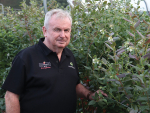
Blueberries have the potential to become a major horticultural export, earning up to $150 million within the next three to five years.
New Zealand needs to make sure that it continues to focus on its own food security, according to HortNZ board member and blueberry grower Dermott Malley.
According to a progress report on the Aotearoa Horticulture Action Plan (AHAP), New Zealand's horticulture sector is making real progress on the big issues facing growers.
Horticulture New Zealand’s Board has welcomed the re-election of grower-elected directors Alistair Petrie and Doug Brown.


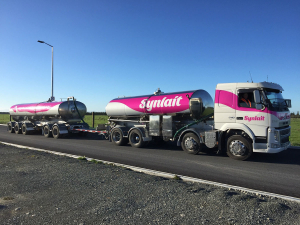
Synlait has swung to second-half profit as operations stabilise, but the dairy processor still posted a $75.4m annual loss.

LIC shareholders have elected a new North Island representative to the co-operative's Board, along with five representatives to its Shareholder Reference Group (SRG), following the company's Annual Meeting held in Invercargill.
Farmers across parts of Southland and South Otago are continuing to deal with difficult conditions after a prolonged run of wet weather, with pressure building around feed supply, stock management, pasture damage, farm infrastructure and everyday workloads.
Federated Farmers says it welcomes Labour's commitment to reviewing the Sharemilking Agreements Act, calling on other major parties to do the same.
For Canterbury dairy farmers Sian Meijer and Rick Wobben, wearable technology has become one of their most valuable on-farm tools - helping manage 1850 cows across an expansive, high-performing dairy operation while improving efficiency, mating outcomes and day-to-day decision making.
Fonterra has unveiled its annual results for the 2026 financial year, posting $27 billion in revenue and close to $20 billion returned to New Zealand farmer owners and unit holders.





OPINION: The same mainstream media muppets that brought you Jacindamania in 2017 have been flat out pimping for the Opportunities…
OPINION: Your old mate reckons the atrocious way farmers in the UK are treated by their lords and masters in…




