Milk Powder Prices Prop Up Farmgate Milk Price
Milk powder prices are keeping farmgate prices up, helping processors offset the dip in milk fat prices.



 increase font size
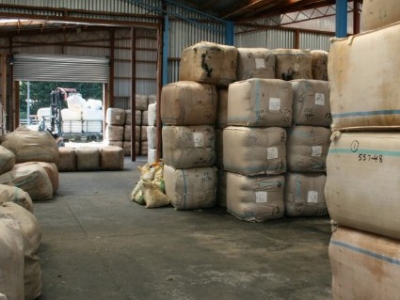
The weakening New Zealand dollar helped local prices this week with most types increasing by the corresponding currency change, says NZWSI general manager, John Dawson.
The weighted indicator for the main trading currencies was down 2.04% compared to the last sale on 9th July.
Of the 7,900 bales on offer from the South Island, 88% sold with types suitable for in the grease shipments coming under strong competition.
Dawson says that compared to the South Island sale on 25th June, Mid Micron Fleece 24.5 to 27.5 microns were firm to 1.5% dearer with 28 and 29 microns coming down 1 to 4%.
Compared to the last time it was offered, at the North Island sale on 9th July, Fine Crossbred Fleece remained firm with longer shear types up to 3% dearer.
Coarse Crossbred Fleece were firm to 2% stronger.
Coarse Shears 3 to 5 inches were up 1 to 2%, 3 to 4 inches 2.5 to 4.5% dearer and 2 to 4 inch and shorter, 2 to 3% dearer.
Long Oddments were nominally 2% dearer with short oddments ranging from 1% cheaper to 2% dearer.
There was widespread interest for the wide cross section of types available, with Chinese shippers the most active, supported by Australasia, Western Europe, Middle East and India.
The next sale on 23rd July comprises approximately 6,000 bales from the North Island, down 32% on anticipated roster due to poor weather delaying shearing.
Milk powder prices are keeping farmgate prices up, helping processors offset the dip in milk fat prices.

New Zealand wool is reaching new heights as air filtration companies move away from synthetic products to biodegradable alternatives.
Chinese beef trade quotas and a looming suspension of Brazilian beef imports into the European Union are expected to reshape global beef trade flows over the remainder of 2026, with implications for New Zealand exporters, according to Rabobank's Q3 Global Beef Quarterly report.
Will a stronger, more coordinated voice help rebuild confidence and improve returns in the wool sector?
Ballance Agri-Nutrients has released its latest fertiliser outlook, detailing some of the current global trends influencing fertiliser supply. Ballance head of procurement Shane Crean takes part in a Q&A in the report:


Farmgate lamb prices are down by 8%, beef cattle by 4.5% and farm expenditure up by 4.2%.
Kiwifruit growers are watchful but remain optimistic as concerns around the potential effects of the El Niño weather pattern this season.
Almond hulls sourced from Australian orchards may have the potential to help New Zealand cows reduce emissions, boost milk yield and lower input costs.
Striking a balance between meeting the needs of industry to speed up approval time for products but on the other hand ensuring that risks are properly assessed.
Surprised, humbled and quite thrilled. That’s the reaction of James Allen, one of the founding partners and now chief executive of AgFirst, on being made a life member of the Institute of Rural Professionals.

OPINION: The same mainstream media muppets that brought you Jacindamania in 2017 have been flat out pimping for the Opportunities…
OPINION: Your old mate reckons the atrocious way farmers in the UK are treated by their lords and masters in…