It's The Margins That Matter
OPINION: It appears to be difficult for people who haven’t tried to run a business to understand the difference between assets and cash.




 increase font size
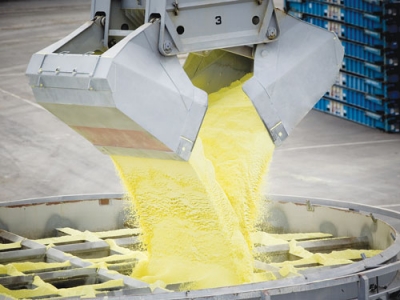 Fertiliser prices are tumbling due to weak demand and over supply.
Global fertiliser prices are slumping – good news for cash-strapped farmers.
Both the big fertiliser co-ops have cut prices of key fertiliser inputs from January 31.
Ballance and Ravensdown have cut urea prices by $50 to $525/tonne, DAP down $25 per tonne, sulphate of ammonia by $15 and potash by $10; the changes will flow through to product blends.
Ballance chief executive Mark Wynne says the move follows a global slump in fertiliser prices, driven by strong supply and soft demand.
"There's plenty of supply in the market at present, with extra production coming on stream and China switching from being an internal consumer of nutrients to an exporter. On the demand side, Brazil and India are both suffering from weakening currencies therefore lowering their fertiliser requirements."
The co-op has been supporting farmers with cash when it counts throughout the year – paying out rebates early, holding urea prices through spring and cutting prices in December.
"Our foreign exchange approach has helped us to offset the weaker New Zealand dollar. In a tough year like this, these price reductions will be good news for farmers and growers."
With recent rains in many regions there is a good opportunity for farmers to take advantage of the reduced prices and apply fertiliser now for feed production ahead of autumn.
Wynne says the price moves will likely flow through to a lower rebate payment than in recent years. "But we're confident we've done the right thing. Our aim is to consistently deliver our farmers and growers a strong return on their investment in our co-operative."
Ravensdown chief executive Greg Campbell says the price drops will be welcome news for customers.
"For a large dairy farmer in the grip of a payout downturn or a sheep and beef farmer dealing with drought or weaker returns, these price differences could mean thousands of dollars staying in their bank account. This is far more useful to our shareholders at this time than a large rebate cheque later in the year.
"We've been told consistently by our customers that they would prefer competitive pricing, money in their pocket, all-year value and a sensible annual rebate.
"Farmers are resilient and adaptable people, but it's not just up to them to manage their way through these tough times. We all play our part in the rural sector, challenging the status quo and asking how things can be done better," says Campbell.
Priceisright
Urea price down $50 to $525/tonne
DAP down $25/t
Ammonium sulphate down $15/t
Potash down $10/t.
OPINION: It appears to be difficult for people who haven’t tried to run a business to understand the difference between assets and cash.

Ballance Agri-Nutrients has released its latest fertiliser outlook, detailing some of the current global trends influencing fertiliser supply. Ballance head of procurement Shane Crean takes part in a Q&A in the report:
Ballance Agrinutrients chief executive Kelvin Wickham says despite a tough year, he is pleased the business has returned to profit.
OPINION: In the 1980s, concern was expressed in West Germany about the falling birth rate. Some simple analysis was performed by Professor Helmut Sies, physician and biochemist at Dusseldorf University. His letter ‘A new parameter for sex education’ was published in Nature in 1988:
Plan ahead and be patient. That’s the message to farmers and horticulturalists from the chairman of the NZ Agricultural Aviation Association, Kent Weir.



Outgoing Fonterra Co-operative Council chair John Stevenson says that it has been a privilege to represent the co-op's farmer shareholders.
New Plymouth-based Manuka honey exporter Egmont Honey has completed its acquisition of Taihape beekeeping business Tweeddale's Honey, with settlement finalised on Friday, 18 September.
Westpac NZ is calling on farmers and growers to start preparing now for the possibility of a dry summer, as likely El Niño conditions raise the risk of drought across parts of the country.
Fonterra Co-operative Group has confirmed the independently assessed candidates standing for election to its board in 2026.
Fonterra has revised its Farmgate Milk Price forecast for the 2026/27 season, lifting the midpoint and narrowing the range on the back of improving global dairy commodity prices.



OPINION: It seems Canterbury processor Synlait is still in the doldrums.
OPINION: Get offside with New Zealand First leader Winston Peters at your own peril.