Record final milk price for Miraka suppliers
Farmers supplying milk to Taupo-based processor Miraka are getting a 2024-25 season base milk price of $10.16/kgMS.




 increase font size
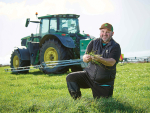
 Miraka Excellence Awards 1 Certificate Holders - representatives from Te Raparahi Trust including Phillip Samuels, Murray and Tracey Simpson, Craig Walker & Dave Bajoyo.
Miraka's insistence on sustainable farming practices has shown results in more farms winning honours in the recent Te Ara Miraka farming excellence awards.
“Since establishing the awards four years ago we’ve started to see significant change in on farm practices,” says Grant Jackson, general manager milk supply.
“We’re not just meeting the regulations, that’s mandatory for us. Rather we’re going over and above, to achieve excellence in animal welfare, sustainable land management, looking after employees and premium quality milk.”
Seventeen of 104 participating farms scored 90% or more and Te Raparahi Lands Trust took won the top prize with 100%. Only 10 farms reached 90% when the awards began four years ago.
Mandatory and optional excellence criteria apply to farms. Achieving the optionals will gain a farmer points and a payout higher than a market competitive base milk price.
“When Miraka first brought out the standards I thought they looked pretty challenging,” says top award winner Tracey Simpson of Te Raparahi Lands Trust.
“I was worried it was too much pressure for farmers and that we would never be able to meet all of them. But there’s a real change in the farming community, and we know strong environmental practices are good for the land and they make financial sense.”
The team at Te Raparahi Lands Trust have worked on a holistic farming approach for 10 years, says Phillip Samuels, Te Raparahi Lands Trust chairpman.
“For us it’s having shared goals and pushing ourselves to do more. Last year we used our incentive payment to purchase a new Halo monitoring system for our farms, which has been a great investment.
“Miraka’s approach is helping create a paradigm shift within New Zealand farming, to encourage farmers to start making positive changes.”
Each year Miraka is seeing more farmers grow and accelerate change within the programme, says Murray Hemi, Miraka’s Kaitiaki and GM environmental leader.
“At Miraka we value kaitiakitanga, we support decisions with a long
term view, we build resilience into our business and live our values while creating top quality dairy products.
“Our farmers are starting to see the value in our approach. It’s exceptional to have so many of our farms hitting high targets.”
Farmers supplying milk to Taupo-based processor Miraka are getting a 2024-25 season base milk price of $10.16/kgMS.
Open Country Dairy has finalised a deal to acquire 100% of Miraka.
Milk processors are either matching or beating Fonterra's record $10/kgMS opening forecast milk price as the 2025-26 season gets underway.
Māori-owned milk processor Miraka is looking for a new chief executive following the resignation of Karl Gradon last week.
The chief executive of Taupo-based dairy company, Miraka – Karl Gradon - has stepped down from the role for personal and family reasons.

For 15 years, Glenda Rees has travelled from Gore to Awarua, often several times a week, to keep watch over one of the country’s rarest birds.
With some farmers opposing a government-industry partnership set up to develop methane reducing products, one NZ company claims that it already has a product on the market.
During the nesting season, from September to December, industrious starlings can quickly build nests in the darker areas behind tractor and vehicle, usually close to hot engines, typically resulting in localised damage or in some cases complete write-offs.
The meat processing industry is much more collegial than it was in the past and is now more focused on common goals.
With the last couple of months having seen some potential tractor purchases put on hold with the impending election and continued input cost rises, year-to-date figures, ending September, has seen deliveries up around 5% over the same period in 2025, with a total of 2026 units.
Beef+Lamb New Zealand is calling for nominations for director roles in the Northern South Island and Northern North Island electoral districts.

OPINION: It seems Canterbury processor Synlait is still in the doldrums.
OPINION: Get offside with New Zealand First leader Winston Peters at your own peril.