BVD Control Begins Long Before You See A Problem
Bovine Viral Diarrhoea (BVD) is sometimes viewed as a dairy industry issue, but the reality is that the disease can have serious consequences for beef breeding herds as well.




 increase font size
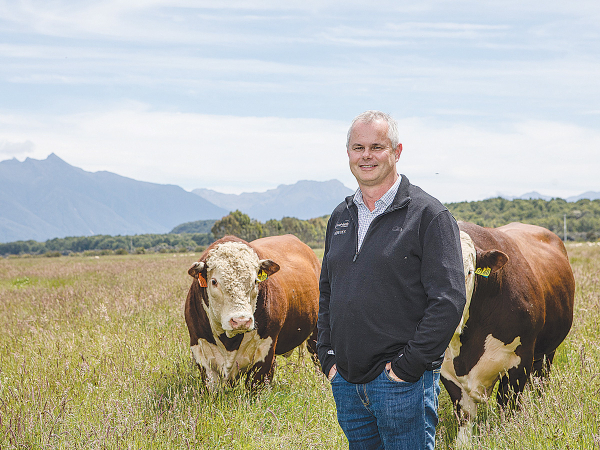 Jason Archer, genetics specialist at Beef + Lamb New Zealand (B+LNZ) and INZB science lead.
More than 50 bulls have been nominated as sires for use in the innovative Informing New Zealand Beef (INZB) programme’s upcoming mating season, the highest number since the across-breed progeny test was launched in 2020.
Angus, Hereford and Simmental breeders have nominated 52 bulls for the 2023-mating of the programme’s acrossbreed Beef Progeny Test (BPT).
“We’re really pleased with the positive response from breeders,” says Dr Jason Archer, genetics specialist at Beef + Lamb New Zealand (B+LNZ) and INZB science lead.
“It shows how serious farmers are about improving productivity and profitability in the beef sector. Ultimately, the BPT will play an important role in strengthening New Zealand’s beef industry for the benefit of all farmers.
“It is enabling us to evaluate good bulls on the same level playing field while demonstrating the differences and similarities between the breeds and also the benefits of hybrid vigour.
“The BPT is a key part of our mission to give breeders and farmers the tools to produce great-tasting beef backed by a strong environmental story, while at the same time improving production efficiency.”
The upcoming mating season will again be undertaken at Pāmu’s Kepler farm near Te Anau and Lochinver Station near Taupo.
Breeders of bulls selected for use in the test will also be provided with detailed information about the performance of their bull’s progeny, including data on growth, fertility and carcase traits.
The INZB BPT builds on data gathered from the previous Beef Progeny Test with mating carried out between 2014- 2019 on several largescale commercial cattle operations throughout the country.
On Kepler farm, Hereford and Angus cows are run side-by-side with crosses undertaken both ways. Lochinver Station joined the programme as a Progeny Test host farm last year, enabling Simmental genetics to be included in the BPT for the first time.
INZB is a seven-year Sustainable Food & Fibre Futures partnership supported by the Ministry for Primary Industries, B+LNZ and the New Zealand Meat Board, which aims to boost the sector’s profits by $460m over the next 25 years.
The objectives of the programme are to develop a beef genetic evaluation system that includes traits that are important to New Zealand beef farmers and supports a sustainable beef farming industry.
It is also creating easyto- use tools that enable data to be efficiently collected, managed, analysed and used by farmers to make profitable decisions for their operation and creating a new approach to extension design with the goal of increasing farmer engagement across the industry.
Bovine Viral Diarrhoea (BVD) is sometimes viewed as a dairy industry issue, but the reality is that the disease can have serious consequences for beef breeding herds as well.

Animal health company Bovonic is gearing up for its next stage of growth after increasing New Zealand sales of QuadSense by more than 50% in the last 12 months, including a record quarter for the business this year.
With lambing underway in many regions, Beef + Lamb New Zealand is encouraging farmers to put together a wellequipped lambing kit to help minimise lamb losses, particularly in bad weather.
Bovine Viral Diarrhoea (BVD) remains one of the most significant infectious diseases affecting New Zealand dairy herds.
Bovine Viral Diarrhoea (BVD) is sometimes viewed as a dairy industry issue, but the reality is that the disease can have serious consequences for beef breeding herds as well.


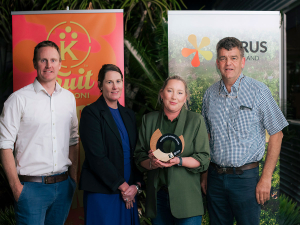
New Zealand's citrus growers were challenged to build their future on the value embedded in their fruit rather than the volume they produce, at Citrus New Zealand's annual gathering in Gisborne on 17 September.
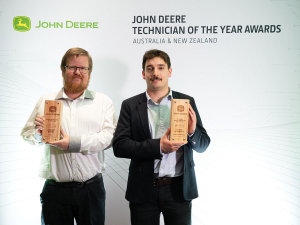
Leading John Deere technicians and apprentices from New Zealand and Australians were recognised at the recent sixth annual JD Technician of the Year Awards, held in Brisbane.
In Dacre, near Invercargill in New Zealand’s South Island, Bruce Dinnington is running a dairy operation unlike any other.
A free online platform aggregating governance vacancies across rural and regional New Zealand has been launched.
Environment Minister Nicola Grigg has announced details of a new rural plastics recycling scheme.
Agricultural drone operators say that a government decision to allow lower-risk drone work without certification won’t lower standards but drive innovation and efficiency.


OPINION: It seems Canterbury processor Synlait is still in the doldrums.
OPINION: Get offside with New Zealand First leader Winston Peters at your own peril.




