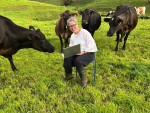
International Day of Rural Women: Two DairyNZ Farmers’ Stories
Today, 15 October, is the International Day of Rural Women, which recognises rural women’s contribution to farming, communities and the environment.




 increase font size
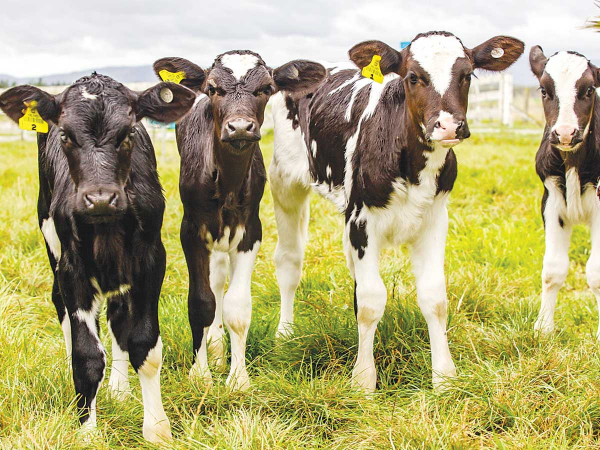 Dairy farmers are set to benefit from an enhanced genetic evaluations system.
More accurate genetic evaluations, drawing on ten years of New Zealand and international research, will be available to dairy farmers from this month.
New Zealand Animal Evaluation Limited (NZAEL) manager Dr Brian Wickham says dairy farmers are set to benefit from an enhanced genetic evaluations system that underpins the national breeding objective and evaluations farmers use to make breeding decisions.
“It will enable farmers to breed cows that are more efficient at converting feed into milk and profit. This has benefits for our environment and economy,” says Wickham.
Breeding companies LIC and CRV are collaborating with NZAEL, a DairyNZ subsidiary, on this project which will replace genetic evaluation software with a nationally consistent, independent genetic evaluation system for dairy cattle.
Wickham says there will be multiple improvements as part of the new software release, called NZAEL 2.0.
Two of the most significant changes are better recognition of trait differences between breeds, in particular for fertility, and the removal of the effect of inbreeding on breeding values: work has been funded by levy investment from DairyNZ, and by LIC.
“While inbreeding depression can negatively affect an animal’s performance, this effect is not passed on to the next generation of animals,” explains Wickham.
“These changes support our national breeding objective and, when completed in 2021, will represent the greatest improvement to the animal evaluation system since the introduction of breeding worth (BW) in 1996,” he adds.
Wickham says the reports farmers will receive from their breeding companies from this month will look very similar. The main difference will be that some farmers may see their animals re-ranking on BW as genetic evaluations become more accurate.
The previous genetic evaluation model, NZAEL 1.0, was developed by LIC in 2006, and adopted by NZAEL for the wider industry. The new system incorporates LIC’s latest software and models, and NZAEL research and development. It has been extensively tested and scrutinised by internationally renowned geneticists.
A scientific advisory committee, with animal genetics experts from New Zealand, Australia, Ireland and the Netherlands has also peer reviewed and endorsed the upgraded system, which has been rigorously tested.
Anna Kempthorne, a Te Anau farmer and NZAEL director, is the chair of the 12-member farmer advisory panel that reviewed and tested the changes to the system.
“The new system contains a number of enhancements which will result in more accurate and timely information,” says Kempthorne.
“This will enable improved breeding decisions to be made which benefit farmers and the dairy industry.”
“We now have new software available that can compute larger quantities of data and give us greater insights into animal performance which enables farmers to improve the performance of their herds overall by breeding more productive and efficient cows,” says Malcolm Ellis, general manager NZ Markets at LIC.
Today, 15 October, is the International Day of Rural Women, which recognises rural women’s contribution to farming, communities and the environment.

LIC shareholders have elected a new North Island representative to the co-operative's Board, along with five representatives to its Shareholder Reference Group (SRG), following the company's Annual Meeting held in Invercargill.
The first major update to the Dairy Cattle Code of Welfare in more than a decade has been released, marking what DairyNZ describes as an important step in ensuring animal welfare standards continue to evolve alongside scientific evidence and on-farm realities.
Have a plan in place for your cows and staff.
DairyNZ deputy chair Cameron Henderson has been re-appointed unopposed for another term.

Federated Farmers has welcomed new rural policies released by ACT, saying they align closely with its own election priorities.

Rural Contractors NZ says proposed changes to land transport rules for agricultural vehicles are a welcome response by the Government to out of date regulations which have seen members hit with huge fines.
Alliance is calling for final applications for its 2027 Graduate Programme, with applications closing on Sunday 25 October.
Decades piloting planes has ensured vet and farmer David Hayes is focused on safety. So, after a serious accident while welding on farm, he is sharing his experience so others can learn from it.
Canterbury milk processor, Synlait Milk has confirmed Leon Fung as its chief executive officer.
OPINION: Making it easier to collect rainwater and use it to grow crops and livestock is a no brainer.

OPINION: It seems Canterbury processor Synlait is still in the doldrums.
OPINION: Get offside with New Zealand First leader Winston Peters at your own peril.




