Yili’s New Zealand Dairy Group Posts Record $1.58 Billion Revenue
Yili's New Zealand businesses have reported record profits following a major organisational and strategic transformation.




 increase font size
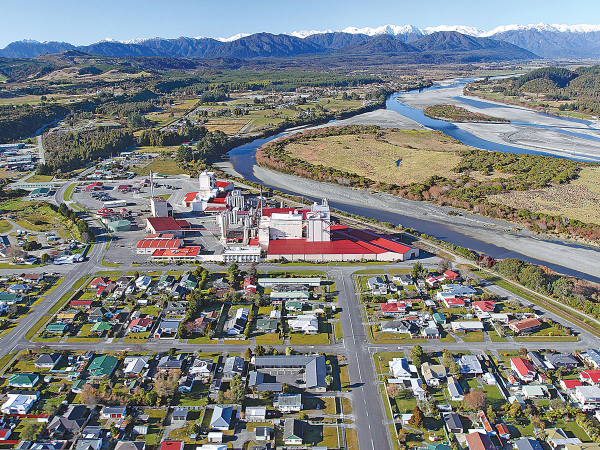 Westland Milk recently did a carbon footprint assessment of their plant in Hokitika whichs shows emissions have reduced since the last report in 2017-18.
Setting a regulation in place often disengages certain people rather than appealing to their motivation to act.
That's the view of Olivia Berry, head of strategy and sustainability at Yili/Westland Milk Products, who recently attended the Agricultural Climate Change conference. She says one of the lessons from the conference was to find the best way to incentivise farmers to deal with agricultural emissions and other environment-related matters.
She says the message came through that farmers should be allowed to do what was necessary, with support through tools and new information.
She says Westland Milk recently did a carbon footprint assessment of their plant in Hokitika which shows emissions have reduced since the last report in 2017-18.
"The draft version of that report is showing a 19% reduction in our carbon dioxide emissions, which is pretty exciting."
Westlnd also reduced coal use by 20% in the past seasn compared with the previous season - equivalent to 11,000 tonnes of coal not burned, she says.
Berry says Westland also reduced energy consumption by 22% "across the board", a lot of which was done in conjunction with the Government Investment in Decarbonising Industry (GIDI) Fund.
She says they have done process heat reduction programmes and changed the way the company moves milk around the country.
"That's been about working with transport companies on improving efficiency on moving product from our Hokitika plant across to Christchurch and then overseas," she says.
Up until now it has focused mainly on reducing emissions at its factory but it has done some limited work with its farmers.
Berry says all their supplier farmer now have their greenhouse gas emissions reports and Westland's own farm excellence programme talks about reducing emissions.
She says their company is now developing focus farms and keeping a watching brief on the likes of what Fonterra and the other dairy companies are doing in regenerative agriculture. She says key to this is looking at what we mean by regenerative agriculture from an NZ perspective.
"We talk about improving biodiversity on farm and the question often asked is, what does this mean to a farm that already has a very high level of biodiversity and is there a need to keep continuing increasing that?"
Berry says farmers who are already doing a good job in this area need to be rewarded.
Yili's New Zealand businesses have reported record profits following a major organisational and strategic transformation.

Former Fonterra executive Alex Turnbull has been appointed CEO to lead all five Yili Oceania Business Division companies in New Zealand.
Chinese dairy giant Yili Group says its New Zealand operations are on track for strong revenue growth in 2025 after recording significant year-on-year growth for the first half of the year.
Arguably one of the country's top dairy company's chief executives, Richard Wyeth has abruptly quit Chinese owned Westland Milk Products (WMP)
Fonterra has climbed three places to number six on RaboResearch's annual Global Dairy Top 20 report.
New Zealand dairy farmers are set to be the first in the world to receive access to a new digital physical milk pricing tool that enables them to fix the price for their physical milk.
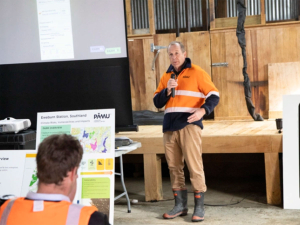
State farmer Pāmu is opening its farm gates this summer in an effort to give the rural sector the opportunity to see how large-scale, multi-system farming is delivering productivity and profitability across New Zealand.
A five-year study has found that the cost of reducing emissions without technology may be significant and unsustainable for Northland dairy farmers.
DairyNZ says Waikato farmers need certainty on Plan Change 1, but they say that certainty must be matched with practical, workable rules and a clear transition that doesn't get ahead of the new resource management system currently under review.
While the Government has moved quickly to make commercial hauliers' lot easier during the current fuel crisis, they appear to be stuck in the creep box when it comes to the agricultural industry.
Waikato farmers have been told that the Government’s new planning system legislation and the region’s Plan Change 1 (PC1) “won’t mesh together very well”.

OPINION: No one messes around with Winston Peters, more so in a general election year.
OPINION: Staying on Federated Farmers, this week's annual general meeting in Auckland is shaping up to be an interesting one.