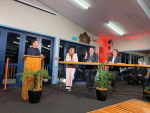
Rural Vote Debate on Q&A: Substance or Just Platitudes?
It was billed as a chance for all the political parties to woo the rural vote, but question marks hang over just how effective this was.




 increase font size
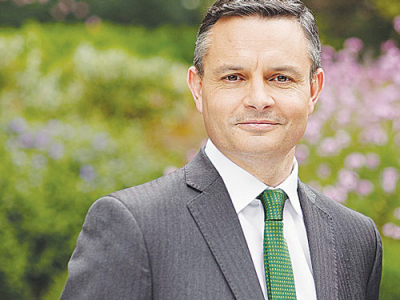 Climate Change Minister James Shaw.
All farmers should feel threatened by the possibility that agriculture will come under the emissions trading scheme (ETS), says Federated Farmers climate change spokesman Andrew Hoggard.
“We will all be under the gun.”
And the Government’s sudden move on the oil and gas industries has the farming sector “a bit spooked” as to what sudden changes could be imposed on any sector, he told Dairy News.
“Everyone saw it as a kneejerk reaction.”
Farmers are definitely concerned what the costs might be if agriculture is brought under the ETS, how it will affect their businesses and what they might have to do.
“The biggest problem here is how can you have farms in a scheme when you can’t even properly measure what is coming off farms to start with?”
“Massive” investment in technology is needed before it is even doable.
He hopes the numbers are crunched and long, hard thinking is applied before any sudden decisions.
“We have had good discussions with [Climate Change Minister] James Shaw and he accepts some of the points we’ve made. But whether some other people in the Government are wedded to certain ideas… that could be the challenge there.”
Hoggard hopes common sense prevails. The Environment Commissioner in his recent report highlights the need to treat different gases differently and to view methane and nitrous oxide differently.
Methane does not need to be taken to zero because it is a recycling gas always present in the atmosphere, says Hoggard. More discussion and research is needed.
A different method from ETS may be required to achieve the goals.
One thing he agreed with in the Greens’ last policy was that gases should be split up and treated differently.
“We didn’t agree with how they were going to treat them but we did agree with splitting them apart.”
An ETS does not magically solve everything, especially if the products are still needed. “Everyone still has to be fed globally; we need to be producing food in the most efficient manner we can. Luckily enough New Zealand is at the forefront of doing that.
“But it’s a global issue and NZ doesn’t operate in a little bubble of its own. [We need] global solutions across some of these sectors and hopefully technology advances.”
Asked whether he hoped common sense would prevail with the new interim climate change committee, Hoggard says a problem is that the international settings and discussions haven’t been the right ones. NZ’s agriculture probably needs to pursue this more with its international counterparts.
Most global emissions come from electricity generation in about 10 countries.
“What really worries me is effectively they will be slapping a tax on an industry; we will just be paying a tax – not actually solving a problem.”
Any scheme needs to be focused at farm level.
Another issue is everyone focusing on the gross emission not net emission. Science does not recognise what is sequestered in the grass and in the soil.
“What is going around in a circle here? The problem isn’t the stuff going around in a circle, but what is coming out of the circle.”
It was billed as a chance for all the political parties to woo the rural vote, but question marks hang over just how effective this was.
Mid Canterbury Federated Farmers arable chair, Bevan Lill, said Beef + Lamb NZ data indicated that for the last six years, the average arable return on investment was about 0.8% while inflation ran about 4% - so the average arable farm was going backwards at about 3% a year.
For the first time in a quarter of a century, Federated Farmers has something positive to say about the Labour Party’s climate change policy leading into a general election.
Rural leader Mark Hooper has been appointed as an independent director to the NZPork board, bringing extensive farming, governance and advocacy experience to the role.
Climate, nature and animal wellbeing make up Fonterra's refreshed sustainability roadmap released last week.


New Plymouth-based Manuka honey exporter Egmont Honey has completed its acquisition of Taihape beekeeping business Tweeddale's Honey, with settlement finalised on Friday, 18 September.
Westpac NZ is calling on farmers and growers to start preparing now for the possibility of a dry summer, as likely El Niño conditions raise the risk of drought across parts of the country.
Fonterra Co-operative Group has confirmed the independently assessed candidates standing for election to its board in 2026.
Fonterra has revised its Farmgate Milk Price forecast for the 2026/27 season, lifting the midpoint and narrowing the range on the back of improving global dairy commodity prices.
New Zealand's citrus growers were challenged to build their future on the value embedded in their fruit rather than the volume they produce, at Citrus New Zealand's annual gathering in Gisborne on 17 September.
Leading John Deere technicians and apprentices from New Zealand and Australians were recognised at the recent sixth annual JD Technician of the Year Awards, held in Brisbane.


OPINION: It seems Canterbury processor Synlait is still in the doldrums.
OPINION: Get offside with New Zealand First leader Winston Peters at your own peril.




