BVD Control Begins Long Before You See A Problem
Bovine Viral Diarrhoea (BVD) is sometimes viewed as a dairy industry issue, but the reality is that the disease can have serious consequences for beef breeding herds as well.




 increase font size
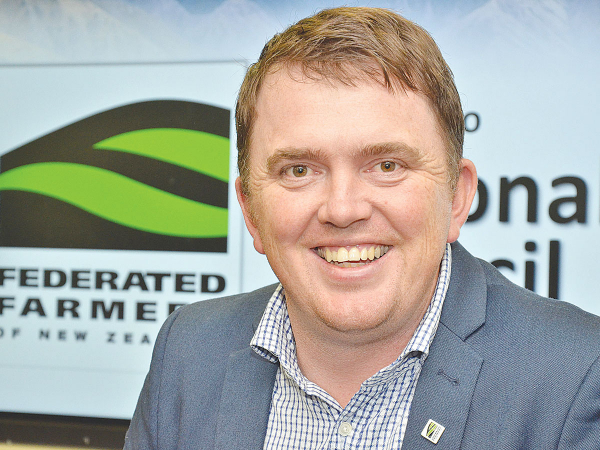 Federated Farmers biosecurity spokesman Wayne Langford says alarm bells will be ringing in Australia.
The Government is tightening up its biosecurity settings following an outbreak of foot-and-mouth disease (FMD) in Indonesia and also the recent discovery of viral FMD fragments on pork imported into Australia from China.
Agriculture Minister Damien O'Connor says Biosecurity NZ will now use foot mats with disinfecting chemicals fro people arriving from Indonesia to ensure their footwear is clean of the virus.
O'Connor says it's important that every New Zealander is vigilant and plays their part to protect New Zealand's economic security.
"I also strongly urge anyone who was in contact with livestock in Indonesia to stay away from farms and animals in NZ for one week.
"We also ask if anyone sees their pigs, goats, alpacas, llamas, cattle, sheep or deer with symptoms including high fever, mouth and feet blisters or erosions and lameness, to call their veterinarian or MPI's exotic pest and disease hotline (0800 80 99 66)," he says.
Federated Farmers biosecurity spokesman Wayne Langford says alarm bells will be ringing in Australia following the discovery last week of dead FMD fragments in Melbourne.
Langford told Dairy News that NZ farmers were in this with their Australian counterparts.
"If Australia gets it, there will be severe consequences for NZ," he says.
Langford says New Zealand farmers are rightly worried because "they know what effect FMD could have".
He urged farmers to be vigilant and ensure nobody arriving from Indonesia is allowed onto farms until they quarantine for seven to ten days.
Meanwhile Biosecurity NZ, which comes under MPI, says it's been in contact with the Australians about the viral fragments of FMD.
MPI Deputy Director General Stuart Anderson says he's been assured that what was found in the food was not live virus, but a trace viral fragment.
He says viral fragments are not infectious and could not transfer live virus to another animal. He says it's not unusual for non-infectious viral fragments to be found in food.
"There's no indication that there is a heightened risk to New Zealad. We have among the strictest import health standards and biosecurity settings in the world for pork and other meat products coming into New Zealand," he says.
But Anderson says as an extra precaution MPI will undertake market surveillance to double check product available here is legally imported.
He also points out that travellers to NZ are not allowed to bring in uncooked meat products.
"Since FMD was found in Indonesia recently, we have stepped up our work at the border to prevent FMD arriving in New Zealand. Every passenger arrival card is examined and those from countries that have FMD (including Indonesia) are directed to a different process of questioning, baggage search and disinfection.
"This means that should passengers transit other airports, risks are still addressed," he says.
Anderson says all mail products that come into NZ from Indonesia are x-rayed and checked by dogs. He says quarantine officers are also checking all cargo containers coming from Indonesia.
He says MPI is committed to constantly reassessing the multi-layered biosecurity settings as it has done in recent weeks with regard to FMD.
"Those settings include risk assessments of all arrivals and cargo, 100 per cent screening of all checked-in and cabin baggage, detector dogs and very strong import health standards," he says.
An outbreak of FMD in NZ would be the worst possible disaster for NZ, threatening all our meat exports worth billions of dollars.
In the past there have been several FMD scares, one of the most notable on a pig farm near Temuka in the South Island in 1981.
The disease was suspected and later it was found not to be FMD, but as a precaution all the pigs were slaughtered and cremated on the property.
Bovine Viral Diarrhoea (BVD) is sometimes viewed as a dairy industry issue, but the reality is that the disease can have serious consequences for beef breeding herds as well.

Election years are always a concerning time for farmers, according to DairyNZ chair Tracy Brown.
Testing confirms H5 bird flu in a single northern giant petrel, found dead on a remote Cape Palliser beach in the Wairarapa, says Dr Mary van Andel, the Ministry for Primary Industries' (MPI) Chief Veterinary Officer.
Bovine Viral Diarrhoea (BVD) is sometimes viewed as a dairy industry issue, but the reality is that the disease can have serious consequences for beef breeding herds as well.
Four years since it was first detected in New Zealand, researchers and growers now know much more about management of maize pest fall armyworm (FAW).


LIC shareholders have elected a new North Island representative to the co-operative's Board, along with five representatives to its Shareholder Reference Group (SRG), following the company's Annual Meeting held in Invercargill.
Farmers across parts of Southland and South Otago are continuing to deal with difficult conditions after a prolonged run of wet weather, with pressure building around feed supply, stock management, pasture damage, farm infrastructure and everyday workloads.
Federated Farmers says it welcomes Labour's commitment to reviewing the Sharemilking Agreements Act, calling on other major parties to do the same.
For Canterbury dairy farmers Sian Meijer and Rick Wobben, wearable technology has become one of their most valuable on-farm tools - helping manage 1850 cows across an expansive, high-performing dairy operation while improving efficiency, mating outcomes and day-to-day decision making.
Fonterra has unveiled its annual results for the 2026 financial year, posting $27 billion in revenue and close to $20 billion returned to New Zealand farmer owners and unit holders.
The first major update to the Dairy Cattle Code of Welfare in more than a decade has been released, marking what DairyNZ describes as an important step in ensuring animal welfare standards continue to evolve alongside scientific evidence and on-farm realities.


OPINION: It seems Canterbury processor Synlait is still in the doldrums.
OPINION: Get offside with New Zealand First leader Winston Peters at your own peril.




