
Fonterra CFO Andrew Murray Resigns
Fonterra Co-operative Group chief financial officer Andrew Murray has resigned to take up a role outside the dairy giant.




 increase font size
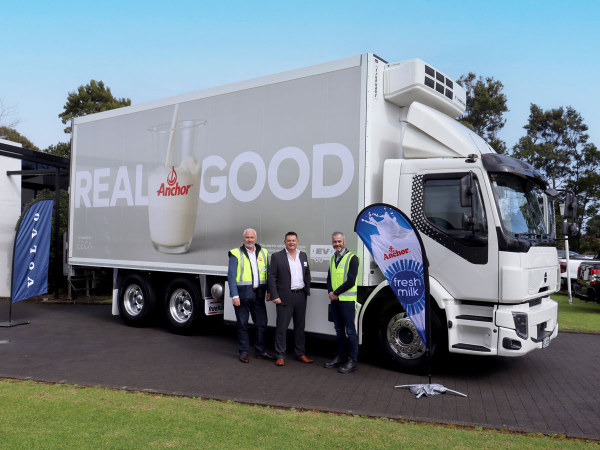 This truck is the second electric truck in Fonterra’s metro distribution fleet for its Oceania business.
Fonterra has unveiled the first refrigerated electric truck to deliver dairy products across Auckland.
The new truck, delivered in partnership with Volvo Trucks New Zealand and the Energy Efficiency & Conservation Authority (EECA), will deliver consumer products from the co-op’s Takanini plant to customers across metropolitan areas.
This truck is the second electric truck in Fonterra’s metro distribution fleet for its Oceania business, meeting the operational needs of the business while also reducing emissions.
Rob Howell, director of operations and supply chain Oceania Fonterra, says the new electric truck represents an important step in Fonterra’s sustainability journey.
"Our objective is to be a leader in sustainability while prioritising our commitment to delivering healthy dairy nutrition to consumers around the motu (country).
“We are working hard to reduce emissions across our supply chain. Working towards an electric fleet is another step in our journey partnering with Volvo Trucks New Zealand and EECA, providing access to the best technology to allow us to continue to make progress towards our climate ambitions," he says.
Fonterra recently announced the sale of its consumer businesses to Lactalis: the deal includes the Oceania business and the Takanini plant.
Scott Holt, general manager for Volvo Trucks New Zealand, says the electric truck marks an important juncture – the start of the real-world use and testing of this type of EV technology in a medium refrigerated truck application.
“In order for New Zealand to transition to low carbon fleets, we need leaders like Fonterra to continue to have the courage to break new ground so that others feel they can also follow, with validation of performance and local support, all while achieving critical sustainability goals.”
The Volvo FE Electric Truck, equipped with a 256-kilowatt-hour battery pack, offers an estimated range of up to 200km on a single charge. Its refrigerated body provides 14 deck spaces, enabling transport for over 400 crates in a single delivery.
The e-truck is expected to deliver more than 1.6 million litres of dairy products over the next year.
Fonterra Co-operative Group chief financial officer Andrew Murray has resigned to take up a role outside the dairy giant.

Four candidates have been confirmed for two director positions on Fonterra’s board.
A record farmgate milk price and strong global demand is laying the foundation for continued growth of organic dairy farming in New Zealand.
Waikato milk processor Tatua has again declared a record milk payout to farmer shareholders, leaving other processors in the dust.
Fonterra has unveiled its annual results for the 2026 financial year, posting $27 billion in revenue and close to $20 billion returned to New Zealand farmer owners and unit holders.


National’s pledge to introduce 19 new national standards shows the party is serious about getting Wellington out of farming, Federated Farmers says.
The National Party’s policies to make it easier to grow fresh vegetables, secure reliable water and energy and simplify farm planning are practical changes that will give growers the confidence to invest, according to Horticulture New Zealand (HortNZ).
Fonterra Co-operative Group chief financial officer Andrew Murray has resigned to take up a role outside the dairy giant.
A major move is about to get underway to improve the quality and viability of dairy beef and cattle in NZ.
Veterinarians say changes to the code of welfare for dairy cattle provides a positive foundation for improved cattle welfare across the country.
Today, 15 October, is the International Day of Rural Women, which recognises rural women’s contribution to farming, communities and the environment.

OPINION: It seems Canterbury processor Synlait is still in the doldrums.
OPINION: Get offside with New Zealand First leader Winston Peters at your own peril.




