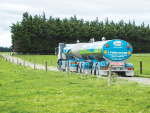
Fonterra FY26 Results: $9.69 Milk Price, $3.4bn Profit
Fonterra has unveiled its annual results for the 2026 financial year, posting $27 billion in revenue and close to $20 billion returned to New Zealand farmer owners and unit holders.




 increase font size

FONTERRA HAS come under fire from its competitors at the primary production select committee hearing into the Dairy Industry Restructuring Amendment Bill (DIRA Bill).
The select committee last week heard submissions from all the major players and some individuals about the DIRA Bill now before Parliament and scheduled to be passed into law later this year. The bill is designed to provide an oversight on how Fonterra sets it farmgate milk price and includes changes to allow TAF (trading among farmers).
In a joint submission, the Independent Dairy Producers Group (IDPG), Synlait, Open Country and Miraka accused Fonterra of being “anti-competitive” because of the way it sets the farmgate price for milk.
A spokesperson for IDPG, Dr John Penno, told the select committee Fonterra set the price artificially high by cross-subsidising this from its profits to the tune of $600 million. This tactic, says Penno, resulted in Fonterra’s profit being substantially lower than a group of international peers and also artificially lowered Fonterra’s share price.
Penno quoted from an analysis by Deloitte of Fonterra’s pricing systems. He says in 2006 Fonterra changed the basis on which it set the milk price from ‘actuals’ to ‘notional efficient producer’ (NFP).
He says the ‘actual’ was what Fonterra could pay for raw milk at the farmgate while achieving a ‘sensible’ return on capital.
Penno claims the NFP, which is based on what an imaginary or ‘super-competitor’ could pay, has seen the farmgate milk price jump to upwards of 50 cents/kgMS. This is more than Fonterra’s own commodities business or a typical independent processor can afford to pay for milk and still make a return on capital, and is therefore ‘anti competitive’, Penno says.
The IDPG says the DIRA Bill effectively enshrines the ‘super-competitor’ concept and will permanently lock in an artificial farmgate milk price.
“Fonterra’s artificially high farmgate milk price is having a dramatic negative effect on the dairy industry. As well as stifling competition it is sending farmers distorted pricing signals about milk. This will lead to overpriced dairy farm land, accelerated rates of dairy conversion and over-production on existing farms,” says Penno.
The IDPG wants changes to the legislation to stop Fonterra doing what it is doing now. “Unless the legislation is changed it will prevent TAF from bringing about normal market pressures that would normally solve these sorts of things. So there are some quite specific things written into the act that allow them to do some of the things they do which is distorting the milk price,” says Penno.
The raw milk market in New Zealand is not a competitive market, he says. “We have a very dominant player put there by legislation. What we are asking for is a milk price that approximates what would happen in a competitive environment rather than a dominant player setting that in an unfettered way.”
Kingi Smiler, of Miraka, told the committee the IDPG wants a level playing field and not legislation that supports a monopoly in the market. The IDPG has collective export revenues of $1.3 billion dollars. – Fonterra’s response, P5
Fonterra has unveiled its annual results for the 2026 financial year, posting $27 billion in revenue and close to $20 billion returned to New Zealand farmer owners and unit holders.
Fonterra Co-operative Group has confirmed the independently assessed candidates standing for election to its board in 2026.
Fonterra has revised its Farmgate Milk Price forecast for the 2026/27 season, lifting the midpoint and narrowing the range on the back of improving global dairy commodity prices.
Outgoing Fonterra Co-operative Council chair John Stevenson says that it has been a privilege to represent the co-op's farmer shareholders.
OPINION: It seems Canterbury processor Synlait is still in the doldrums.



Federated Farmers says it welcomes Labour's commitment to reviewing the Sharemilking Agreements Act, calling on other major parties to do the same.
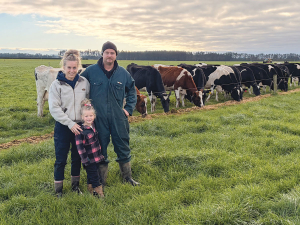
For Canterbury dairy farmers Sian Meijer and Rick Wobben, wearable technology has become one of their most valuable on-farm tools - helping manage 1850 cows across an expansive, high-performing dairy operation while improving efficiency, mating outcomes and day-to-day decision making.
Fonterra has unveiled its annual results for the 2026 financial year, posting $27 billion in revenue and close to $20 billion returned to New Zealand farmer owners and unit holders.
The first major update to the Dairy Cattle Code of Welfare in more than a decade has been released, marking what DairyNZ describes as an important step in ensuring animal welfare standards continue to evolve alongside scientific evidence and on-farm realities.
Ravensdown shareholders have elected Jane Montgomery and Kate Acland to the Ravensdown Board for three-year terms, following a closely contested director election.
Federated Farmers says new legislation replacing the Resource Management Act will cut red tape, unlock investment and help grow New Zealand's export-led economy, after the Planning Bill and Natural Environment Bill passed their third reading in Parliament yesterday.



OPINION: It seems Canterbury processor Synlait is still in the doldrums.
OPINION: Get offside with New Zealand First leader Winston Peters at your own peril.




