Southland Farmers Named 2026 Sustainable Farming Ambassadors
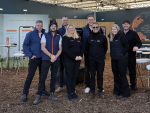
Michelle and Tony Roberts didn't inherit the farming business they have today. They’ve built it from the ground up.




 increase font size
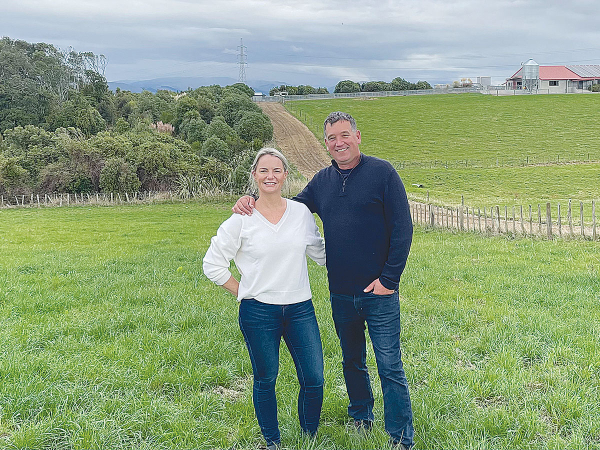 James and Debbie Stewart say they see themselves as stewards over their land.
James and Debbie Stewart of Dairylands in the Manawatū are no strangers to taking home the silverware.
Having last entered the awards scene about 15 years ago, recently their office wall has been sagging under the weight of the Bayleys People in the Primary Sector, Dairy NZ Sustaiability and Stewardship and Rabobank Agri-Business Awards, alongside the NZFET Biosecurity, Innovation and Climate Recognition Awards and the Margaret Matthews trophy for Commitment to Sustainability in the Ballance Farm Environment Awards.
Located at Hiwinui, on the outskirts of Palmerston North, the family can trace its roots back to Scotland and the arrival of their ancestors to the Manawatū in the 1880s.
Typifying the New Zealand term 'good buggers', the Stewarts' operation centres around people, the environment, animals and delivering a quality product, while at the same time being forward thinking and ready to adopt beneficial technology and innovation.
Their journey to a balanced approach began aroun 12 years ago when they started the ongoing task of planting a thousand trees each year. These plantings are not only for aesthetics, but to also attract bird life in less productive areas, help with erosion protection and keep waterways cleaner. Converting from sheep to dairy 25 years ago, a tried and tested solution to keep cows out of plantings and waterways uses seven or eight wire fencing, without battens, but with three 'hot' wires.
James Stewart says they see themselves as stewards over their land.
"We believe it's always better to be ahead of compliance and the big stick, so the best time to invest in initiatives is today."
Dairylands milks 800 cows, split over two farms of 580ha, with a 350ha milking platform, with the remainder used for young stock and a small amount of cropping. They run a System 3 operation relying on 85% grass with feed imported to extend lactation and for dry cows. James describes the farm as heavy land, so favours lighter cows, grazed at 2.2 to 2.4 animals per hectare and achieve pasture production of about 12 tonnes DM/ha.
Debbie Stewart notes that as the farm lies on the fringes of Palmerston North, they are aware of the impression they create with their urban and rural neighbours.
"We want to create a positive message about dairy farming and strive to protect our social licence. We are active in this area by hosting open days, where we welcome visitors from schools, Massey University and overseas guests including those from the Hiwinui Country Estate we have on farm. We also welcome volunteers from the surrounding area who help in our planting initiatives," she says.
James says schemes like the Ballance Farm Environment Awards are a great name for what the farm is trying to achieve.
"We strive to create a balance on our farms, set an example for our children and staff and hoping to come out the other side with a reasonable profit."
Looking at Dairylands' investment in technology, solar panels are fitted to the main dairy shed, purchased on a lease to buy plan over seven years. Described by Debbie as "cost-neutral", ownership of the panels will pass to the Stewarts at the end of the period and with a life expectancy of approximately 25 years, continue to make appreciable costs savings.
A recycling initiative in the dairy shed is centred around green washing, collecting parlour and yard washings, that then pass through a separator, with the soilds returning to the farm and gardens on the property and filtered water being recycled - so currently saving up to 30 cubic metres each day.
Cows are fitted with collars for heat detection and in parlour recording and drafting, with the farms also using systems such as proof-of-placement for fertiliser, Levno, and automated wage planning into management.
They operate with four permanent and two part-time staff.
James also voices the benefits of Fonterra's Dairy Insights Programme, not least as a confirmation they are heading in the right direction.
James says data collection can sometimes seem a bit of a chore, but the value of that data is a huge benefit to managing the farms.
"The fact is that in today's environment you have to know your numbers to make any meaningful change. That includes leaching, greenhouse gases and the intensity of your emissions. 'Environment' is the New World, so we address the constant change with professionalism, always trying to stay one step ahead of legislation and in doing so, see a great future for agriculture."
Michelle and Tony Roberts didn't inherit the farming business they have today. They’ve built it from the ground up.
The bumpy road you travel on teachs you a lot, believes Don Watson. And that’s the message he and wife Kirsten, supreme winners of the Auckland Ballance Farm Environment Awards, aim to pass on to their three sons.
Helensville farmers, Donald and Kirsten Watson of Moreland Pastoral, have been named the Auckland Regional Supreme Winners at the Ballance Farm Environment Awards.
Philip and Lyneyre Hooper of the Hoopman Family Trust have tonight been named the Taranaki Regional Supreme Winners at the Ballance Farm Environment Awards.
Jon and Fiona Sherlock have been named the Waikato Regional Supreme Winners at the Ballance Farm Environment Awards.
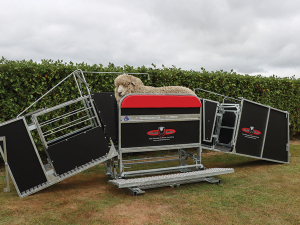
Oamaru-based livestock handling specialist Te Pari has bought Combi Clamp, the New Zealand manufacturer of Combi Clamp manual sheep handlers.
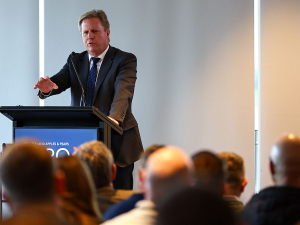
Agriculture Minister Todd McClay has admitted that a scheme bringing workers from Pacific nations to work on orchards has become too hard to navigate but says changes are coming.
A new app designed in New Zealand aims to help sheep, beef and deer farmers capture, analyse and use body condition score data more effectively.
Canterbury farmer Andy Macfarlane has been appointed to the board of AgriZeroNZ, the public-private partnership designed to accelerate the development and deployment of emissions reduction tools for New Zealand farmers.
For over 50 years Mel Ewers has been supporting the apple sector navigate through compliance and quality assurance issues.
The apple sector is enjoying a bumper harvest season.
OPINION: City and regional councils have been put on notice - stop using extreme climate forecasting scenarios that can drive…
OPINION: The Green Party’s rivers and oceans policy may have a new name but nothing else has changed.