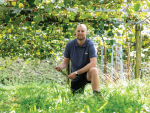
Rabobank Launches HortPathways for Emerging Hort Leaders
Twenty-eight emerging leaders from across the horticulture sector spent two days last month learning valuable skills and connecting with industry experts.




 increase font size

New Zealand's dairy producers are gearing up for a better season on the back of higher commodity prices, according to a visiting dairy analyst.
Rabobank's Australian-based senior dairy analyst Michael Harvey is touring the North Island this week and meeting with dairy farmers to discuss what's in store for the coming months.
"Milk production will return to growth in key export regions in late 2013, as farmers in the Southern Hemisphere get a crack at farm gate milk prices 20 to 33% higher than 12 months prior, and all farmers see a substantial reduction in the cost of bought in feed," Harvey says.
"Prices are likely to drift down, as some demand is 'choked off' in emerging markets and buyers at least see a new season commencing in the Southern Hemisphere, but the shift will be limited."
Speaking at Rabobank functions in Carterton, Hamilton, Putaruru, Morrinsville, Waihi, and Whakatane this week, Harvey says weather conditions have improved markedly through March and April with virtually all key dairying regions in New Zealand experiencing good rainfall and mild temperatures.
"Production will then edge marginally above prior year levels as the season builds, with the benefits of a slightly larger herd and the ability to buy feed, offsetting mixed cow conditions and low feed reserves," he says.
"Looking at the global situation, from early 2014 we should see a stronger supply response from most major dairy exporters, and this will create bounce in export product availability and provide relief from extreme shortages."
Following his tour, Harvey will release his latest research report on the South East Asian dairy industry titled, 'Dairy – Milk for the ASEAN-6 tigers'.
The report highlights that dairy consumption growth has been outpacing local supply growth in the six ASEAN countries (Indonesia, the Philippines, Vietnam, Thailand, Singapore and Malaysia) which is creating substantial trade opportunities for dairy export countries, like New Zealand.
Twenty-eight emerging leaders from across the horticulture sector spent two days last month learning valuable skills and connecting with industry experts.

A 'tsunami' of milk from key exporting countries is winding down and this may be good news for New Zealand dairy farmers.
OPINION: Succession and long-term planning are perennial topics because it is perpetually sidelined on busy farms.
OPINION: The stats speak for themselves.
Farms across the upper North Island are trialling different pasture mixes as part of a research programme that aims to build greater resilience into farming systems.


Federated Farmers has welcomed new rural policies released by ACT, saying they align closely with its own election priorities.

Rural Contractors NZ says proposed changes to land transport rules for agricultural vehicles are a welcome response by the Government to out of date regulations which have seen members hit with huge fines.
Alliance is calling for final applications for its 2027 Graduate Programme, with applications closing on Sunday 25 October.
Decades piloting planes has ensured vet and farmer David Hayes is focused on safety. So, after a serious accident while welding on farm, he is sharing his experience so others can learn from it.
Canterbury milk processor, Synlait Milk has confirmed Leon Fung as its chief executive officer.
OPINION: Making it easier to collect rainwater and use it to grow crops and livestock is a no brainer.

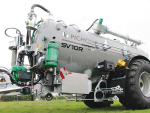
OPINION: It seems Canterbury processor Synlait is still in the doldrums.
OPINION: Get offside with New Zealand First leader Winston Peters at your own peril.




