Federated Farmers Welcomes ACT’s New Farming Policies
Federated Farmers has welcomed new rural policies released by ACT, saying they align closely with its own election priorities.




 increase font size
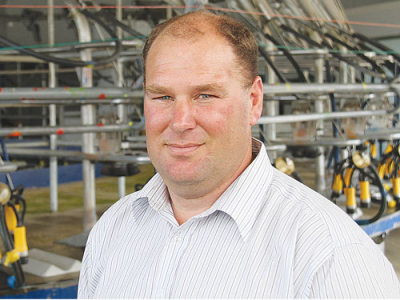 Andrew Hoggard.
Dairy farming is in the spotlight following three heavyweight Government announcements.
Reports on water quality, climate change and Mycoplasma bovis all appeared over just three days last week, prompting Federated Farmers vice president Andrew Hoggard to say these presented more challenges for farmers, prompting him to think about sitting back, going on the dole and saving the planet that way.
He says it’s like trying to fix a plane while it’s flying; as well as meeting the new challenges in water quality and climate change things have to keep going on the farm.
“We are expected to meet all the new regulations and do all the other stuff on the farm such as ensuring that the effluent system is running properly,” he says.
He says farmers are annoyed that while they come under pressure, district councils consistently get let off the hook for not meeting environmental standards, and he doesn’t see this changing.
The new regulations announced by Environment Minister David Parker and Agriculture Minister Damien O’Connor promise a “noticeable improvement” in water quality in five years.
“Clean water is our birthright. Local rivers and lakes should be clean enough for our children to swim in and put their head under water without getting crook,” says Parker.
The Government has effectively scrapped the Land and Water Forum (LAWF) and replaced it with three advisory groups: a science and technical advisory group chaired by scientist Ken Taylor, a fresh water leaders group headed by John Penno, and Kahui Wai Maori chaired by Kingi Smiler.
The Government is also planning to have a new National Policy Statement on Freshwater Management completed by 2020 to provide clear guidelines for regional and district council policies and rules on freshwater.
DairyNZ chief executive Tim Mackle says his organisation supports the Government initiative and says dairy farmers are already solving the issues, for example by greater use of stand-off pads and planting of wetlands. But he also acknowledges the impact the dairy sector has had on the land and says it will take time to fix the historical issues.
Predictably Greenpeace has called for a ban on new dairy farms and an immediate end to any further intensification of dairy farming.
Meanwhile dairy farming made the headlines in a report by the Inter Governmental Report on Climate Change. The report noted that 43% of NZ’s greenhouse gas emissions were caused by methane – all livestock burping and 11% nitrous oxide -- and by cows urinating. The lead author of the report, Professor Bronwyn Hayward, Canterbury University, says NZ is going to have think hard to be competitive.
Federated Farmers has welcomed new rural policies released by ACT, saying they align closely with its own election priorities.
Federated Farmers is backing Feilding High School’s call to keep Agriculture and Horticultural Science as a standalone subject in Year 11.
As part of its Election 2026 coverage, Rural News asked political parties how they would help pull the arable sector out of the doldrums. Here's what they said:
National’s pledge to introduce 19 new national standards shows the party is serious about getting Wellington out of farming, Federated Farmers says.
OPINION: Rivers never sit still. They start as snowmelt and rain in the high country, pick up a creek here and a stream there, and carry all of it down to where it's needed.


Federated Farmers has welcomed new rural policies released by ACT, saying they align closely with its own election priorities.

Rural Contractors NZ says proposed changes to land transport rules for agricultural vehicles are a welcome response by the Government to out of date regulations which have seen members hit with huge fines.
Alliance is calling for final applications for its 2027 Graduate Programme, with applications closing on Sunday 25 October.
Decades piloting planes has ensured vet and farmer David Hayes is focused on safety. So, after a serious accident while welding on farm, he is sharing his experience so others can learn from it.
Canterbury milk processor, Synlait Milk has confirmed Leon Fung as its chief executive officer.
OPINION: Making it easier to collect rainwater and use it to grow crops and livestock is a no brainer.

OPINION: It seems Canterbury processor Synlait is still in the doldrums.
OPINION: Get offside with New Zealand First leader Winston Peters at your own peril.




