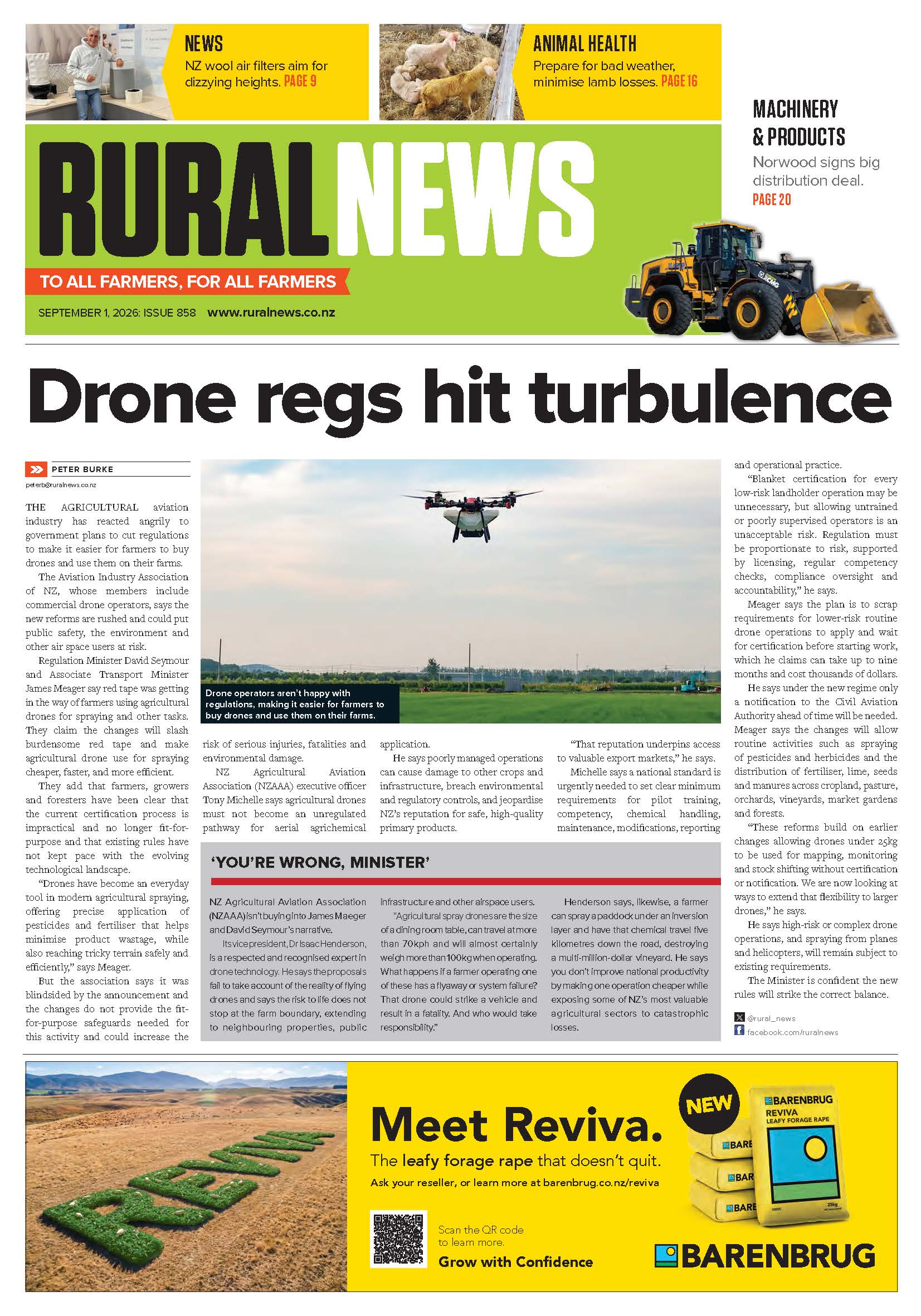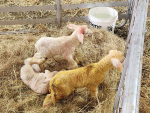
Beef + Lamb NZ's Lambing Kit Checklist for a Tough Season
With lambing underway in many regions, Beef + Lamb New Zealand is encouraging farmers to put together a wellequipped lambing kit to help minimise lamb losses, particularly in bad weather.




 increase font size
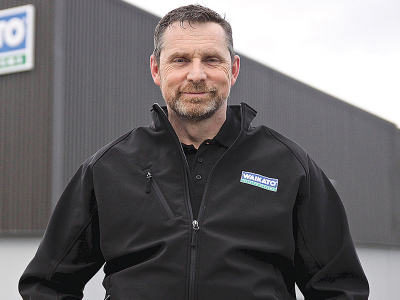 Andy Geissmann believes there’s plenty of scope for Kiwis working in the emerging sheep and goat dairy sectors to export.
Waikato Milking Systems product and project manager Andy Geissmann believes there’s plenty of scope for Kiwis working in the emerging sheep and goat dairy sectors to export.
A few years ago Andy Geissmann was invited to speak on a farm in China where a dairy consortium planned to milk 500,000 goats.
“I thought they meant 5000 or maybe 50,000, that they had got the number wrong, but then someone wrote it down for me in words: ‘half a million’.
“We went there and it was the first farm of a bigger project, planning to milk 70,000 goats all in one farm, just two years away from milking.
“They planned to have half a million goats spread over several farms in one hub, and they planned to have three of those hubs in the surrounding area.”
Geissmann, who recently joined Waikato Milking Systems, has had 20 years experience in the dairy industry, recently with a focus on small ruminants. He is now the product and project manager at its headquarters in Horotiu, north of Hamilton.
Geissmann says the sheer size of the China operation overshadows anything planned in New Zealand, but he says Kiwis should not be discouraged from exporting to China and other countries.
“In China, there are basically two market streams. People who can afford the local produce and those with additional disposable incomes.”
The latter group of consumers don’t mind paying a “premium price” for dairy products made in a country that has a clean, green image.
“And NZ does have the right image.”
Those marketing sheep milk dairy products promoted the idea that the customer was not only buying a NZ made product but buying a piece of NZ too, Geissmann said.
Geissman is this week attending Fieldays to hear more from those working in the emerging sheep dairy industry and the niche goat dairy industry. This will help guide the company in developing systems and technology for the sheep and goat dairy industries.
Geissmann sees growing awareness of the nutritional benefits of sheep and goat milk products which “has resulted globally in an increased consumption”.
The lower environmental impact of the two industries is a big attraction for consumers, he said. It is opening opportunities for expansion for farmers and manufacturers.
That includes Waikato Milking Systems, which in 2017 installed a 100 bail, goat rotary milking system in Canada and is now working on similar installations in China.
The company is also aiming to do more in NZ to help the sheep and goat industry meet demand. “We want people to know we’re dedicated to sheep and goat dairying and are not just transforming a cow milking system into something smaller,” Geissmann said.
“We want to use our knowledge and farmers’ expertise to further develop milking systems specifically suited to small ruminants.”
He said it is important to understand that the behaviour and physiology of sheep and goats is different.
Goats are “always on the go”, they are inquisitive animals that like to investigate things. They like being up high, don’t like to lay around much and don’t like getting wet.
Sheep are followers, need eye contact with each other and don’t like to be seperated.
All of these traits need to be taken into account when building milking systems to handle the animals.
The company’s milking platform in the market can handle both sheep and goats.
“We have worked closely with farmers in the design of our milking platform. The result is a system that is well received for its milking performance and durability.”
Geissmann is on the Waikato Milking Systems Fieldays site (F45-M12-M14) and the SheepMilkNZ site (J22).
Steady rise in markets
Andy Geissmann says NZ has about 100 dairy goat farms with almost 70,000.
Sixteen dairy sheep farms NZ-wide are milking about 15,000 ewes. The sheep milking industry is growing by three to four farms a year but many more are needed to satisfy the global demand.
Geissmann says some farms are producing for niche market outlets and others produce for the local and export markets.
Some farms want to expand commercially by producing their own milk and collecting milk from other farms to process. In the sheep dairy business these include Kingsmeade in Manawatu, Antarag Ag Dairy in Southland, Thorvald in Nelson, and Spring Sheep and Maui Milk in Waikato.
The Dairy Goat Co-operative collects milk from its farmers in many North Island regions to process at its plant in Hamilton.
The Ministry of Primary Industries does not report separately on the value of the sheep and goat milk industry, but includes it as one report on dairy.
The ministry said there is data showing the global market for goat milk was worth US$330m in 2013 and is now worth US$390m.
Data from the UN Food and Agriculture Organisation showed the world volume of goat milk increased from 10m tonnes in 1990 to 17.5m tonnes in 2017.
World sheep milk production was 8m tonnes in 1990 and slightly exceeded 10m tonnes in 2013.
With lambing underway in many regions, Beef + Lamb New Zealand is encouraging farmers to put together a wellequipped lambing kit to help minimise lamb losses, particularly in bad weather.
Will a stronger, more coordinated voice help rebuild confidence and improve returns in the wool sector?
China remains New Zealand’s biggest market, taking $23 billion of our exports, but it’s no longer a commodity story, says Prime Minister Christopher Luxon.
Fonterra is strengthening its foodservice presence in China with the launch of a new cream for professional bakeries at Bakery China 2026 in Shanghai.
OPINION: What does the birth rate in China have to do with stock trading? Just ask a2 Milk Company.



Now in its fourth year, the 2026 Fencing Industry Awards, formed part of the proceedings of the FCANZ Conference, held in Nelson during August.
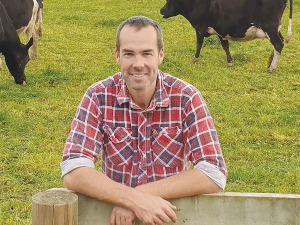
DairyNZ deputy chair Cameron Henderson has been re-appointed unopposed for another term.
OPINION: The stats speak for themselves.
Farms across the upper North Island are trialling different pasture mixes as part of a research programme that aims to build greater resilience into farming systems.
Election years are always a concerning time for farmers, according to DairyNZ chair Tracy Brown.
The Ballance Farm Environment Awards are coming to the West Coast of the South Island.


OPINION: It seems Canterbury processor Synlait is still in the doldrums.
OPINION: Get offside with New Zealand First leader Winston Peters at your own peril.