Fonterra's New Roadmap Targets Climate, Nature, Animals
Climate, nature and animal wellbeing make up Fonterra's refreshed sustainability roadmap released last week.




 increase font size
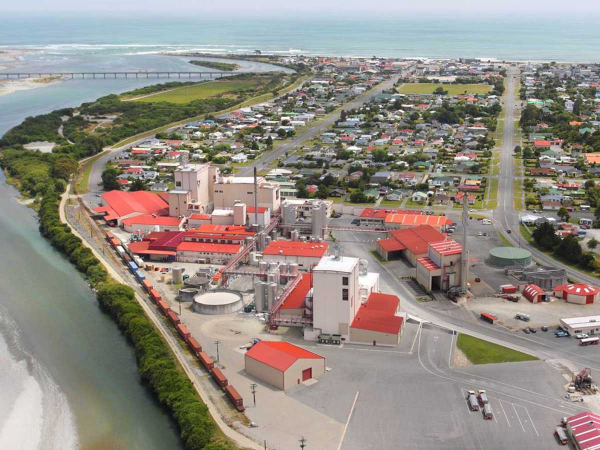 Westland is investing in technology to reduce emissions.
Chinese-owned Westland Dairy Company is getting $1.7 million from the Government to accelerate plans to reduce carbon emissions produced by its Hokitika factory.
The milk processor says the funding from the Government Investment in Decarbonising Industry (GIDI) Fund will help 116,000 tonnes of annual carbon emissions as part of work to be completed by October next year. Westland Dairy is investing $1.5 million.
"Thi is an important step in our journey towards a low-carbon future," Westland chief executive Richard Wyeth.
"This co-investment will allow us to reduce our emissions, produced by our boilers, immediately."
Wyeth says Westland is very conscious of its responsibilities to the region and the role it needs to play in navigating the path towards a low-carbon future.
"The West Coast faces particular challenges when it comes to decarbonising our local industries but we look forward to working with the Government to identify future alternative energy sources as we transition to that future."
The two stages of work on technology solutions would allow annual carbon emissions produced by the factory to be reduced by 7% - from 116,000 tonnes to 107,560 tonnes.
Work has already begun on the project, which involves installing new heat exchangers to recover more heat from coal-fired boilers used in milk pasteurisation. Heat recovered by the exchangers will be reused for energy consumption, reducing the amount of coal the factory requires to run its boilers.
Energy efficiency projects will be progressed alongside the installation of the heat exchangers, including projects that will allow combustion air to be preheated, and heat to be collected from the refrigeration engine room and air compressors to preheat the cold-water feed to the boilers.
New control mechanisms to better manage product flow across the heat exchangers will also enable better energy efficiency by reducing the amount of steam produced and therefore lost to evaporation rather than energy reuse.
The work will involve the use of local engineering firms as part of the Fund's guidelines to keep jobs in the region, stimulate the local economy and support local employment as part of the Government's Covid Response and Recovery Project.
In total, 14 companies will receive nearly $2.3m in co-funding from the GIDI Fund to help their businesses transition away from fossil fuels.
"The decarbonisation fund provides crucial financial support to business and industry to help them switch from boilers run on coal and gas to cleaner electricity and biomass options. This helps create jobs in the clean energy sector, and future-proofs our economy," says Energy and Resource Minister Megan Woods.
"The 14 projects we're announcing funding for will achieve up to 10% of the gross long lived emission reductions required from the Climate Commission's first draft carbon budget for the period 2022-2025 - the same as taking 49,000 cars off the road."
Another milk processor Synlait will get $600,000 for installing a biomass boiler from the GIDI Fund.
Climate, nature and animal wellbeing make up Fonterra's refreshed sustainability roadmap released last week.
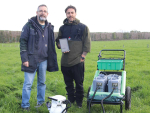
Researchers at Massey University are using a special piece of scientific equipment to improve the measurement of greenhouse gas emissions from pasture soils.
A revolving door of chief executives at milk processor Synlait is a warning sign, says Lincon University senior lecturer in agribusiness Nic Lees.
Troubled milk processor Synlait has lost its third chief executive in five years.
A hypothesis in a major dairy research programme that bulls genetically proven to be low methane producers could pass this trait onto their lactating daughters has been proven to be incorrect.


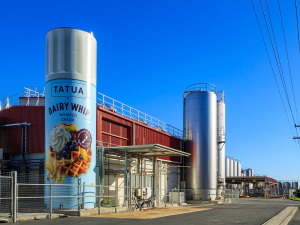
Waikato milk processor Tatua has again declared a record milk payout to farmer shareholders, leaving other processors in the dust.

A Labour-led Government won’t be bringing back the controversial freshwater rules of 2020.
National’s much-touted free trade deal with India featured in the Rural Issues Debate at Mystery Creek, Hamilton on Wednesday night.
New Zealand's 2026-27 freshwater fishing season has opened, with anglers encouraged to head to rivers and lakes over the coming days as conditions look favourable across much of the country.
Central Otago District Council (CODC) has voted against a plan to spread treated sewage sludge from Cromwell and Alexandra on farmland near Lauder, a decision Federated Farmers says reflects strong opposition from rural residents.
Pāmu has released its FY26 Integrated Annual Report, reporting a Net Operating Profit of $113 million, more than double the $49 million recorded in FY25.
OPINION: It seems Canterbury processor Synlait is still in the doldrums.
OPINION: Get offside with New Zealand First leader Winston Peters at your own peril.




