Massey Uses Portable Analyser to Measure Pasture Soil GHGs
Researchers at Massey University are using a special piece of scientific equipment to improve the measurement of greenhouse gas emissions from pasture soils.




 increase font size
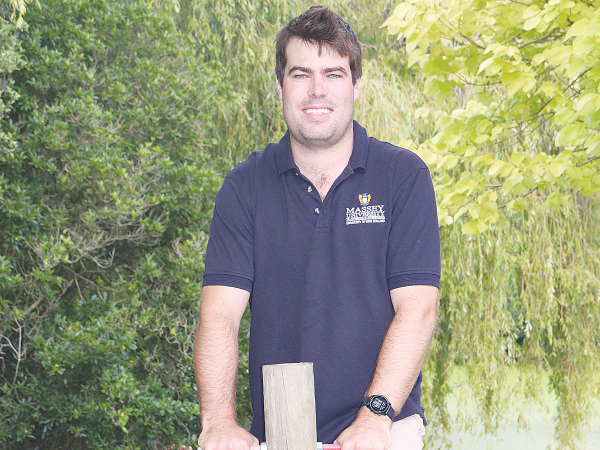 Sam Wilson’s creation, the ‘puggostick’ is modeled on a child’s toy called a pogo stick.
A Massey University lecturer has devised a simple No. 8 wire device to help shed some light on how to improve the persistence of plantain in dairy farm pastures.
The device Sam Wilson has come up with is what he calls a ‘puggostick’, which is modeled on a child’s toy called a pogo stick.
Wilson is in the final stages of completing a PhD, a large part of which is about researching the damage caused to plantain by cattle pugging pastures, which in turn affects the plants regrowth ability.
He says plantain has been identified as a lowcost option for dairy farmers to reduce nitrogen losses from their farms by including it in the pastures. But persistence is generally poor and it only lasts for around two years.
Wilson says the aim of his research is to find out more about why plantain doesn’t persist for longer.
“It appears that treading or pugging damage and water logging can temporarily slow down the growth of plantain and cause some of the plants to die, but there are other factors as well,” he told Dairy News.
“One that is coming clear from my PhD studies is the shading from other pasture plants, namely rye grass, particularly through cooler times of the year when plantain is not so active. I think there are plenty of previous studies that show that plantain is sensitive to shading,” he says.
Trying to set up trials to determine the damage caused by pugging to plantain has been challenging. Wilson says in the past a mechanical artificial hoof was manufactured, but its size and complexity meant it had limited use for field work.
The other known device was a ‘hoofinator’ which used hydraulic rams with steel plates that were forced into the soil to recreate the compaction of cow treading. But Wilson points out that a lot of the devices have been quite large, heavy, expensive and require a good amount of technical aptitude.
“As a PhD student I had to look for an alternative, so I came up with the ‘puggo-stick’ which comprises a weighted fencepost with steel handles and footrests, so it was possible to stand on the device in a manner like a pogo-stick. It is pressed into the ground with the weight of a human operator and replicates that of a single hoof of a stationary dairy cow.
“The beauty is that it cost about $150 and took just two hours to assemble, thus meeting the criteria of being inexpensive and quick to manufacture,” he says.
But while the device may be simple in concept, using it requires some very hard work. Wilson has some 30 plots on a Massey farm, each of which measure 2m by 2m.
The small plots are seen as the best way to effectively measure pasture damage. He says running cattle over larger plots can produce random results whereas the small plots give a much more accurate picture about the effects of pugging damage.
 |
|---|
|
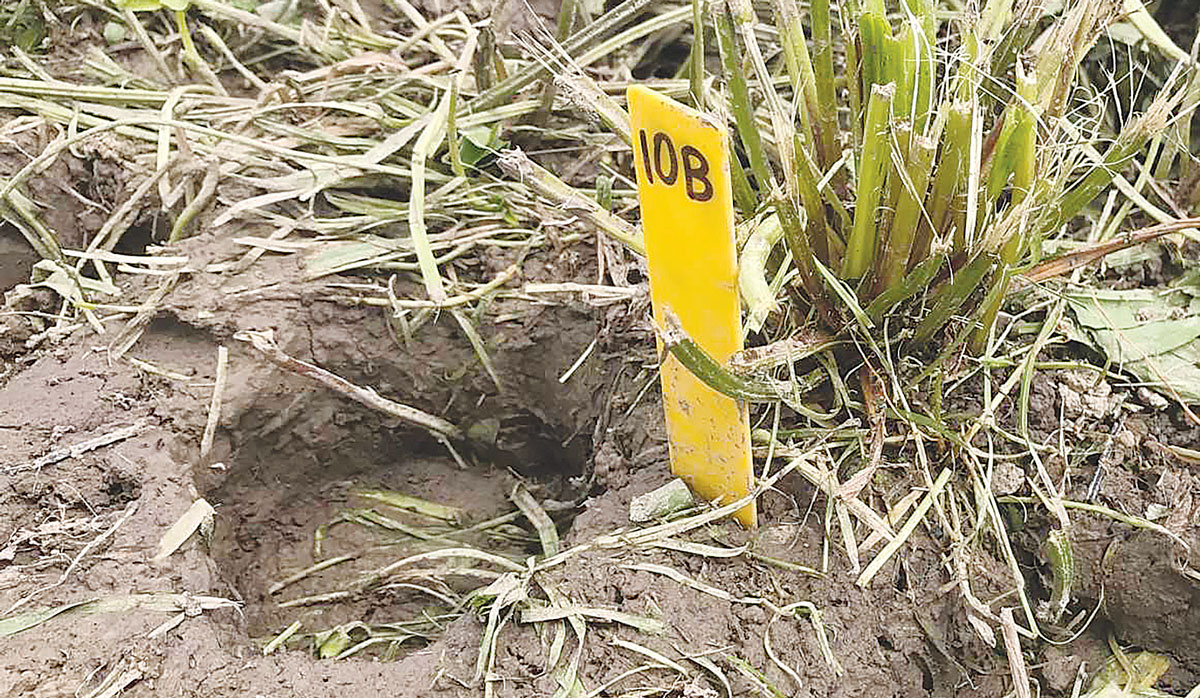
When pressed into the ground with the weight of a human operator, the puggo stick replicates that of a single hoof of a stationary dairy cow. |
The ‘puggo-stick’ weighs about 25kg, and to get sufficient data, Wilson says the distance between every pug mark he made was zero – as near as possible to over-lapping. He had to stand on the device until it made an impression about 35mm down in the pasture equivalent to a cattle beasts’ hoof mark.
“I had to do this to the 30 plots and basically it took me four days of solid treading with the puggo stick. It was quite a big week and I lost three kilograms over that time,” he says.
Wilson says the treading damage caused by the puggo-stick was comparable to damage caused by cattle in previous studies which suggests that this simple inexpensive tool is an effective method of simulating cattle treading damage in pastures and could be used for future experiments.
Wilson says one of the ways to overcome the problem of plantain persistence appears to be managing the grazing of such pastures differently. He says one option is to graze to a slightly lower residual and probably grazing more often. He says it looks like plantain pasture might be ready to graze earlier than ryegrass dominated pasture.
Researchers at Massey University are using a special piece of scientific equipment to improve the measurement of greenhouse gas emissions from pasture soils.

Interest in agritech and production animal systems has prompted Massey University's School of Agriculture and the Environment to new majors to its popular animal science degree.
The industry is crying out for graduates with agricultural related degrees.
A four year trial has reaffirmed that mixing plantain into dairy pastures can help reduce nitrogen losses to freshwater while maintaining milk production and profitability, say researchers.
Special courses for secondary school teachers to help excite kids about agriculture and horticulture are now being run at Massey University.


New Zealand's citrus growers were challenged to build their future on the value embedded in their fruit rather than the volume they produce, at Citrus New Zealand's annual gathering in Gisborne on 17 September.
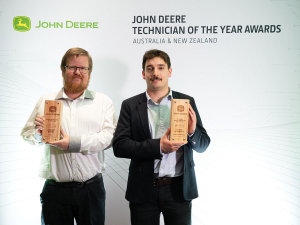
Leading John Deere technicians and apprentices from New Zealand and Australians were recognised at the recent sixth annual JD Technician of the Year Awards, held in Brisbane.
In Dacre, near Invercargill in New Zealand’s South Island, Bruce Dinnington is running a dairy operation unlike any other.
A free online platform aggregating governance vacancies across rural and regional New Zealand has been launched.
Environment Minister Nicola Grigg has announced details of a new rural plastics recycling scheme.
Agricultural drone operators say that a government decision to allow lower-risk drone work without certification won’t lower standards but drive innovation and efficiency.


OPINION: It seems Canterbury processor Synlait is still in the doldrums.
OPINION: Get offside with New Zealand First leader Winston Peters at your own peril.




