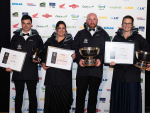
2027 NZ Dairy Industry Awards Open for Entries
Entries opened on Monday, 5 October 2026 for the 2027 New Zealand Dairy Industry Awards (NZDIA), which organisers describe as the nation's biggest celebration of excellence in the dairy sector.




 increase font size
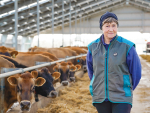
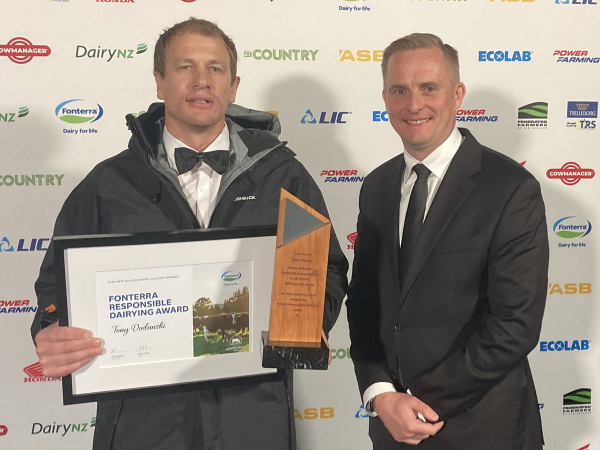 Fonterra Responsible Dairying Award winner Tony Dodunski with new Fonterra chief executive Richard Allen at the awards.
Milking cows in the environmentally sensitive Lake Ellesemere/Te Waihora catchment in Canterbury has kept Tony Dodunski on his toes.
And his outstanding leadership in delivering responsible dairying outcomes on the farm earned him the Fonterra Responsible Dairying Award at the recent NZ Dairy Industry Awards.
Beaumaris Dairies has been owned by the Dodunski Family since 2017.
Tony Dodunski, who manages the farm, told Dairy News that when the family first looked at buying the property, they understood the environmental constraints it has.
The farm has heavy soils and low-lying areas where overland flow of nutrients, sediments and phosphorus is the biggest environmental risk.
Dodunski says they identified that early and built a concrete feed pad to stand cows off and capture effluent during high rainfall events.
"We've also implemented a number of other initiatives including sediment traps, riparian planting, a low application rate effluent system, grid and all paddock soil testing with targeted fertilisr application, breeding smaller cows, focusing heavily on pasture utilisation, and installing solar to help power the cowshed."
Dodunski says he has come to acknowledge the farm for what it is.
"It's not an A-class Canterbury dairy farm, so rather than pushing the system too hard, we're comfortable farming at a slightly lower intensity to create something that is environmentally, financially and operationally sustainable long term."
Dodunski's message to dairy farmers is to focus on building profitable and resilient farm systems first, because profitability gives a farmer the ability to invest in sustainability long term.
"I also think sustainability is broader than just environmental outcomes. It's about people, energy, financial resilience, community, and the long-term sustainability of the wider dairy industry as well.
"The good thing about New Zealand dairy farming is that many of the practices that improve environmental outcomes also improve operational performance and resilience.
"Sustainability doesn't have to be about big statements, often it's the accumulation of lots of practical decisions and continuous improvement over time."
Dodunski says the Fonterra Responsible Dairying Award means heaps to him, his family, and the people who have been part of the journey.
"My name might be on the award, but there are so many people who have contributed to it over the years, so it's just as much a reflection of their contribution as it is mine. I'm very proud and grateful."
New Zealand Dairy Industry Awards say Dodunski has demonstrated that high environmental performance can be achieved through deliberate system design, evidence-based decision-making, and long-term commitment.
"His work exemplifies responsible dairying in action: delivering verified environmental outcomes, building capable and motivated people, and strengthening the long-term sustainability of the dairy sector."
Entries opened on Monday, 5 October 2026 for the 2027 New Zealand Dairy Industry Awards (NZDIA), which organisers describe as the nation's biggest celebration of excellence in the dairy sector.

The inaugural winners of the NZ Dairy Awards’ CowManager Experience prize say it will be a no-brainer to keep the technology in their farm business after experiencing the results.
Signing up to a benchmarking tool is not about competition, but about improving collectively, says Ximena Puig and Alvaro Luzardo who are 50-50 sharemilkers at a 164-hectare (effective) dairy farm in Eketāhuna in the Lower North Island.
More than 640 dairy farmers and industry leaders gathered together at Rotorua's Energy Events Centre on Saturday night to celebrate the New Zealand Dairy Industry Awards where Southland couple Scott and Stacey Mackereth were named Share Farmers of the Year.
Braden and Brigitte Barnes have taken the leap into farm ownership to purchase their first farm with support from the Fonterra & ASB First Farm Award.


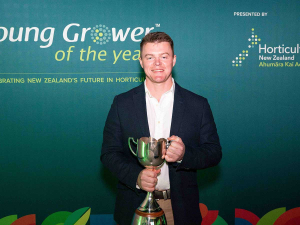
The potato industry is celebrating the success of two rising stars - James Blair, the 2026 Young Grower of the Year and runner-up and innovation award winner, Amber Davy.
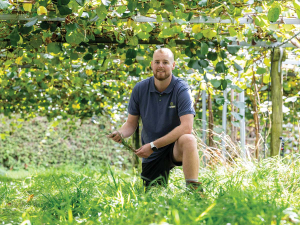
Twenty-eight emerging leaders from across the horticulture sector spent two days last month learning valuable skills and connecting with industry experts.
There are five entrants in this year’s Young Horticulturist of the Year, competing in a series of technical, practical, business and leadership challenges.
A seasoned horticulturist has been appointed to deliver the Apple Action Plan, a key initiative of the India-New Zealand Free Trade Agreement.
New Zealand's citrus growers have been told to compete on the value built into their fruit rather than the volume they grow.
Hawke's Bay fruit growers are being reminded of the need to prepare for whatever the El Niño weather system may bring in the coming months.
OPINION: It seems Canterbury processor Synlait is still in the doldrums.
OPINION: Get offside with New Zealand First leader Winston Peters at your own peril.




