
Feds Back National’s 19 Farming National Standards
National’s pledge to introduce 19 new national standards shows the party is serious about getting Wellington out of farming, Federated Farmers says.




 increase font size
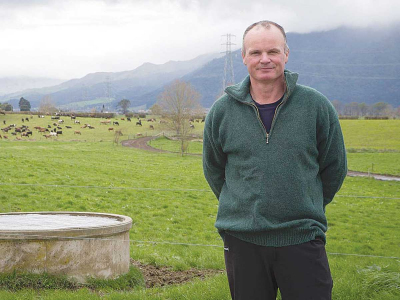 Andrew McGiven.
Disregarding the social and economic effects of the proposed water reforms is a recipe for disaster, warns Federated Farmers Waikato president Andrew McGiven.
Commenting on economic modelling done by DairyNZ on the proposed Essential Freshwater package, McGiven says our national standard of living would be under threat should the package be adopted.
The modelling shows the reforms could greatly harm New Zealand’s dairy sector and the wider national economy by 2050, costing $6 billion per year.
The Government’s September release of its proposed freshwater regulations prompted DairyNZ to make three studies of their potential economic effects. Two studies are independent and all three are peer-reviewed.
The economic analysis points to a huge hit: total milk production is forecast to fall 24% by 2050, and all national exports by 5.2% ($8.1b).
Tax revenue from dairy is also forecast to more than halve by 2050, with an annual loss of $540 million at the national level.
McGiven says the reports paint an alarming picture.
“It shows there will be a significant impact on revenue and employment throughout the dairy sector that will eventually impact on our national standard of living,” he told Dairy News.
“While all farmers are on board with improving our freshwater health and quality, the Government seems oblivious to the fantastic improvements that have already been made over the last decade and continue to be made.
“To solely focus on the environmental aspects and completely disregard the social and economic effects with these proposed policies I believe is a recipe for disaster.
“Farmers’ point of view is that we can’t be green if we’re in the red... and I don’t mean this as a political statement.”
DairyNZ says the proposed Zero Carbon Bill would add to the industry’s woes.
With the Zero Carbon Bill and its assumed reductions in methane considered alongside the Essential Freshwater reforms, the forecast is for an extra $1b loss (ie a $7b total loss) and another 4% reduction in milk production (total loss of 28%).
The more moderate freshwater reforms, in isolation, are not expected to have the same degree of economic impact, says DairyNZ chief executive Tim Mackle.
“Four scenarios were modelled and scenarios one and two -- which include actions on fencing, farm plans, capital expenditure, consented stand-off pads and nitrogen caps in priority catchments -- had less financial impact for farmers and therefore the economy.
“In contrast, the proposed nutrient limits under scenario three were forecast to impose a significant financial burden on the dairy sector.
The flow-on effects of less milk production are far-reaching and particularly severe for several New Zealand communities.
National’s pledge to introduce 19 new national standards shows the party is serious about getting Wellington out of farming, Federated Farmers says.

Mobile phone coverage and reliability are deteriorating in rural areas, and farming families are bearing the cost, according to a Federated Farmers survey.
Central Otago District Council (CODC) has voted against a plan to spread treated sewage sludge from Cromwell and Alexandra on farmland near Lauder, a decision Federated Farmers says reflects strong opposition from rural residents.
Federated Farmers has called on Central Otago District Council (CODC) to drop or vote down a plan to truck sludge from Alexandra and Cromwell to farmland near Lauder, warning it would compound an "outrageous" situation created by a separate council's decision weeks earlier.
Federated Farmers says new legislation replacing the Resource Management Act will cut red tape, unlock investment and help grow New Zealand's export-led economy, after the Planning Bill and Natural Environment Bill passed their third reading in Parliament yesterday.



National’s pledge to introduce 19 new national standards shows the party is serious about getting Wellington out of farming, Federated Farmers says.
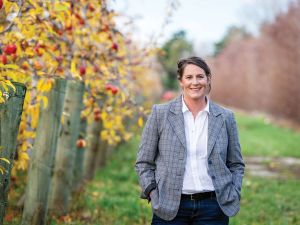
The National Party’s policies to make it easier to grow fresh vegetables, secure reliable water and energy and simplify farm planning are practical changes that will give growers the confidence to invest, according to Horticulture New Zealand (HortNZ).
Fonterra Co-operative Group chief financial officer Andrew Murray has resigned to take up a role outside the dairy giant.
A major move is about to get underway to improve the quality and viability of dairy beef and cattle in NZ.
Veterinarians say changes to the code of welfare for dairy cattle provides a positive foundation for improved cattle welfare across the country.
Today, 15 October, is the International Day of Rural Women, which recognises rural women’s contribution to farming, communities and the environment.




OPINION: It seems Canterbury processor Synlait is still in the doldrums.
OPINION: Get offside with New Zealand First leader Winston Peters at your own peril.




