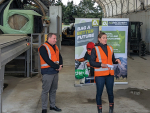
New Rural Recycling Scheme to Replace Voluntary Farm Plastics Programmes by 2027
Environment Minister Nicola Grigg has announced details of a new rural plastics recycling scheme.




 increase font size

PLANNED CHANGES to the rules for agricultural vehicles will reduce compliance costs while still ensuring safety, says Associate Transport Minister Simon Bridges.
The change is to a two-tier system for agricultural vehicles based on a 40km/h operating speed. Vehicles operating below this speed will be exempt warrants of fitness and work time requirements.
A new licence endorsement will allow car licence holders to drive a greater range of agricultural vehicles if they have the skills.
Other changes will improve and simplify the rules on pilot vehicles, work time variation schemes, hazard identification and vehicle visibility.
“Safety remains a key factor,” Bridges says. “Agricultural vehicles [must] use a flashing amber beacon to better alert other road users to [their] presence. Better and less regulation [will improve] compliance and flexibility for vehicle owners.”
A review in September 2011 responded to farmers’ and contractors’ concerns that existing laws failed to take into account the special nature of farm vehicles and the demands of production.
Introducing the changes for agricultural vehicles will require land transport rule amendments, and Bridges says there will be further opportunities for industry and the public to make submissions.
Environment Minister Nicola Grigg has announced details of a new rural plastics recycling scheme.
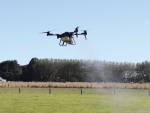
OPINION: David Seymour and James Meager's plan to make it easier for farmers and orchardists to operate drones can best be described a 'courageous' move.
There's been widespread support from the primary sector for the Government's announcement on changes to freshwater farm plans that come under the Natural Environment Bill, which is now set to replace the existing RMA.
The chair of the country's environmental regulator, the Environmental Protection Authority (EPA), says changes are already under way to improve the performance of the agency to better meet the needs of those who interface with them.
Are you ready for El Nino? That’s the question asked by Beef+Lamb NZ’s Ian Tarbotton who leads B+LNZ’s farm extension service.



Federated Farmers says it welcomes Labour's commitment to reviewing the Sharemilking Agreements Act, calling on other major parties to do the same.
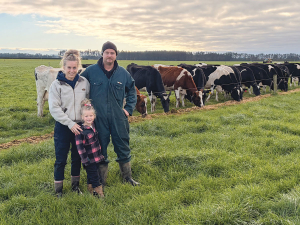
For Canterbury dairy farmers Sian Meijer and Rick Wobben, wearable technology has become one of their most valuable on-farm tools - helping manage 1850 cows across an expansive, high-performing dairy operation while improving efficiency, mating outcomes and day-to-day decision making.
Fonterra has unveiled its annual results for the 2026 financial year, posting $27 billion in revenue and close to $20 billion returned to New Zealand farmer owners and unit holders.
The first major update to the Dairy Cattle Code of Welfare in more than a decade has been released, marking what DairyNZ describes as an important step in ensuring animal welfare standards continue to evolve alongside scientific evidence and on-farm realities.
Ravensdown shareholders have elected Jane Montgomery and Kate Acland to the Ravensdown Board for three-year terms, following a closely contested director election.
Federated Farmers says new legislation replacing the Resource Management Act will cut red tape, unlock investment and help grow New Zealand's export-led economy, after the Planning Bill and Natural Environment Bill passed their third reading in Parliament yesterday.



OPINION: It seems Canterbury processor Synlait is still in the doldrums.
OPINION: Get offside with New Zealand First leader Winston Peters at your own peril.




