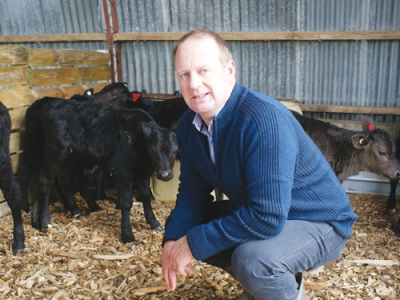
Dairy farmers wanting to spread risk and income source are enquiring about Firstlight Wagyu genetics, says the company's supply manager Peter Keeling.
He says the company will meet its targets for straw semen and bulls to supply dairy farmers for winter and spring mating.
"Dairy farmers are keen to look at alternative income sources... within their existing dairying business.
"Crossing cows and/or heifers with Wagyu genetics... can lock in a high value four-day-old calf with a guaranteed buyer at a premium that makes them more appealing than the traditional bobby calf."
Farmers can expect to be paid $200 per mixed sex AI calf, and $150 per naturally mated calf. They also have the option of rearing them to 90kg and getting up to $550/head.
Easy-calving Wagyu also offer an option to traditional breeds for farmers mating heifers for the first time, Keeling says.
Marketing-wise Firstlight Wagyu are also good value, the company claims. Friesian-cross Jersey and Friesian dairy breeds can produce high quality marbled beef, and mating them with Wagyu sires results in high-marbling beef.
Firstlight director Gerard Hickey says market demand for Firstlight grass fed Wagyu is gaining momentum every year in many markets. "We now have sales staff in the United Arab Emirates, California, Paris and the UK."
Firstlight says in the US it has a loyal following in retail chains in Los Angeles and San Francisco. The beef is said to appeal to high income, environmentally conscious consumers, Hickey says.
"Buyers or consumers tell us this is the best beef they have ever tasted."
The company says it tells a genuinely "New Zealand" story with its grass fed, antibiotic free, high quality brand.