'No downsides to OAD milking'
Matamata farmer Cam Houghton is an enthusiastic once a day milking advocate and is always looking to add to his farming knowledge, partly through attending SMASH events.




 increase font size
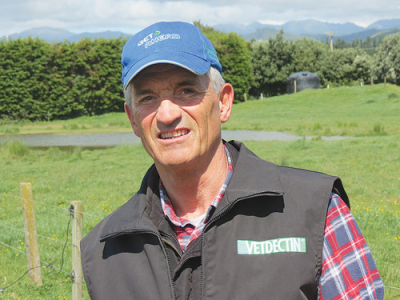 Leo Hendrikse.
Once-a-day (OAD) milking farm consultant Leo Hendrikse says planning is a key element in succeeding with a conversion to OAD.
It may take a few years to get the right cows and infrastructure on the farm but this time and effort pays off in the long term.
“Don’t go into OAD on a whim,” he says.
The loss in production when farmers first convert to OAD can be as high as 25% or as low as 3%, depending heavily on planning and good professional advice.
The key thing is to balance income and expenditure, he says. “So if your production is down by 11% you need to reduce your farm working expenses by 11%.”
Hendrikse says most farmers who move to OAD stay with it because it is working for them.
Meanwhile Ed Jackson, who milks 190 cows OAD at Ashurst agrees with Hendrikse’s advice about the need for planning. His good planning enabled him to avoid a loss when he converted to OAD.
He was great friends with the late Professor Colin Holmes, one of NZ’s greatest supporters of OAD. Holmes gave Jackson many tips, especially planning to get the genetics right and getting cows that suited OAD.
“We have a variety of cows, most of them cross-breeds leaning more towards Jersey. The Jersey cow has the ability to hold the milk in her udder without the decrease in production you see in Friesian cows,” he says.
Jackson also rears extra beef calves, something they have always done. Now in his 5th OAD season, he says he’d never go back to TAD. OAD offers more lifestyle choices, providing time for family, hobbies and sport.
Matamata farmer Cam Houghton is an enthusiastic once a day milking advocate and is always looking to add to his farming knowledge, partly through attending SMASH events.

Some dairy farmers in Southland are already moving to once a day (OAD) milking because they don’t have sufficient good pasture on which to graze their stock.
There was a large turnout on a recent DairyNZ webinar discussing once-a-day (OAD) milking, with participants joining in from Northland and Southland and all places in between.
Once-a-day (OAD) milking was up for discussion at a recent Small Milk and Supply Herds (SMASH) field day at Massey University.
A leading once a day (OAD) farmer says her farm is set to have a record year thanks to a combination of favourable circumstances – especially the weather.


Testing confirms H5 bird flu in a single northern giant petrel, found dead on a remote Cape Palliser beach in the Wairarapa, says Dr Mary van Andel, the Ministry for Primary Industries' (MPI) Chief Veterinary Officer.

"What's for dinner?" may sound like a simple question, but for many Kiwi parents, answering it has become a job in itself.
Fifty Eight years ago, on the 16th of August 1968, August Claas, the founder of the harvesting company and father of Helmut Claas, personally presented a Claas Senator combine harvester to Scottish farmer John Steven.
New Zealand consumers are paying more for beef mince than ever before, with the average retail price now sitting above $24 per kilogram, according to Rabobank.
State farmer Pamu has delivered its strongest operating result on record.
Four years since it was first detected in New Zealand, researchers and growers now know much more about management of maize pest fall armyworm (FAW).




OPINION: After hogging the media limelight for telling a NZ Chinese MP to "go back home", Winston Peters has decided…
OPINION: With fuel prices soaring, one would have expected most farmers to be reclaiming excise duty on petrol.