New chair for genetics governance group
Fifth-generation dairy farmer Rebecca Keoghan is the new independent chair of the Animal Evaluation Governance Group.




 increase font size
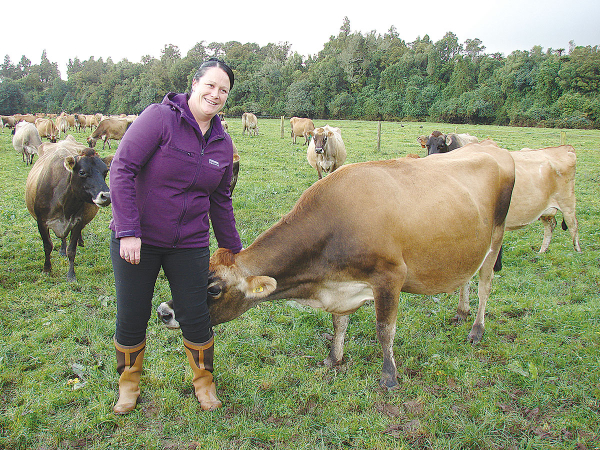 Fifth-generation dairy farmer Rebecca Dr. Paul Edwards – DairyNZ Keoghan is heading a committee targeting genetic gains for farmers.
New Zealand's dairy sector has long been a global leader in productivity and efficiency, but to stay competitive, it's crucial that the sector keeps pace with advancements in genetic gain.
That's the challenge being tackled by the Future Focused Animal Evaluation Work Programme, a new initiative led by a Governance Group formed in 2024.
At the helm is independent chair and fifth-generation dairy farmer Rebecca Keoghan, who brings a practical, future-focused lens to the work.
Keoghan is chairing a group made up of DairyNZ, its subsidiary NZ Animal Evaluation Limited (NZAEL), LIC, and CRV.
"These are key players in New Zealand's animal evaluation system, and we're working both together and individually to help lift our rates of genetic gain by modernising how we evaluate breeding animals," she says.
The formation of the group was driven by findings from an independent Industry Working Group (IWG) that found that New Zealand is falling behind international counterparts in adopting genomic technologies to accelerate genetic progress. The IWG recommended a more collaborative, future-proofed approach to ensure the system remains relevant and effective.
"As farmers know, genetics has been a cornerstone of our productivity," says Keoghan. "But we need tools and information that help farmers keep improving. Thar means developing a better animal evaluation system, one that is simple, reliable, and built for the future and freely available to all."
This year, the Governance Group is focusing on three core areas:
"We need to be breeding animals today that will meet the needs of farmers and the sector tomorrow," says Keoghan. "That requires strong engagement throughout the sector to define what we want our future herd to look like."
To support this work, a new - and separate to the Governance Group that Keoghan leads - NBO Committee has been established, comprising DairyNZ, NZAEL, LIC, CRV, Fonterra, genetics experts and farmer representatives. This collaboration is a significant shift in how breeding objective recommendations are formed, bringing some of the sector's largest players together around the table to help shape the traits that will matter most. It's a direct response to the IWG's call for more strategic collaboration.
Following industry consultation, the group's feedback is fed through to NZAEL as the industry-good body for decision making. The NBO Committee's task is to help define the traits that will be in a future-focuse NBO that reflects both farmer needs and emerging sector challenges.
Lactose is expected to be incorporated next, with the potential for additional traits in the future, such as those relating to environmental outcomes and climate adaptability.
"We've got the heavy hitters working on this big challenge," Keoghan says.
Farmers often face conflicting information when making breeding decisions.
"If you're at the kitchen table with three pieces of paper and three different BWs, it's confusing," she says. The goal is an industry-wide, consistent BW assessment against the NBO that everyone, farmers, breeders, and sector players,can rely on. It's a complex job, but the early work suggests it's achievable."
Any successful evaluation depends on the quality of the data it uses. The group is assessing gaps and exploring how to better capture the performance traits needed to feed future genetic models.
A major shift from past approaches is the level of collaboration. While DairyNZ, NZAEL, LIC and CRV have always played roles in animal evaluation, this is the first time they've all collaborated in a structured way to tackle these problems for the sector.
"There's a real spirit of cooperation," says Keoghan. "It's clear no single organisation can solve this on its own. The commitment I've seen in the room, from all three partners on the Governance Group is really encouraging," she says.
Engagement with farmers and stakeholders is also a priority. "We've been meeting with Breed Associations, Federated Farmers, and other breeding companies. This isn't just a technical exercise - it must work for those using the system every day."
Since taking up the Chair role, Keoghan has led the Future Focused Animal Evaluation Governance Group, set up key technical workstreams, and built strong alignment around the project's milestones and direction. "Our goal is to have the improved system in place, tested, and operating by the end of 2026."
"But the work won't stop there. Genetic improvement is never 'done'," Keoghan says. "This programme lays the foundation, but we'll keep refining and improving beyond the two-year horizon.
Farmers need systems that evolve as fast as the science does."
With strong leadership, sector-wide collaboration, meaningful stakeholder engagement and a clear vision for the future, the Future Focused Animal Evaluation Work Programme is set to deliver enduring value for New Zealand's dairy farmers, and the country.
Governance Group Members
FFAE Governance Group members:
Committee Members
NBO Committee Members:
Fifth-generation dairy farmer Rebecca Keoghan is the new independent chair of the Animal Evaluation Governance Group.

A major new initiative to improve safety in farming has been launched by Landcorp, branded Pamu Academy.
Two West Coast dairy farmers were named in the Queen’s Birthday honours list.
Dairy Woman of the Year Rebecca Keoghan loves governance and strategy and has worked her way into that in the last couple of years.
"What I do in dairying I do for love – I don't need any recognition for it," says the 2016 Dairy Woman of the Year, Rebecca Keoghan.


Dairy processors are ready to further boost New Zealand’s export earnings but want the incoming government to match their ambition with good policy.
Massey University is best placed to solve the “problems” facing the dairy industry, says vice chancellor, Pierre Venter.
Synlait's longest serving employee – a man who joined the Canterbury-based milk processor even before it began processing milk – is now its newest executive.
A dairy industry leader believes eradicating the common and costly disease, Bovine Viral Diarrhoea (BVD) is within reach.
A farmgate milk price of $10/kgMS this season is firming up as milk powder prices soar and the New Zealand dollar weakens.
Federated Farmers has welcomed new rural policies released by ACT, saying they align closely with its own election priorities.

OPINION: It seems Canterbury processor Synlait is still in the doldrums.
OPINION: Get offside with New Zealand First leader Winston Peters at your own peril.




