
El Niño Warning: NZ Farmers Urged to Plan Fert Early
Plan ahead and be patient. That’s the message to farmers and horticulturalists from the chairman of the NZ Agricultural Aviation Association, Kent Weir.




 increase font size
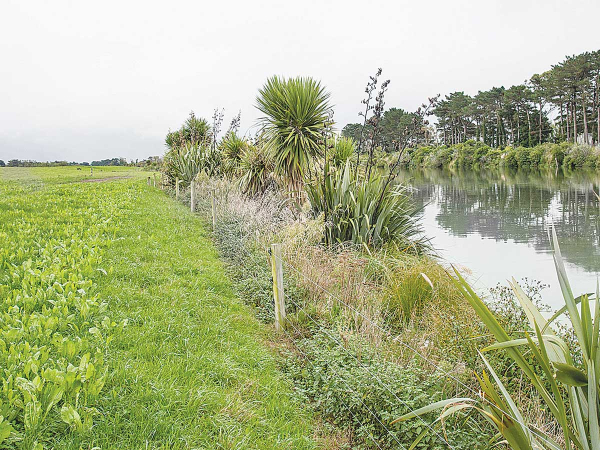 A clear assessment of fertiliser requirements will both improve economic returns from pasture and help avoid contamination of ground and surface water.
With spring in the air and soils starting to warm up over the next few weeks, farmers will be preparing to fertilise their paddocks.
As there are a range of risks when applying fertiliser and strategies to help avoid them, it is highly recommended that all farmers have a nutrient budget and a nutrient management plan for their properties and discuss their situation with a fertiliser or farm consultant.
There are a range of tools to help practice sustainable nutrient management. Nutrient budgeting is widely accepted as the appropriate first step in managing nutrient use and it’s also the preferred tool for evaluating the environmental impact of farm management practices.
OverseerFM, a digital decision support model, is used to advise on nutrient management and greenhouse gas emissions. It predicts what happens to the nutrients that are brought onto the farm in the form of fertilisers and supplementary feed in the same way that a financial budget can track money.
A prolonged dry spell is forecast for the forthcoming summer months. It is therefore strongly recommended that nitrogenous fertilisers be used strategically looking at feed budgeting.
Another issue to consider is nitrate leaching. Plants need nitrogen (N) for healthy leaf growth. But N is an extremely mobile nutrient. If more nitrogenous fertiliser is applied than plants can take up, most of the unused nitrogen ends up leaching down through the soil into groundwater. Sometimes N will also be lost to waterways as runoff and some is always released back into the air as gas.
The amount of N leaching from pastures can be reduced by:
• timing fertiliser application to avoid periods when plant uptake of N will be low, such as when soils are saturated, during heavy rain, colder periods and times of low soil temperatures
• applying N fertiliser in split dressings (limit to 30 kg N/ha/yr and maximum of 190 kg N/ha/yr)
• irrigating farm dairy effluent to a large enough area
• adjusting fertiliser policy for effluent irrigated areas to account for the nutrient value of effluent
• using fenced wetlands and well-managed open drains as nutrient traps.
The nutrient phosphorus behaves very differently to N because it binds with the soil and only dissolves slowly in water over time. This means it doesn’t readily leach to groundwater. But it can damage the health of waterways through soil erosion and surface runoff into water.
Farmers can reduce the amount of phosphorus runoff by keeping Olsen P to optimum agronomic levels. Other tips include:
• following the NZ Fertiliser Manufacturers’ Research Association Code of Practice for Nutrient Management
• applying fertiliser when the grass is in an active growing phase
• leaving a grassed buffer strip between paddock and waterway – the strip filters the phosphorus before the runoff reaches the water
• controlling runoff from tracks, races, feed and stand-off pads.
So, a clear assessment of fertiliser requirements will both improve economic returns from pasture and help avoid contamination of ground and surface water with nutrients, particularly nitrogen and phosphorus.
With Waikato Regional Plan Change 1, National Policy Statement for Freshwater Management (NPS-FM) and National Environmental Standards (NES) around the corner, there is an increasing pressure for farmers to improve their farm’s nutrient management.
Due to the effects nitrogen and phosphorus can have on water, and because improving nutrient use efficiency is more important for farm profitability, the issue of nutrient management has become increasingly vital.
Getting the best bang for buck out of fertiliser, use while protecting economic and environmental bottom lines, is a key goal for farmers.
• Bala Tikkisetty is a sustainable agriculture advisor (technical) at Waikato Regional Council. Contact him on This email address is being protected from spambots. You need JavaScript enabled to view it. or 0800 800 401.
Plan ahead and be patient. That’s the message to farmers and horticulturalists from the chairman of the NZ Agricultural Aviation Association, Kent Weir.
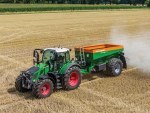
Amazone's ZG-TX combi spreader has been updated with several new features, centred around improved accuracy and easier operation.
When it comes to annual rebates, it's been a long time between drinks for Ravensdown shareholders.
Ravensdown has reported a net profit before tax and rebate of $50.1 million for the year ended 31 May 2026.
A new digital assistant is now helping Ballance Agri-Nutrients farmers speed up nutrient information and ordering.


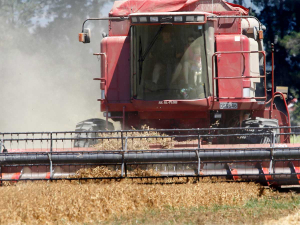
Mid Canterbury Federated Farmers arable chair, Bevan Lill, said Beef + Lamb NZ data indicated that for the last six years, the average arable return on investment was about 0.8% while inflation ran about 4% - so the average arable farm was going backwards at about 3% a year.

Seed and grain companies share the concerns of arable farmers about the viability of their sector, says Seed and Grain New Zealand chief executive Dr Sarah Clark.
The New Zealand Institute of Forestry (NZIF) says unnecessary changes to New Zealand’s Emissions Trading Scheme (NZ ETS) will seriously erode investor confidence and result in significant reductions in forest planting rates.
For the first time in a quarter of a century, Federated Farmers has something positive to say about the Labour Party’s climate change policy leading into a general election.
A warning for New Zealand seed and grain companies – be prepared for an exodus of farmers from the arable sector.
Now in its fourth year, the 2026 Fencing Industry Awards, formed part of the proceedings of the FCANZ Conference, held in Nelson during August.




OPINION: It seems Canterbury processor Synlait is still in the doldrums.
OPINION: Get offside with New Zealand First leader Winston Peters at your own peril.




