DairyNZ Sets Out Election Priorities for Dairy Farmers
Election years are always a concerning time for farmers, according to DairyNZ chair Tracy Brown.




 increase font size
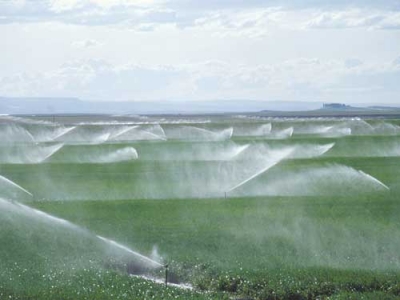 More needs to be done quickly to build irrigation infrastructure.
The Government's 30 Year Infrastructure Plan announced last month recognises irrigation infrastructure as part of the foundations for a prosperous New Zealand.
“This is positive and, importantly, the plan recognises that more needs to be done by national and regional government to ensure water storage and irrigation infrastructure is built to maximise the economic and social benefits our freshwater can offer while protecting the environment,” says Andrew Curtis, IrrigationNZ chief executive.
“As part of this, the action plan identifies that Government needs to provide more detailed national guidance on nutrient limit setting in rivers and help develop better tools for measuring nutrients.
“This will prevent councils and environmental courts muddling their way through vague legislation to reach outcomes which are causing significant delays in getting water storage and irrigation projects off the ground and are driving away investors.”
Additionally, there is recognition in the plan that unnecessary delays caused by the RMA and consenting processes need to stop. Otherwise, we will be in a situation where promises are made but not delivered on and our regional and national economies will suffer, says Curtis.
“The plan also acknowledges our recommendation that the best way to respond to land change, and other development pressures on freshwater, is by collaborative catchment scale solutions. As part of this, water storage can become part of the solution to water quality and nutrient issues by providing flushing flows and river or groundwater augmentation. All irrigation projects currently under investigation provide these key benefits. This way, water infrastructure can offer environmental benefits, as well as the well-known broader economic and social ones.
“The Government recognises this potential, which is why it has contributed $150m since 2011. But more needs to be done, quickly, to get this beneficial infrastructure built and over the line.
“The future requires building resilient provincial communities and water supply reliability is paramount to this, especially on the east coasts of NZ.”
IrrigationNZ emphasises that as well as these changes at a national level, all irrigators need to implement SMART irrigation practices and technologies to ensure maximum efficiencies. SMART irrigators are those farmers demonstrating precise and accountable water application.
Election years are always a concerning time for farmers, according to DairyNZ chair Tracy Brown.
Opuha Dam's ability to protect South Canterbury communities from major flooding has taken a significant step forward, with Opuha Water Limited (OWL) successfully commissioning a new outlet valve capable of releasing record volumes of water from the dam ahead of a weather event.
OPINION: David Seymour and James Meager's plan to make it easier for farmers and orchardists to operate drones can best be described a 'courageous' move.
Increased competition for water means the whole community is looking at how irrigators use water.
OPINION: To a chorus of crying greenies, and not a minute too soon, the Government has moved to put the courts back in their place through proposed amendments to the Climate Change Response Act 2002, intending to limit climate litigation claims such as Smith v Fonterra, in the interests of providing greater certainty for vital industry.



Now in its fourth year, the 2026 Fencing Industry Awards, formed part of the proceedings of the FCANZ Conference, held in Nelson during August.
DairyNZ deputy chair Cameron Henderson has been re-appointed unopposed for another term.
OPINION: The stats speak for themselves.
Farms across the upper North Island are trialling different pasture mixes as part of a research programme that aims to build greater resilience into farming systems.
Election years are always a concerning time for farmers, according to DairyNZ chair Tracy Brown.
The Ballance Farm Environment Awards are coming to the West Coast of the South Island.



OPINION: It seems Canterbury processor Synlait is still in the doldrums.
OPINION: Get offside with New Zealand First leader Winston Peters at your own peril.