
Fall Armyworm in NZ Maize: Four Years of Research
Four years since it was first detected in New Zealand, researchers and growers now know much more about management of maize pest fall armyworm (FAW).




 increase font size
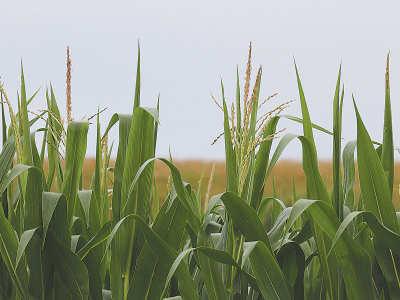
The summer dry has resulted this autumn in less-than-ideal quantities of grass being available to cows.
And, typically, at this time of year we get a lot of questions about feeding maize in autumn when there often isn’t much grass in cows’ diets. Let me cover some typical questions.
I have just harvested my maize; how long do I need to wait before feeding it?
You can begin feeding maize as soon as you have harvested it. We recommend you wait for 4-20 days because this gives the maize time to become oxygen-free and therefore ensile. If you have used a proven inoculant (e.g. Pioneer 1132), the maize will have reached pH 3.6-4.0 in four days. If you haven’t used a proven inoculant, it can take up to 20 days to ensile. If you have used an inoculant with L. buchneri in it, ideally you should wait 20 days before opening the stack, as it simply takes longer for the bacteria to do their job.
How much maize silage can I feed?
This is a ‘how long is a piece of string’ type question because many factors go into the answer. The amount you can feed depends on the class of stock you are feeding and what you want to achieve. When I visited France, some farmers were feeding 90% of the cows’ diet in maize silage; the other 10% was a very high protein-and-mineral pellet. If you are feeding late lactation cows, you will require an average of 14% crude protein in the diet. Maize is only about 7% crude protein (CP). If you need a total of, say, 14kgDM to achieve the milk production you are aiming for and you only have maize and grass, then if the grass is 18% and maize is 7% you will need to feed about 9 kgDM pasture and 5kgDM maize silage. This calculation will be different for each farm so if you feel uncomfortable about calculating this yourself, give your farm consultant or vet a call.
What is the most profitable use of maize silage in late lactation?
This is one of those ‘it depends’ questions. The data shows that very high milk response rates to maize silage -- and therefore returns -- can be achieved by bridging a feed gap and, instead of drying off, you would able to keep cows milking. Likewise, if your cows are thin (i.e. below BCS 4.0 at calving), using maize silage to put weight on cows to achieve BCS 5.5 for first and second calvers and BCS 5.0 for mixed age cows can also result in high milk response rates.
Should I save my maize silage and only feed it to dry cows?
I sometimes hear “maize silage is no good for milking off therefore I should only feed it to my drys”. Nothing is further from the truth. While it is true that dry cows fed maize silage put on weight very efficiently, it is not true that cows will not milk on maize silage. As long as the cow’s total diet is adequate in protein, at 11 mjme/kgDM maize silage is a great milking feed. It is often better than grass silage (average energy content 9.5 mjme/kgDM) and in some regions with pastures plagued by summer grass (10-10.5mjme/kgDM) it can be higher energy than pasture. So, if you need energy to keep your cows milking, and there is enough protein in the diet, feed maize to milkers.
Do I need to add minerals to my maize and if so, how much?
The best person to answer this question for your farm is your vet or animal nutritionist. However, a rough rule of thumb is that as maize silage is low in Ca, Na, Mg and P, if you are feeding more than one third of the cow’s diet as maize silage, you will likely need to add these to the diet.
A good guide is the DairyNZ website https://www.dairynz.co.nz/feed/supplements/maize-silage.
• Ian Williams is a Pioneer genetics specialist.
Four years since it was first detected in New Zealand, researchers and growers now know much more about management of maize pest fall armyworm (FAW).
How to save soil, living with kikuyu grass and retaining nutrients on farm.
The transition period (typically defined as the three weeks prior to and the three weeks immediately after calving) sets the biological and productive trajectory for the entire lactation by determining how well the cow adapts from pregnancy to peak milk production.
As spring calving cows head into dry-off, the priority shifts to one thing: setting cows up to calve at the target body condition score (BCS).
Early December marks a key transition for many dairy farmers, as weaned replacement heifers head off-farm to grazing.



Fonterra Co-operative Group chief financial officer Andrew Murray has resigned to take up a role outside the dairy giant.
A major move is about to get underway to improve the quality and viability of dairy beef and cattle in NZ.
Veterinarians say changes to the code of welfare for dairy cattle provides a positive foundation for improved cattle welfare across the country.
Today, 15 October, is the International Day of Rural Women, which recognises rural women’s contribution to farming, communities and the environment.
Global dairy giant Lactalis has integrated its Australian operations with the Mainland Dairy consumer business it acquired from Fonterra earlier this year.
After almost two decades of sharemilking, saving and building equity, Aaron and Marcia Flay this year realised their long-held dream of settling on their first dairy farm.


OPINION: It seems Canterbury processor Synlait is still in the doldrums.
OPINION: Get offside with New Zealand First leader Winston Peters at your own peril.




