Federated Farmers Welcomes ACT’s New Farming Policies
Federated Farmers has welcomed new rural policies released by ACT, saying they align closely with its own election priorities.




 increase font size
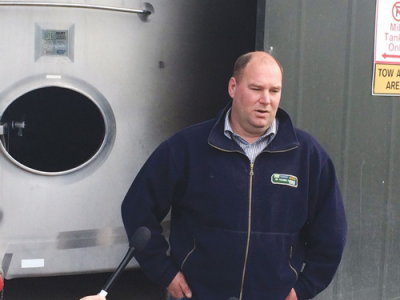 Andrew Hoggard.
Farmers need to start asking companies to get behind existing technology to make life easier for farmers when it comes to data collection.
Recently in Federated Farmers we got asked to comment on whether we felt there should be any changes to the Statistics New Zealand’s annual production census.
A review is happening and our policy staff wanted feedback as to what farmers thought; some responded asking why they can’t pull the information from somewhere else.
This got me thinking about one of my pet hates: the amount of duplication that is out there with farmers needing to provide data to companies and agencies.
All these organisations that collect data likely think they’re only asking for a little, which will only take a few minutes, but when you add up all those requests for data it becomes a mountain of work.
When I think about the number of organisations or companies that want to know how many cows I have, it is actually quite a list.
My dairy company wants to know so it can plan for milk production and nitrogen recording. NAIT wants that information because that’s what they’re about and Statistics NZ wants to know.
My fertiliser company wants to know for nutrient budgeting, as well as the Overseer computer program, which unfortunately doesn’t inform the dairy company’s nitrogen recording system.
My regional council wants to know for effluent and stock drinking water consents. My accountant wants to know, because IRD wants to know, and so I need to enter it into my accountancy software. Beef + Lamb NZ wants to know so I get my allowed number of votes.
Finally I actually want to know, because it’s a useful piece of information to have for feed budgeting and financial budgeting purposes. So I have to enter it into my herd management software.
Chances are that none of those numbers provided above exactly match and the most accurate one is of course in my herd management software.
There are pan industry initiatives which would make life simpler by ticking a box that would allow information to automatically go to everyone who needs it if I agreed to it.
• Andrew Hoggard is Federated Farmers dairy chairman.
Federated Farmers has welcomed new rural policies released by ACT, saying they align closely with its own election priorities.

A farmgate milk price of $10/kgMS this season is firming up as milk powder prices soar and the New Zealand dollar weakens.
Federated Farmers is backing Feilding High School’s call to keep Agriculture and Horticultural Science as a standalone subject in Year 11.
As part of its Election 2026 coverage, Rural News asked political parties how they would help pull the arable sector out of the doldrums. Here's what they said:
National’s pledge to introduce 19 new national standards shows the party is serious about getting Wellington out of farming, Federated Farmers says.


Fonterra board members are in line for a pay rise of around 3%.
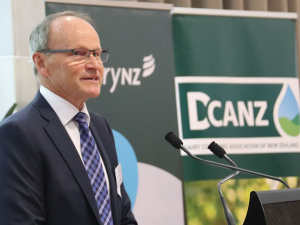
Dairy processors are ready to further boost New Zealand’s export earnings but want the incoming government to match their ambition with good policy.
Massey University is best placed to solve the “problems” facing the dairy industry, says vice chancellor, Pierre Venter.
Synlait's longest serving employee – a man who joined the Canterbury-based milk processor even before it began processing milk – is now its newest executive.
A dairy industry leader believes eradicating the common and costly disease, Bovine Viral Diarrhoea (BVD) is within reach.
A farmgate milk price of $10/kgMS this season is firming up as milk powder prices soar and the New Zealand dollar weakens.

OPINION: It seems Canterbury processor Synlait is still in the doldrums.
OPINION: Get offside with New Zealand First leader Winston Peters at your own peril.




