India FTA Removes 33% Tariff on NZ Sheepmeat
New Zealand’s red meat sector has welcomed the India-New Zealand Free Trade Agreement taking effect, which removes India’s 33% tariff on New Zealand sheepmeat.




 increase font size

A new report commissioned by the Ministry for Primary Industries has shown the potential held in over one million hectares of Maori freehold land, says Minister for Primary Industries Nathan Guy.
The report Growing the Productive Base of Māori Freehold Land estimates that lifting productivity to average industry benchmarks could result in an additional $8 billion in gross output and 3,600 new jobs for the primary sector. To achieve the estimated gains an investment in the land of just under $3 billion would be required.
"The potential for Maori freehold land represents an opportunity for Maori, the wider primary sector and New Zealand as a whole," says Guy.
"The report confirms that some iwi are well organised and have their asset base generating good returns, while others haven't realised their true potential yet.
"It is ultimately up to Maori to work out how to realise that potential, but Government has an important role partnering with Maori as leaders in driving a change.
"The proposed reforms to the Te Ture Whenua Māori Act announced by Minister for Treaty Settlements Chris Finlayson and Minister of Māori Affairs Dr Pita Sharples will be an important step towards unlocking this potential."
Late last year the Ministry for Primary Industries provided close to $3 million in funding for initiatives to promote sustainability and innovation amongst Maori agribusinesses.
The Ministry is also working with education agencies, training providers and other stakeholders to identify the opportunities to provide targeted training to Maori agribusinesses.
The Maori collective asset base is estimated at $37 billion. About 30% ($10.6 billion) is estimated to be in the primary sectors.
New Zealand’s red meat sector has welcomed the India-New Zealand Free Trade Agreement taking effect, which removes India’s 33% tariff on New Zealand sheepmeat.

New Zealand's role is not to compete with Indian growers, according to NZ Apples and Pears.
The red meat sector is in great heart.
As expected, the US has launched a safeguard investigation into lamb imports, a move that could impact New Zealand sheepmeat returns.
New Zealand's red meat sector says it welcomes the Government's focus on trade ahead of the general election in November.
New analysis from DairyNZ highlights the growing importance of efficiency and cost control in maintaining profitability, with a widening gap between New Zealand’s highest and lowest performing dairy farms.
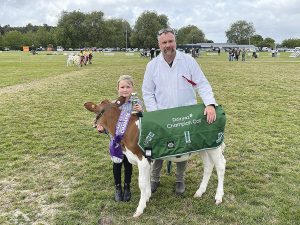
For eight-year-old Myra Smith, weeks of caring for and preparing her Red Holstein Friesian calf, Bell, have paid off, with the young Te Pahu handler taking home the Champion Dairy Type title at the recent Waikato A&P Show held at Claudelands.
A titan of the meat industry but a humble and generous guy.
In line with New Zealand’s strategy to open up new markets, the Ministry for Primary Industries (MPI) his extending its diplomatic footprint.
Demand for dairy products over the next two decades will increasingly be shaped by demographic shifts, rather than population growth alone.
The global dairy industry is fighting back against alternative proteins masquerading as dairy products.



OPINION: The same mainstream media muppets that brought you Jacindamania in 2017 have been flat out pimping for the Opportunities…
OPINION: Your old mate reckons the atrocious way farmers in the UK are treated by their lords and masters in…